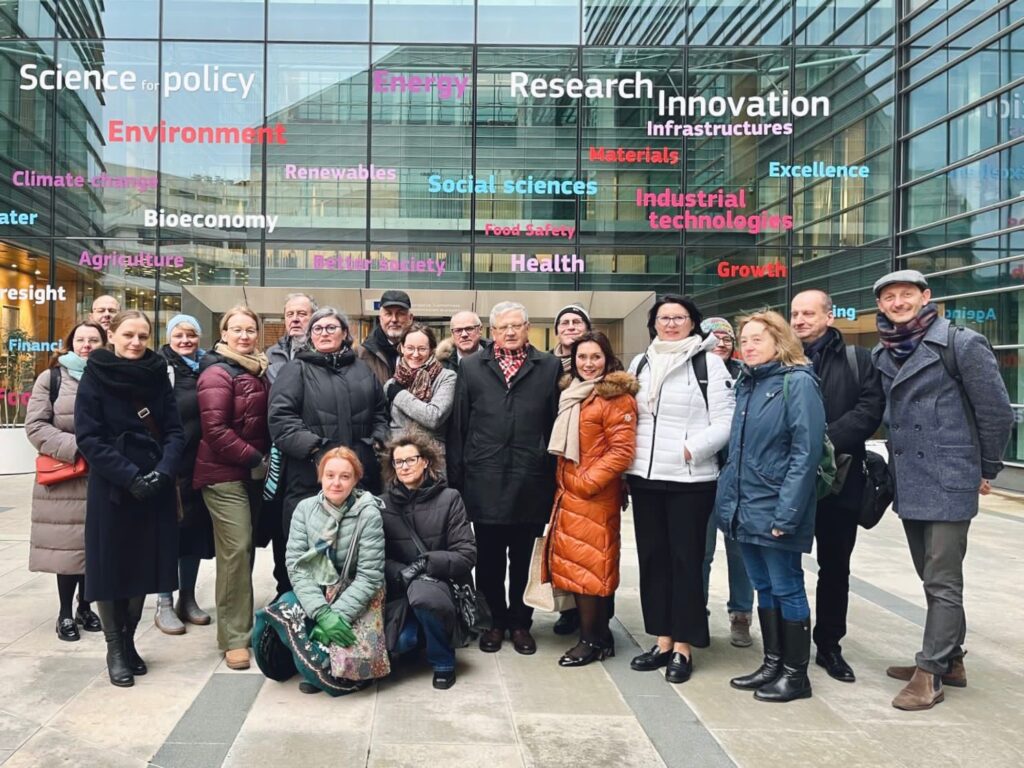
On 10th and 11th December, 2024, we hosted in Brussels a group of 19 representatives of scientific and thematic committees operating in PAS for a two-day study visit devoted to Science for Policy (S4P). The visit was organized by the PolSCA Office of the Polish Academy of Sciences in Brussels and the International Cooperation Office of the Polish Academy of Sciences in Warsaw.
The first institution that introduced the participants to the subject matter and at the same time showed how Science for Policy works in practice was the European Parliamentary Research Service (EPRS), operating at the European Parliament, which prepares reports, based on scientific research, for the use of MEPs or parliamentary committees in order to support data-driven decision-making (evidence-based policy making). Some of the reports prepared by EPRS are aimed at the general public and are available on the EPTHINKTANK blog. Also within the structures of the EP, there is the Science and Technology Options Assessment (STOA) panel, which is tasked with assessing the possible impact of new technologies in the context of EU-level activities.
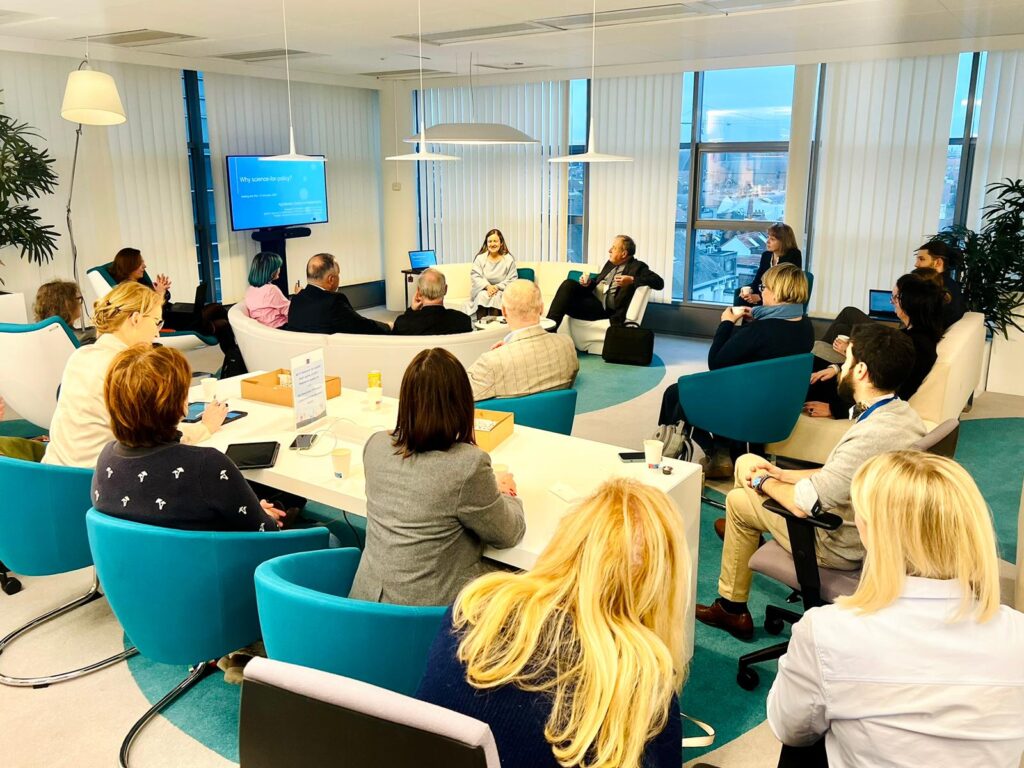
Another institution operating in the field of science advice that the study visit participants got to know is a unit of the Directorate General for Research and Innovation (DG RTD): Science for Policy, Advice and Ethics Unit. The DG RTD houses the secretariat of the Scientific Advice Mechanism (SAM), where the Chief Scientific Advisors Group develops recommendations for European policy directions based on analyses prepared by SAPEA (Science Advice for Policy by European Academies). Finally, the EC’s activities on integrity and ethics in science were presented to researchers, encouraging them to engage as experts in this field.
The relevance of science for policy activities was expressed in the Council Conclusions on Strengthening the role and impact of research and innovation in the policymaking process in the Union. An example of activities in the framework of the implementation of the aforementioned Council Conclusions is the Mutual Learning Exercise (MLE), which facilitates the exchange of information, experiences and lessons learned, as well as the identification of good practices, policies and programs that promote S4P, and allows us to understand the diversity of national S4P ecosystems across Europe. So far, three MLE meetings have been held; the next, fourth one was held in February 2025 in Warsaw, Poland, and focused on Trust in Science.
Not slowing down, the delegation representing PAN committees learned about the activities of Science Europe association regarding Science for Policy (S4P), which, among other things, has published a report titled Guidance on Science for Policy Activities, Science-Policy in Action, and guides for young science advisors.
The remainder of the visit took place at the Joint Research Center (JRC), whose mission is to provide scientific and technical support for the conception, development, implementation and monitoring of the EU policies. First, Agnieszka Gadzina-Kołodziejska presented the tasks of the JRC, the science for policy ecosystem and the Knowledge4Policy platform (K4P), which supports evidence-based policy making. She also presented the first edition of the Technical Support Mechanism – an instrument implemented by the JRC in member countries to support S4P ecosystems – and the announcement of the second edition (2025-2027), which will involve, among others, the Chancellery of the Prime Minister, ministries and the Polish Academy of Sciences.
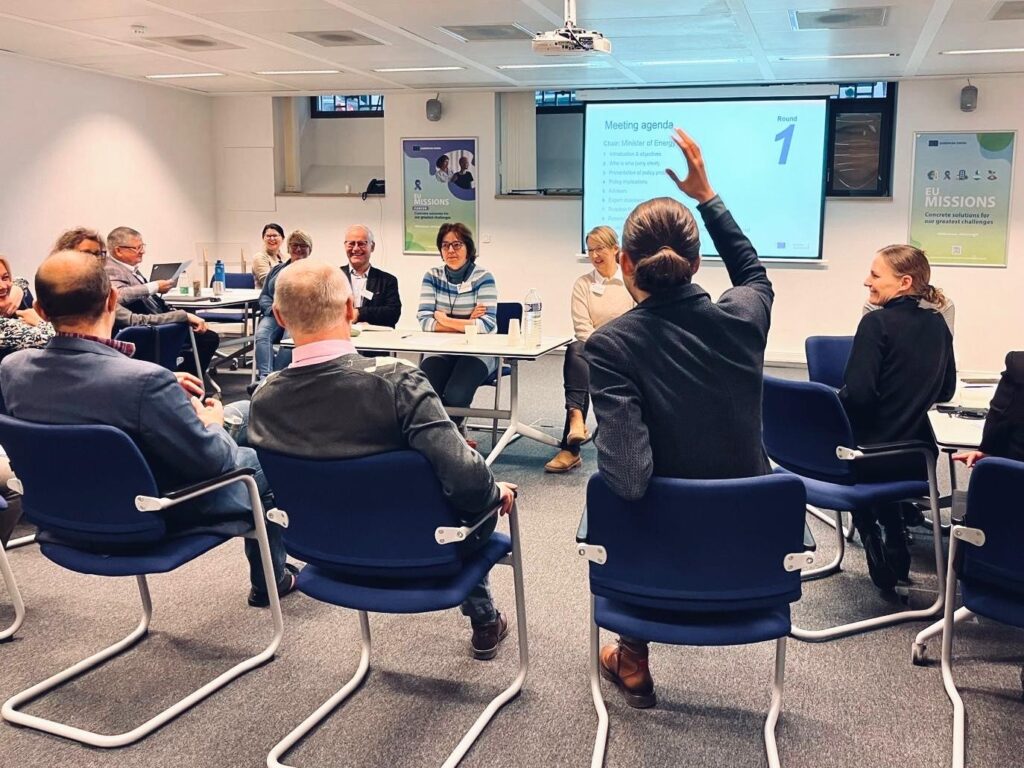
On the second day of the visit, still at the JRC, representatives of PAN committees had the opportunity to touch on the issues discussed the day before in a workshop on science communication and influence. The exercises included simulated political negotiations with partners from different backgrounds with different motivations and goals. They faced the necessity of adapting scientific messages to audiences outside the academic community.
Many thanks to the participants for their involvement at every stage of the visit, sharing your experiences and active participations during the workshop!


