V4 Training Spring Edition 2019 – call for applications!
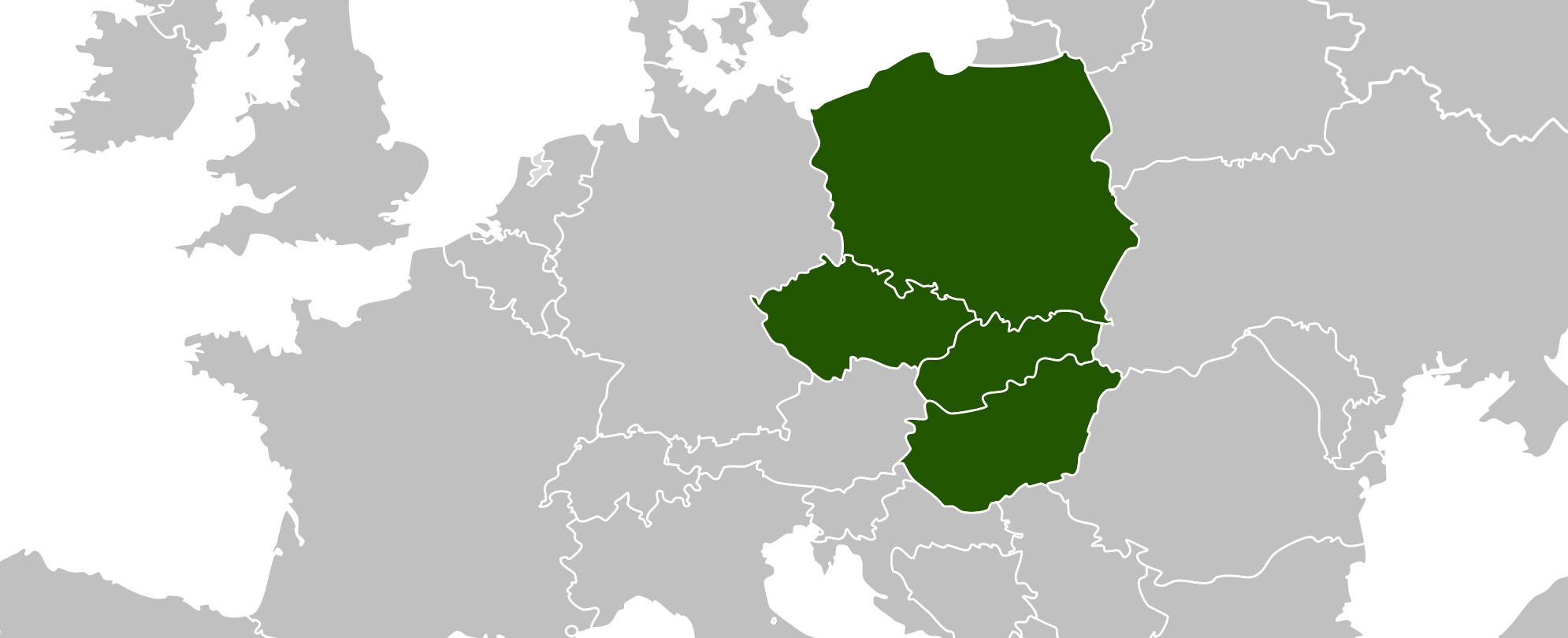
The Polish Science Contact Agency cordially invites managers of European research projects from Poland to take part in the next edition of “V4 training” organized by the V4 group!
The training will be held on 27-29 March 2019 in Brussels.
V4 Training is addressed to employees of the Polish Academy of Sciences’ institutes, universities and research institutes from Poland who are in charge of managing European projects on a daily basis, in particular, the EU Framework Programme for Research and Innovation – Horizon 2020. The training is carried out in English and it covers the most important issues related to Horizon 2020 as well as next EU proposition – Horizon Europe. Lectures and workshops are conducted by specialists from the European Commission and other European institutions in Brussels for research and innovation.
Candidates shall complete the questionnaire, which is available here, and send your CV.
The online questionnaire should be filled out via the Google application, whereas the CV in English should be sent at email address: polsca@polsca.pan.pl.
Applications will be accepted until Friday, 15 February 2019, at 12.00.
Participation in training is free of charge. Participants cover travel costs to / from Brussels and accommodation in Brussels.
The preliminary training program will be published in February on the PolSCA website.
We look forward to receiving your applications!
V4 Training spring edition 2019 – invitation
Second Call for Dioscuri Centres!
The Max Planck Society (MPG) and the National Science Centre in Poland (NCN) are running jointly call for proposals in the second edition of the international competition for the establishment of Dioscuri Centres of Scientific Excellence in Poland!
The Dioscuri program, mutually funded by the Polish Ministry of Science and Higher Education (MNiSW) and the German Federal Ministry of Education and Research (BMBF), was initiated by the Max Planck Society. Its objective is to strengthen and develop scientific excellence through the creation of Dioscuri Centres in Central and Eastern Europe by promoting outstanding researchers who want to conduct their research in this region. Within them, each call awardee has the opportunity to build his or her own research teams in the best Polish scientific institutions.
How to fight against disinformation? A series of meetings in the PolSCA Office and in the European Parliament
On December 5, 2018, the European Commission presented an Action plan against disinformation, which can be defined as a verifiable false or misleading information that is created, portrayed and disseminated in order to achieve economic benefits or misleading public opinion. This plan assumes increasing the capacity of EU institutions and Member States to reveal, analyze and disclose fake news, to find methods of responding to disinformation campaigns, and also to raise public awareness in this area. This is extremely important because this type of information effectively disrupts public debate, affects democratic processes, at the same time undermining citizens’ trust in institutions and the media.
Due to the growing problem of disinformation, the Polish Science Contact Agency in the first quarter of 2019 started a series of meetings for representatives of Polish regions devoted to this issue. (wiecej…)
On the strategy of action against disinformation – a meeting with Robert Sołtyk
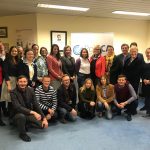
The first in this year expert meeting for representatives of Polish regions in Brussels was held on 17 January 2019. At the headquarters of the PolSCA Office, we hosted Robert Sołtyk, a long-time correspondent and journalist of “Gazeta Wyborcza”, currently a senior advisor in the European Commission. The meeting was devoted to EU strategies against disinformation, and the starting point for discussion was the report of the European Commission on fake news, which came out in December 2018. Among the discussed topics were: impact of disinformation on electoral processes in the world, legal restrictions for online platforms, as well as ways of working against hate speech or conducting effective media education. (wiecej…)
Opportunities for Researchers from the Socio-economic Sciences and Humanities (SSH) and Horizon 2020
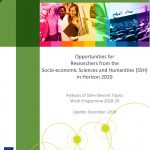
We recommend reading the document Opportunities for Researchers from the Socio-economic Sciences and Humanities (SSH) and Horizon 2020, prepared and published by the Net4Society project in December 2018. The publication contains a full range of topics in the Horizon 2020 contests in 2019 that are relevant to scientists, academics, researchers and other entities in the SSH area, including SSH-DEDICATED TOPICS, SSH-RELEVANT TOPICS as well as TOPICS WITH MINOR SSH RELEVANCE.
Seasons greetings

Peaceful Christmas time
spent in a family atmosphere
and many successes in the coming year
wishes
Team of the PolSCA Office in Brussels
Christmas break – changes in the operation of the PolSCA office

We would like to kindly inform you that on December 24-27, 2018, the PolSCA office – located on Rue du Trone 98, 1050 Brussels – will be closed.
Merry Christmas and Happy New Year,
PolSCA team
The first issue of newsletter of the Polish Science Contact Agency!
Dear All,
We are pleased to enclose the first issue of newsletter of the Polish Science Contact Agency of the Polish Academy of Sciences in Brussels (PolSCA). We list and describe the most important events in which we participated actively or which we organized in 2018, as well as those planned for 2019. In addition, we have prepared a set of information on the Horizon 2020 Framework Program and news related to the next EU program for research and innovation called Horizon Europe (FP9). At the end, we would like to extend our warmest Christmas and New Year greetings. Enjoy your reading!
On behalf of the Polish Science Contact Agency
Director Małgorzata Molęda-Zdziech
Please find the English version of newsletter below:
V4 Training – next edition
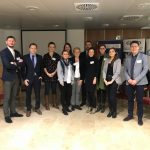
Recently, another edition of “V4 Training” has been concluded – a training addressed to managers of European research projects. The PolSCA in Brussels was one of the co-organizers of the event that took place on December 5-7, 2018. Among participants were employees of universities and research institutes from Hungary, Slovakia, Czech Republic, Poland, Lithuania and Cyprus. During the three-day workshop, with speakers representing various European research & innovation institutions operating in Brussels and across Europe, the participants had the opportunity to discuss issues related to the current Horizon 2020 framework program, as well as those regarding the forthcoming Horizon Europe. In addition, the program included issues such as conducting effective scientific communication, implementing good administrative practices, as well as matters dedicated to building a network of contacts in the research environment or data management plans in scientific projects. One of the training sessions was devoted to such current events as Brexit. Among the invited speakers were: Marcin Mońko, spokesman of European Research Council Executive Agency, Jakob Just Madsen, scientific attaché from the Danish EU Research Liaison Office, Massimo Busuoli from the university network UnILiON and Mathea Fammels, director of the European Institute of Innovation and Technology (EIT).
The FNP Prize ceremony 2018
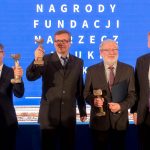
Exactly a week ago, on 5 December 2018, during a gala event at the Royal Castle in Warsaw, the Foundation for Polish Science Prize (The FNP Prize), regarded as the highest scientific honour in Poland, was awarded to four distinguished scholars: Prof. Andrzej Dziembowski, Prof. Andrzej Gałęski, Prof. Krzysztof Pachucki and Prof. Timothy Snyder. Two honored recipients are associated with the Polish Academy of Sciences.
The FNP Prize is awarded for significant advancements and scientific discoveries which shift cognitive boundaries and open new perspectives for research, provide an exceptional contribution towards the advancement of the nation’s progress and culture, and assure Poland a significant position for undertaking the most ambitious challenges of the modern world. The amount of the prize is PLN 200,000. Below we present the laureates and their scientific achievements, for which they were recognized with this year’s prizes:
Next Page »« Previous Page


