Matchmaking event – MEDIA, MIGRATION and EDUCATION – event summary!
Summary of the event!
The “MEDIA, MIGRATIONS and EDUCATION” match-making event took place on 20 November 2025 in Brussels and was an international meeting dedicated to upcoming calls under Cluster 2 of the Horizon Europe programme, with a particular focus on media, migration and education topics. The event was organised by the PolSCA PAN Office in cooperation with liaison offices gathered in the IGLO network, representing a total of 10 EU Member States, including Austria, the Czech Republic, France, Italy, Latvia, Lithuania, Poland, Slovakia and Spain, with the participation of partners from the Netherlands. We had the pleasure of hosting almost 60 representatives of the European research and innovation community.
(wiecej…)Diamond ERA: Fostering Openness in the European Research Area
Open event on 4 December 2025 | Brussels
The “Diamond ERA: Fostering Openness in the European Research Area” conference is a one-day policy-focused event that brings together key stakeholders to advance the conversation on Diamond Open Access (OA) in the Social Sciences and Humanities (SSH) across the European Research Area (ERA). Taking place on 4 December 2025 in Brussels at the Permanent Representation of Poland to the European Union, this open event aims to highlight and promote Diamond OA as a sustainable, equitable, and mission-driven model of scholarly publishing. It provides a platform for engagement between policymakers, researchers, publishers, research funders, and infrastructure providers to collaboratively identify pathways toward stronger support and integration of Diamond OA practices in the European science policy landscape.
(wiecej…)Two days, ten different sessions, almost one hundred experts and…unicorns.
First Central and Eastern European Congress for Research Managers in Brussels comes to an end.
On a surprisingly warm Brussels morning, we opened the doors to something the region has been working toward for nearly ten years: a space where Central and Eastern European research managers could finally meet as equals, not just attendees. People showed up carrying real experience – small wins from finance departments and labs, hard lessons from proposals that almost worked, and a stubborn conviction that solid research ecosystems are built by the professionals who rarely get the spotlight. For two days, they had it.
(wiecej…)PolSCA Masterclass: managing research projects with the PM² methodology. Event summary.
On 7 and 8 October 2025, a two-day workshop on the practical aspects of managing research projects using PM², the European Commission’s project management methodology, was held at the Institute of Fundamental Technological Research of the Polish Academy of Sciences (IPPT PAN). The event was organised by the PolSCA PAS Office in cooperation with IPPT PAN as a part of activities for the Horizon Europe Navigators network of research managers at PAN institutes. The sessions were led by Dr Justyna Małkuch-Świtalska – trainer and expert in project management and research careers, author of Projekty naukowe. Zarządzanie w praktyce (PWN, 2020) – who has delivered over 2,500 hours of training in Poland and abroad and works with Trener Nauki.
(wiecej…)The workshop report “IGLO in Action: Workshop and Survey on Simplification — Summary Report”

On the 10th of October 2025, the report “IGLO in Action: Workshop and Survey on Simplification – Summary Report” was published, summarising the workshop in Brussels, which took place on the 4th and 5th of June 2025, and the accompanying survey.
The new report presents key findings and recommendations for simplifying the rules and procedures of the Horizon Europe program, based on the collective expertise of research managers and administrators from across Europe. Sixty-three participants from 14 countries took part in the survey. The workshop was attended by 22 research managers from public universities and research institutions in 12 European countries, as well as representatives of the European Commission, the Research Executive Agency, and the ERC Executive Agency.
The new report presents the main findings and recommendations for simplifying the rules and procedures of the Horizon Europe program, based on the collective expertise of research managers and administrators from across Europe. Sixty-three participants from 14 countries participated in the survey. The workshop was attended by 22 research managers from public universities and research institutions in 12 European countries, as well as representatives of the European Commission, the Research Executive Agency, and the ERC Executive Agency.
During the workshop in Brussels (4th and 5th of June 2025), participants discussed essential aspects of simplifying the rules and procedures of Horizon Europe, covering a wide range of topics: from lump sums and other simplified cost options, through the interpretation of rules and guidelines, the EU Funding & Tenders Portal, project proposal templates, time to award grants, to reporting, reimbursement of actual costs, financial audits, and the involvement of third parties.
Key recommendations include:
1) Staffing and cost simplifications
• settlement of personnel costs based on actual costs
• simplification of working time records
2) Eligibility rules and technical costs
• Reimbursement of repair and maintenance costs
• Reporting of total depreciation costs only once during the project
3) Contracting and contract amendments
• Simplification of the contract amendment process
- Streamlining the process for making minor changes
4) Reporting
• streamlining of reporting
• extension of the reporting deadline
5) Audits and compliance
• recognition of national audits
• appropriate selection of auditors with a recommendation of knowledge of national law
• raising the threshold for mandatory use of CFS
6) IT tools and document standardization
• automatic transfer of data from an approved application to the SyGMa platform
• introduction of templates for non-scientific parts of project applications
7) Support and communication with the grant provider
• launch of a telephone hotline
The report emphasises the importance of clarity, credibility, and stability of funding rules, as well as the need for early and continuous involvement of practitioners in the development of new measures.
The report can be downloaded at: HERE
IGLO is an informal network of Brussels-based, non-profit R&D liaison offices whose objective is to facilitate and streamline interaction, information exchange, and cooperation between IGLO members, their national research systems, and EU institutions in the area of framework programs.
The PolSCA office is the only Polish representative actively involved in IGLO, representing the interests of Polish institutions, sharing implementation practices, and initiating the exchange of experiences.
One of the results of our activities was the co-financing of the participation of Joanna Kartasiewicz (ICTER – Institute of Physical Chemistry, Polish Academy of Sciences) and Anna Demner (University of Warsaw) in the “Simplification” workshop.
• Valorisation of knowledge (January 2025) KoWi published a summary and a short report on the event.
• Lump sums (October 2023) — “IGLO in Action: Second IGLO Workshop on Lump Sum Funding — Summary Report.”
Round Table: projects’ regulatory and administrative perspective!

On 9 October, the Warsaw School of Economics hosted a Round Table Discussion on Research Projects: Regulatory and Administrative Perspectives. It was the first meeting of its kind among experts on research projects carried out in Polish institutions.
The round table design meeting (OSP) brought together experts who, on a daily basis, connect different worlds: science with administration, researchers’ ambitions with institutional requirements, European standards with national practice. On one side of the table were representatives of research funding agencies and ministries, on the other – research managers and administrators (RMAs) from universities and research institutions, and between them – designers of IT infrastructure intended to streamline everyday grant management.
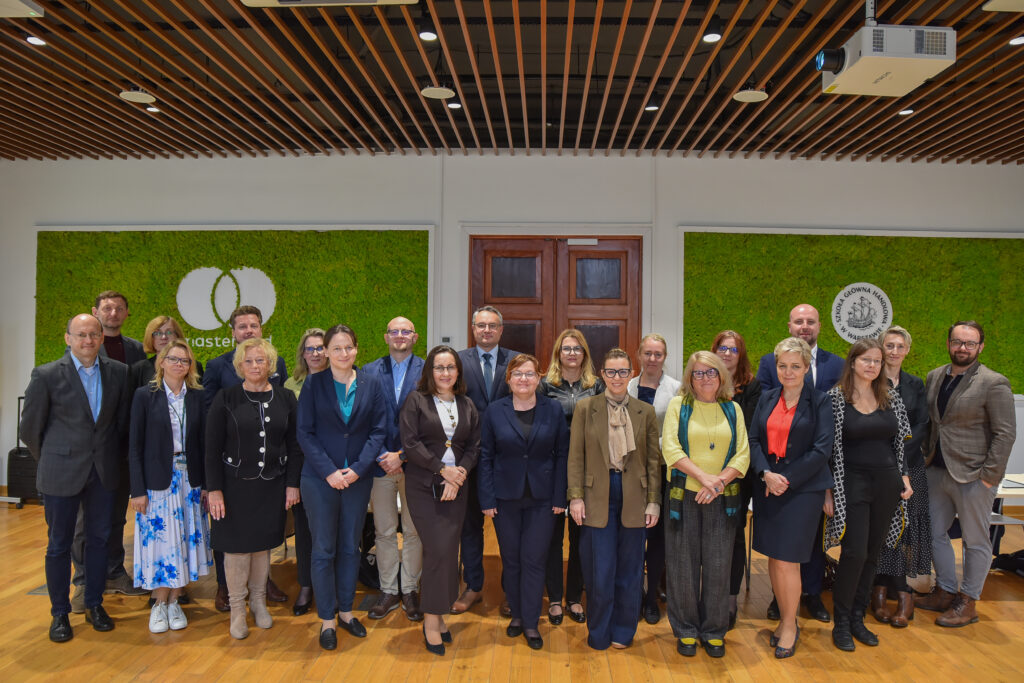
The meeting saw active participation from representatives of institutions financing and programming scientific research: NCN, NCBR, NAWA, FRSE, ABM, FNP and MNiSW, representatives of universities and research institutions (KRASP, PAN) and the RMA community – FAA, PolARMA, PolSCA. Representatives of OPI (e-Grants) were guests from the technology sector.
The OSP was established as a platform to connect stakeholders in the grant process at every stage: from conception and application to implementation and settlement. It is a declaration of a shift away from ad hoc ‘firefighting’ in favour of ongoing dialogue and a roadmap for simplification. In the background, a simple but important thesis resonated: the development of universities today means the development of projects, and without professional administrative support and wise, consistent rules, we will not be able to build lasting quality.
Areas identified as requiring cooperation:
RMA as the missing pillar. The role of RMA was a recurring theme in the participants’ statements: a recognised profession in Europe, but still undefined in Poland, despite its key importance.
E-Grants platform – a common language for the system. This is an OPI project that aims to bring together the entire project lifecycle in a single environment.
Wise standardisation, i.e. the need for wise harmonisation of what is common and repetitive in the offerings of Polish research funding institutions.
Information and competence, i.e. comprehensive training and clear competition announcements.
At times, the discussion was very practical, almost workshop-like. However, it was agreed that this was not a one-off event, but a format for ongoing sectoral consultations.
“Standing on the Shoulders of Giants” in Paris – Polish Science in the European Context
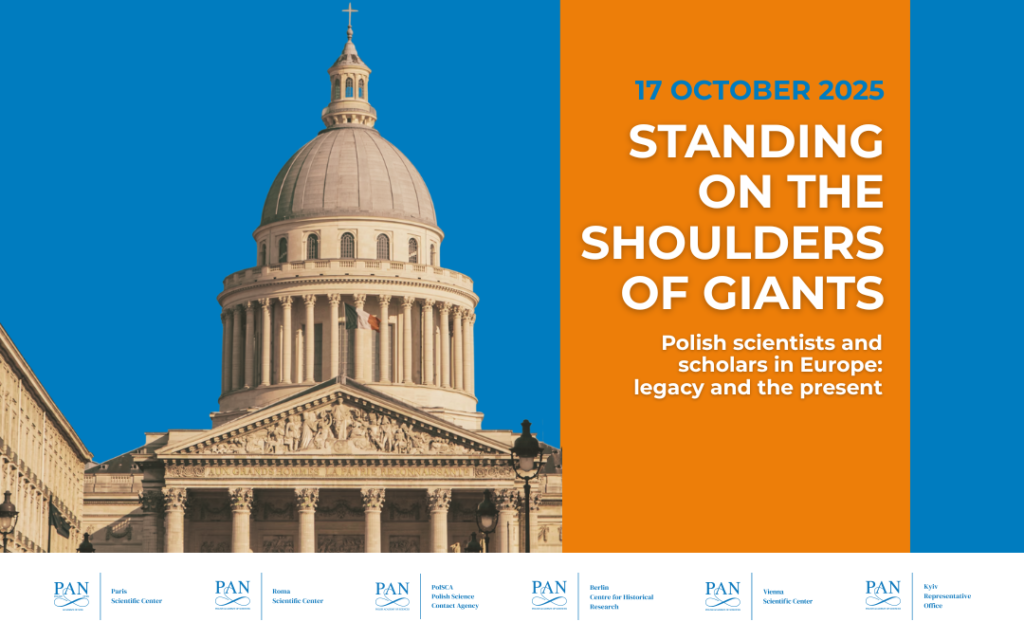
After a successful inauguration in Brussels, the exhibition “Standing on the Shoulders of Giants. Polish Scientists and Scholars in Europe: Legacy and the Present” continues its European journey. Its next stop is the Polish Academy of Sciences Scientific Centre in Paris, where on 17 October 2025 a special event will take place, dedicated to the legacy and contemporary achievements of Polish science in Europe.
The meeting is organised by the PAS Scientific Centre in Paris, in cooperation with the foreign stations of the Polish Academy of Sciences, including the PolSCA Office in Brussels, the Centre for Historical Research in Berlin, and the PAS Scientific Centres in Rome, Vienna and Kyiv.
The programme will feature popular science presentations, a panel discussion, and networking opportunities aimed at fostering dialogue and reflection on the role of Polish science in the European research landscape. Among the speakers will be outstanding researchers from PAS institutes, also featured in the exhibition, including Prof. Monika Kusiak, Prof. Janusz Lewiński, Prof. Paweł Olko, Prof. Andrzej Gamian, and Prof. Maciej Górny. The exhibition highlights the intergenerational dialogue between eminent figures of Polish science — such as Maria Skłodowska-Curie, Jan Czochralski, and Ludwik Hirszfeld — and their modern successors, who continue their work and ideas in new fields of research.
The exhibition was jointly developed by six foreign PAS stations. It was initiated by Dr Tomasz Poprawka, Director of the PolSCA Office in Brussels, and Prof. Igor Kąkolewski, Director of the PAS Centre for Historical Research in Berlin. The project was first presented in June 2025 in Brussels, during the conference Transnational Science Cooperation: Fostering Collaborative Research in Europe and Poland.
The exhibition will be open to visitors from 1 to 28 October 2025 at the PAS Scientific Centre in Paris, from 9:00 AM to 5:00 PM.
We warmly invite you to join the event inaugurating the Paris edition of the exhibition. It will be a unique opportunity to meet leading Polish scientists, listen to their insights, and discuss the place of Polish science within Europe’s academic landscape. Registration form accessible here.
ERC Workshop at the CMB Conference in Rome – 19 September 2025.
How to demystify ERC in 150 minutes? At the 1st Polish-Italian Conference on Chemistry, Materials & Biomedicine (CMB) in Rome, Expert from the PolSCA Office ran an interactive workshop, “Demystifying the ERC: Strategy & Success” It was concise, hands-on and lively – just the way we like to work with researchers.
(wiecej…)Match-making EVENT: MEDIA, MIGRATION, EDUCATION!
An event promoting cooperation within Cluster 2 HE for the years 2026-2027!
The PolSCA office, in cooperation with the IGLO liaison offices in Brussels representing a total of 12 Member States: Austria, Czech Republic, France, Italy, Latvia, Lithuania, Poland, Slovakia and Spain, with the participation of representatives from Germany, the Netherlands and the United Kingdom, is organising a matchmaking event for those interested in the upcoming calls for proposals to be published under the 2026-2027 Work Programme – Cluster 2. The event will take place in person in Brussels on 20 November 2025 and will focus on topics related to media, migration and education.
The organizers have selected 12 topics, based on draft of the Work Programme 2025 available in EC Comitology register. When registering to the matchmaking event provide a specific role/expertise that you want to bring to the consortium and/or you seek in partners. Refer to the wording of the scope of the topic.
The person attending the match-making event should be able to engage in technical discussions on the presented project ideas or expertise contributed to the consortium.
AGENDA (tbc) – HERE
Standing on the Shoulders of Giants: An Exhibition of Polish Scientific Legacy opens up in Brussels
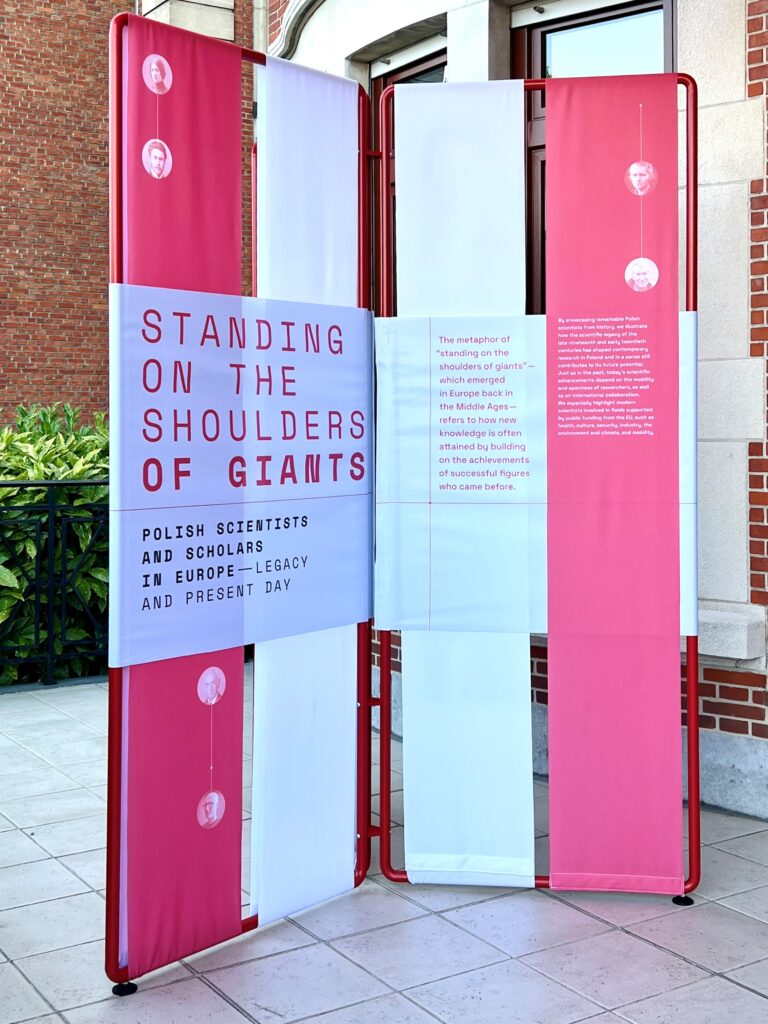
Six foreign stations of the Polish Academy of Sciences (PAS) jointly conceived and developed the exhibition titled ‘Standing on the Shoulders of Giants. Polish Scientist and Scholars in Europe – legacy and present day’ — a visual and intellectual journey through the legacy of Polish science, and its living connections to the challenges and priorities of Europe today. The exhibition was inaugurated in Brussels on 23rd June 2025 and it will soon embark on the passage via selected European capitals.
EXHIBITION CELEBRATING THE CONTINUITY OF POLISH SCIENCE IN A EUROPEAN CONTEXT
The idea for the exhibition arose from the need to jointly showcase the achievements of Polish scientists in a European context, with particular emphasis on Poland’s historical heritage and its contemporary presence in the European research area. It aims not only at presenting the profiles of outstanding scientists, but also at showing their contemporary successors and linking their work to the priorities of European Union R&I policies, including the Horizon Europe programme.
Drawing on the metaphor made famous in the Middle Ages — standing on the shoulders of giants — the exhibition invites us to reflect on how today’s discoveries are anchored in the foundations laid by pioneering figures of the past. It is through the lens of historical and cultural continuity that we connect the early visions of Maria Skłodowska-Curie, Jan Czochralski, or Zofia Kielan-Jaworowska with the groundbreaking work of their modern successors.
(wiecej…)Next Page »« Previous Page


