Discussion about the journalism of Leopold Unger
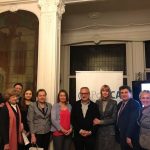
On December 7, 2018, in the East Poland House in Brussels, a discussion took place, which was devoted entirely to the journalism of Leopold Unger, considered one of the most important representatives of serious journalism. The opportunity to take up this topic was the appearance of a French translation of the Unger’s book “Orzeł i reszta. Widziane z Brukseli”. Publication entitled “L’aigle et le reste. Et le reste Vu de Bruxelles“, which was published by Fundacja Terytoria Książki in 2017, is preceded by a scientific introduction written by Professor Iwona Hofman.
The Polish Science Contact Agency PolSCA and the Office of the Lublin Voivodship in Brussels co-organised jointly a panel discussion with a participation of Professor Iwona Hofman from the Maria Curie-Skłodowska University in Lublin and Małgorzata Molęda-Zdziech – Director of the PolSCA Office. We were also pleased to have the son of Leopold Unger – Mr. Mark Unger with two daughters: Deborah and Sarah. Among the discussed topics were questions about the current relevance of Leopold Unger’s journalism in today’s world of immediate flow of abundant information, about the characteristic elements of his creative process, as well as about personal inspiration in the process of creating texts. The whole event was moderated by Robert Sołtyk (European Commission, friend of Unger and former journalist and correspondent of “Gazeta Wyborcza”).
The Polish Science Contact Agency – PolSCA Office activities in 2018
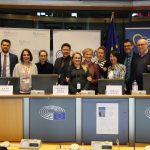
In 2018, the PolSCA Office team actively participated in over 70 seminars, conferences and study visits. Among them, a seminar devoted to Polish business representations in Brussels is certainly worth of mentioning. The first part of the meeting took place in the European Parliament and included the presentation of foreign stations of the Polish Academy of Sciences in Paris and Brussels as subjects implementing the tasks of scientific diplomacy. The results of research published in the book “Representation of economic and social interests in the EU” [PL: Reprezentacja interesów gospodarczych i społecznych w UE], edited by U. Kurczewska and K. Jasiecki were also presented. The second part of the seminar, organized in cooperation with the Permanent Representative of the Republic of Poland in Brussels, was the debate entitled “Lobbying in the EU” with the participation of authors of the above mentioned monograph and employees of the EU institutions.
In addition, together with the Polish Embassy in Brussels, the PolSCA Office co-organized a conference “Women in Science. Past and Present”. PolSCA was also a partner of the event “3Revolution: Reduce-Reuse-Recover”, during which the director of PolSCA Office – Małgorzata Molęda-Zdziech, participated in the discussion panel entitled “Poland for European Innovations”. What should also be emphasized, is the active participation of the PolSCA Office in the 8th European Forum of New Ideas (EFNI) in Sopot, under which M. Molęda-Zdziech moderated the panel on Polish lobbying in Brussels and participated in a panel discussion on Polish business leaders. PolSCA Office was also present at the Science Festival in Jabłonna. As part of the IGLO network (Informal Group of RTD Liaison Offices), the so-called IGLO OPEN seminar was organized and chaired by the PolSCA, covering the issue of the Horizon Europe. The Office was involved in co-organizing a training on framework programs for international project administrators from Polish research institutions. In 2018 a series of meetings for representatives of Polish regional offices in Brussels was initiated – the topic of one of ten meetings was the issue of “smart cities”. A very fruitful cooperation was established with the Polish Academy of Sciences Office in Paris, under which two study visits, the presentation of both stations in the European Parliament and a debate on scientific diplomacy in practice during the Science Festival in Jabłonna took place.
More information about the activities of the remaining scientific stations of the Polish Academy of Sciences can be found at the link:
Sources:
Polska Akademia Nauk
Report by the Polonium Foundation “Beyond recognition: Polish scientific diaspora as a source of social capital”
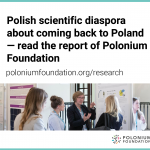
Do you know that every second polish scientist working abroad does not intend to return to Poland? The return is considered by less than one-third of respondents (27 percent). Among those who want to stay abroad (47%), more than half see benefits in networking and cooperating with scientists from Poland, yet only 6% is actively looking for these contacts. The lack of cooperation between scientists results from the lack of opportunities to make contact – this is the opinion of the authors of the report, experts from the Polonium Foundation.
ERA Chairs Group Leader position at the International Institute of Molecular and Cell Biology in Warsaw, Poland
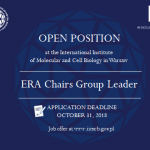
The International Institute of Molecular and Cell Biology in Warsaw (IIMCB) invites applications for the position of a Group Leader with a planned starting date in November 2018.
Deadline for applications is October 31st, 2018.
Open competition for ERA Chairs Group Leader_IIMCB
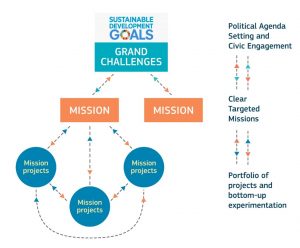
Mission-Oriented Research & Innovation in the European Union
The call for feeback on different aspects of future research and innovation missions was published by the European Commission. The results will feed into the preparatory work for the post-2020 EU R&I programme and its implementation.
We invite all the stakeholders to take part!
https://ec.europa.eu/eusurvey/runner/482a79de-3fad-17e1-c60d-2e4418c1a95d
PolSCA participates already in this process.
Position Statement by the V4 Academies of Sciences on Framework Programme 9
The Academies of Sciences of the Visegrad countries took part in the public consultation on EU funds in the area of investment, research & innovation, SMEs and single market and elaborated the position paper on Framework Programme 9.
https://informacje.pan.pl/images/media/materialy/2018/03/V4_Position_statement.pdf
Did you know? EU funded research is shaping your future
Science and technology touch almost every part of our daily lives. The food we eat, the medicines we take and healthcare we receive, transport, communications, protecting our environment, how we work and how we play: the list is endless! This is why each year the European Union is helping scientists, researchers and innovators from across Europe to work together. Because by working together we can achieve more. Today, the EU is funding thousands of active projects involving scientists, technologists and engineers. This short booklet highlights just a few examples of the impact their work is having on our daily lives.
Study Visit of the representatives of the Scientific Centre of the Polish Academy of Sciences in Paris
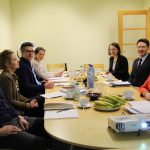
On February the 28th and March the 1nd PolSCA hosted dr hab. Macieja Forycki, the director of the Scientific Centre of the Polish Academy of Sciences in Paris with collborators: Aneta Bassa, Katarzyna Kula, Robert Górski and Ernest Marcinkiewicz. The visit was the opportunity to present activities of both entities and discuss future common projects.
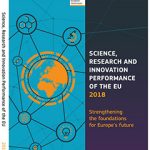
Science, Research and Innovation Performance of the EU (SRIP) report 2018
HORIZON 2020 – key facts and figures 2014-2016
Source: European Commission
Next Page »« Previous Page


