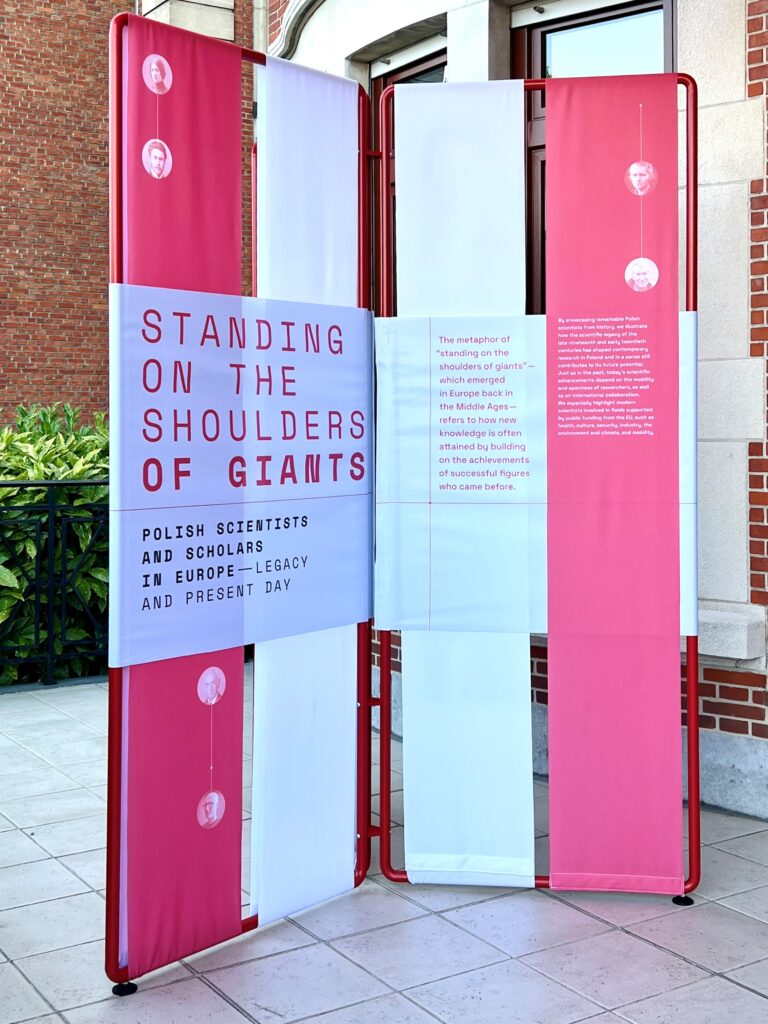
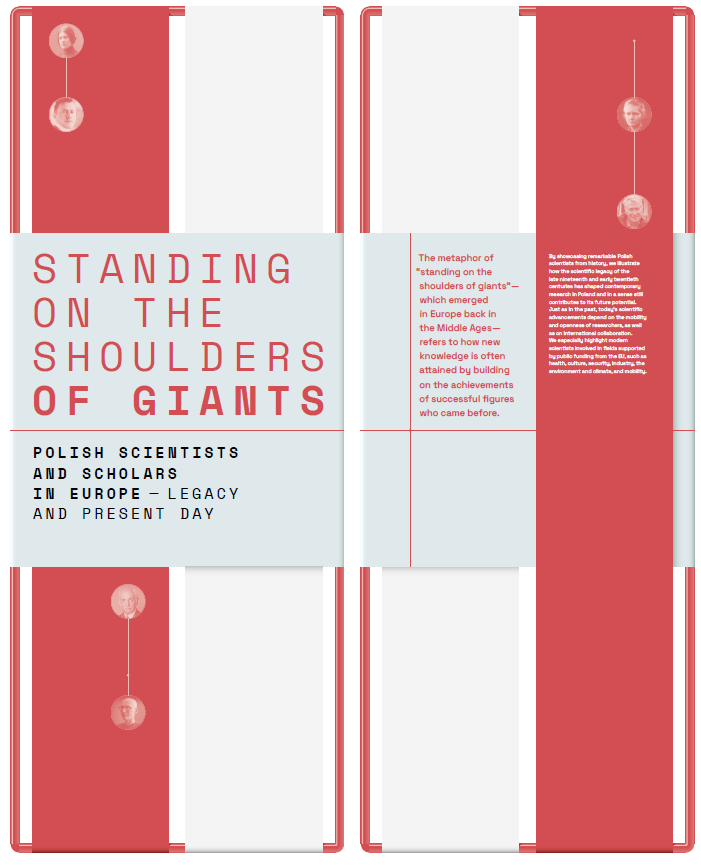
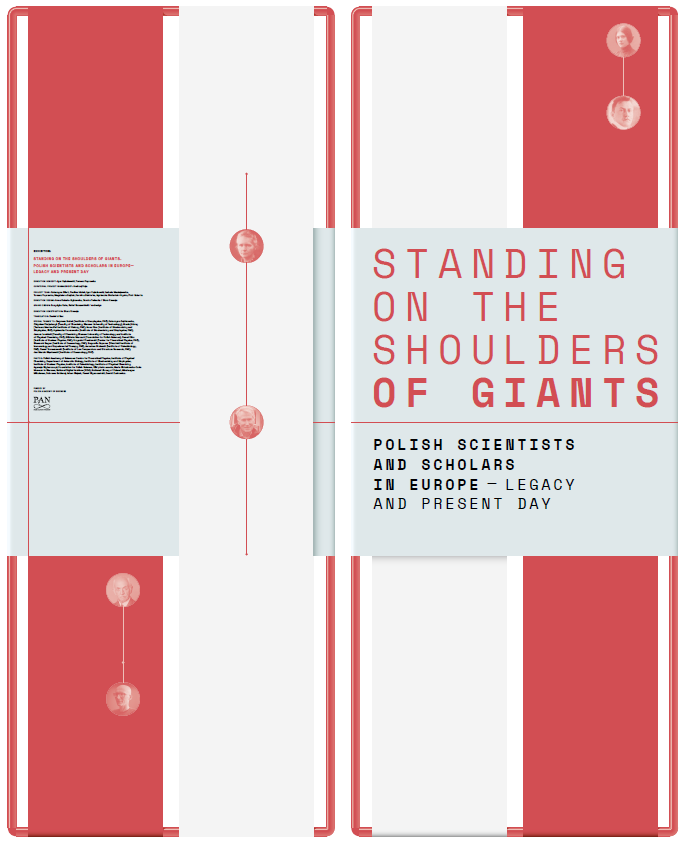
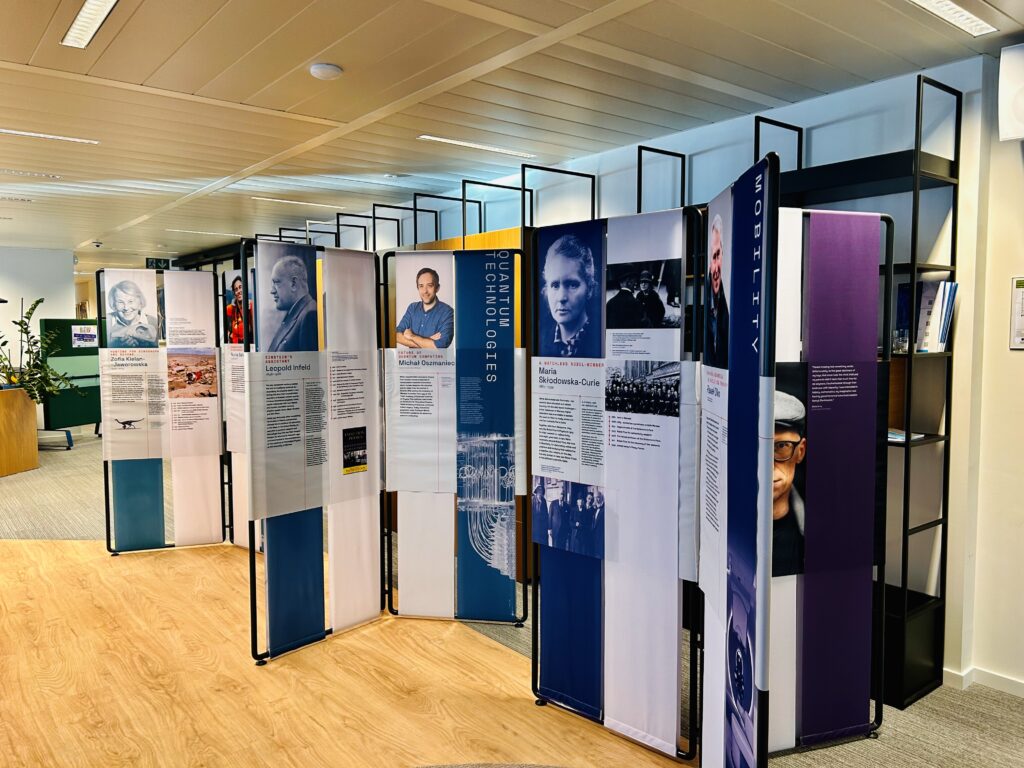
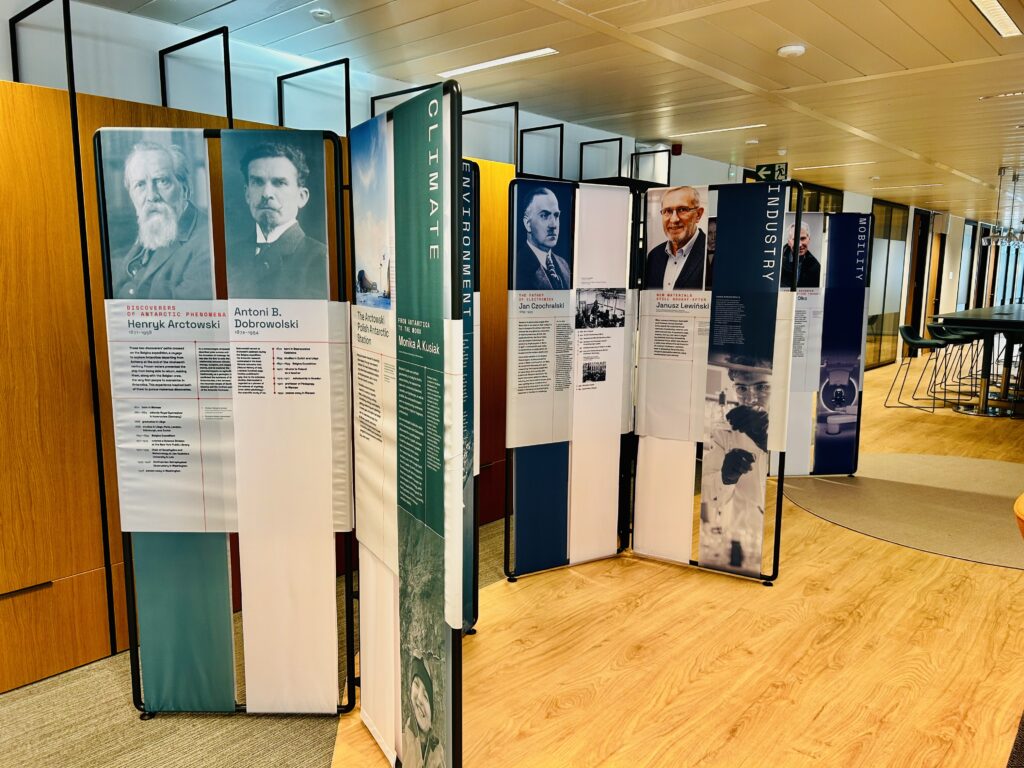
Six foreign stations of the Polish Academy of Sciences (PAS) jointly conceived and developed the exhibition titled ‘Standing on the Shoulders of Giants. Polish Scientist and Scholars in Europe – legacy and present day’ — a visual and intellectual journey through the legacy of Polish science, and its living connections to the challenges and priorities of Europe today. The exhibition was inaugurated in Brussels on 23rd June 2025 and it will soon embark on the passage via selected European capitals.
EXHIBITION CELEBRATING THE CONTINUITY OF POLISH SCIENCE IN A EUROPEAN CONTEXT
The idea for the exhibition arose from the need to jointly showcase the achievements of Polish scientists in a European context, with particular emphasis on Poland’s historical heritage and its contemporary presence in the European research area. It aims not only at presenting the profiles of outstanding scientists, but also at showing their contemporary successors and linking their work to the priorities of European Union R&I policies, including the Horizon Europe programme.
Drawing on the metaphor made famous in the Middle Ages — standing on the shoulders of giants — the exhibition invites us to reflect on how today’s discoveries are anchored in the foundations laid by pioneering figures of the past. It is through the lens of historical and cultural continuity that we connect the early visions of Maria Skłodowska-Curie, Jan Czochralski, or Zofia Kielan-Jaworowska with the groundbreaking work of their modern successors.
The exhibition is divided into several thematic sections that illustrate the achievements of Polish scientists in few priority scientific areas, referencing at the same time key R&I areas of the Horizon Europe programme:, i.e.:
- Medicine & immunology linked to Cluster I – Health
- Culture & history linked to Cluster II – Culture, society and democracy
- Physics & chemistry linked to Cluster IV – Industry and digital technologies
- Climate science & biodiversity linked to Clusters V and VI
By doing so, the exhibition showcases the continuation of ideas and values via development of new research concepts by contemporary scientists and / or research centers. Moreover the presented examples are embedded in the context of European funding, with examples of researchers who have participated in mobility fellowships, research networks and international projects supported by the EU, in particular MSCA instruments, ERC grants and EU partnerships.
STRUCTURE OF THE EXHIBITION – INTERGENERATIONAL PAIRINGS
With the above in mind, we’re honoured to highlight Polish academic personalities of the past and of modern days, who were carefully selected to become protagonists of the exhibition.
Historical figure
Contemporary researcher
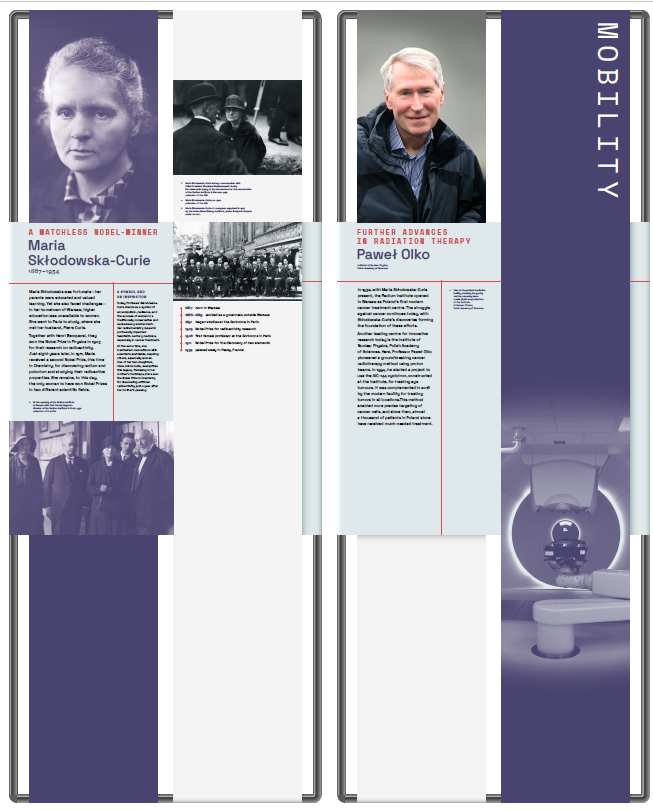
Maria Skłodowska-Curie (1867–1934), a pioneering physicist and chemist, was the first woman to win a Nobel Prize and the only person to win in two sciences (Physics and Chemistry). She discovered polonium and radium, laying the foundation for modern radiotherapy.
Prof. Paweł Olko – a physicist specializing in medical physics. He has significantly contributed to the development and implementation of proton beam therapy for cancer treatment in Poland, notably through his leadership at the Bronowice Cyclotron Centre.
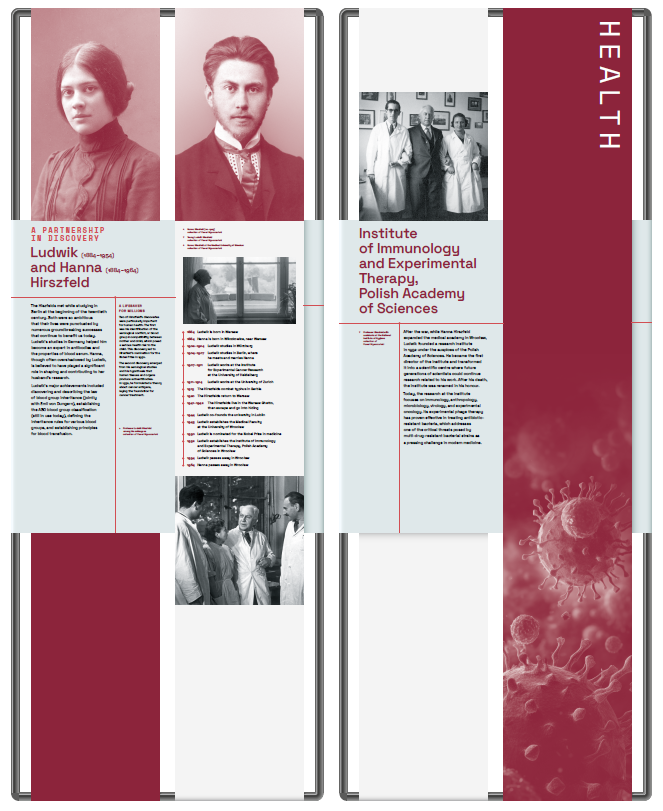
Ludwik Hirszfeld (1884–1954) was a renowned microbiologist who co-discovered blood groups and introduced the Rh factor. His wife, Hanna Hirszfeld, was a pediatrician and bacteriologist. Together, they made significant contributions to medical science and public health.
The Ludwik Hirszfeld Institute of Immunology and Experimental Therapy, Polish Academy of Sciences (PAS) in Wrocław is a leading biomedical research center in Poland. It conducts pioneering work on phage therapy, immunotherapy, and the human microbiome.
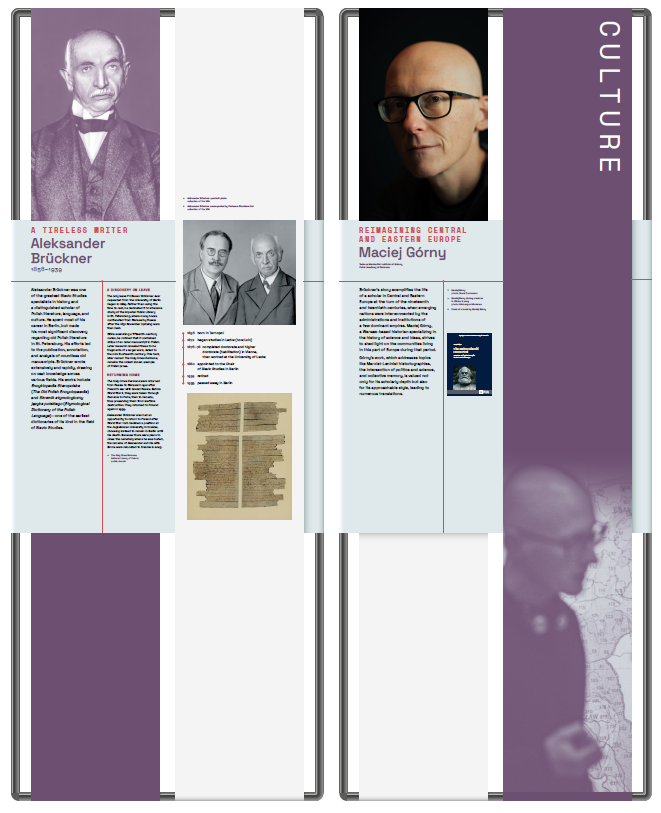
Aleksander Brückner (1856–1939) was a distinguished Polish philologist and historian of literature, known for his extensive research on Slavic languages and Polish culture. His work laid the groundwork for modern Slavic studies.
Prof. Maciej Górny is a historian specializing in Central and Eastern European history and historiography. He is a professor at the Tadeusz Manteuffel Institute of History, Polish Academy of Sciences, and has authored several influential works on the intellectual history of the region.
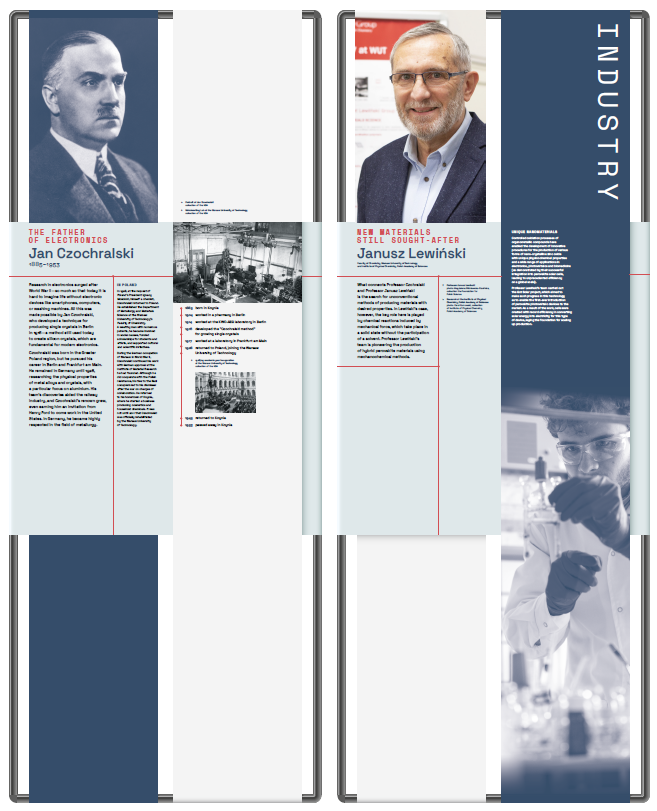
Jan Czochralski (1885–1953) was a Polish chemist and metallurgist who developed the Czochralski method for growing single crystals, a fundamental process in semiconductor manufacturing. His invention is critical to the production of modern electronics.
Prof. Janusz Lewiński is a chemist whose research includes the synthesis of new materials and nanostructures, contributing to advancements in materials science. He has developed innovative methods for creating perovskite materials, enhancing their photovoltaic properties.
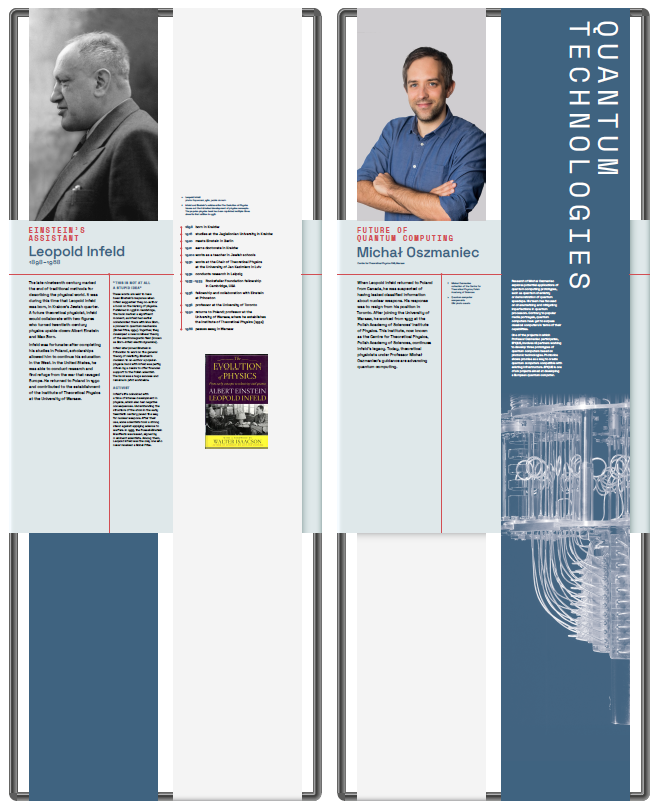
Leopold Infeld (1898–1968) was a theoretical physicist who collaborated with Albert Einstein on the equations of motion in general relativity. He also contributed to the development of the Born–Infeld model in electrodynamics.
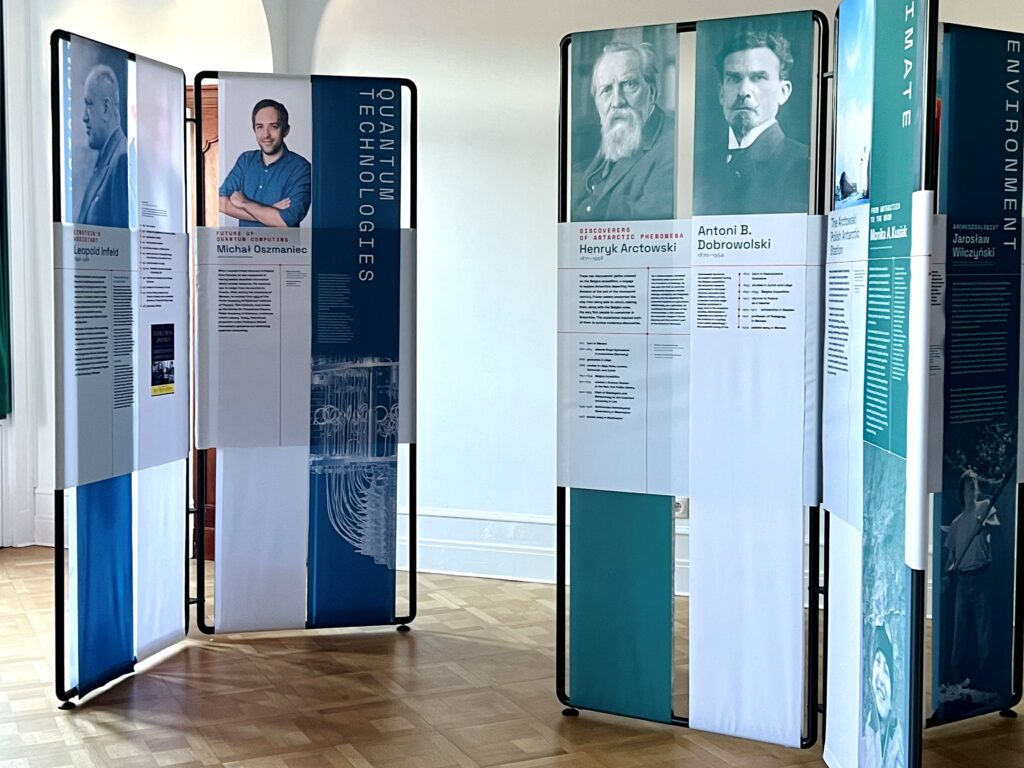
Prof. Michał Oszmaniec is a physicist specializing in quantum information theory. He leads the Quantum Information Group at the Center for Theoretical Physics, Polish Academy of Sciences, focusing on the operational aspects of quantum measurements and computations.
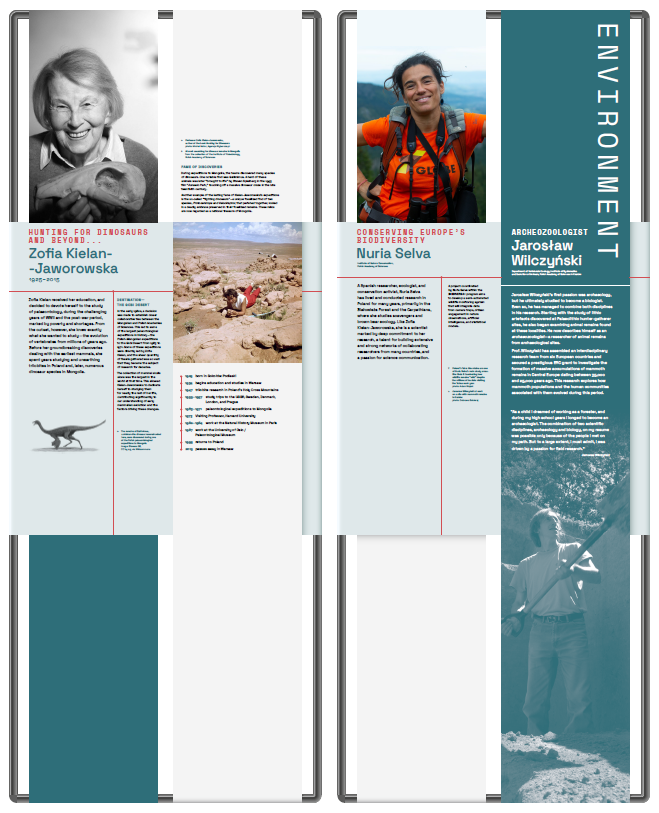
Zofia Kielan-Jaworowska (1925–2015) a globally renowned researcher on earliest mammals and dinosaur species and the leader of Polish-Mongolian expeditions that significantly advanced paleontology.
Dr. Jarosław Wilczyński is a paleontologist and ERC grantee conducting research on Quaternary mammals and human prehistory. He leads the MAMBA project, exploring mammoth bone accumulations in Central Europe.
Dr. Nuria Selva is a biologist and ecologist focusing on biodiversity and ecosystem functioning. She is involved in a transnational research project funded by the EU under Biodiversa+, studying the impact of global change on species and ecosystems.
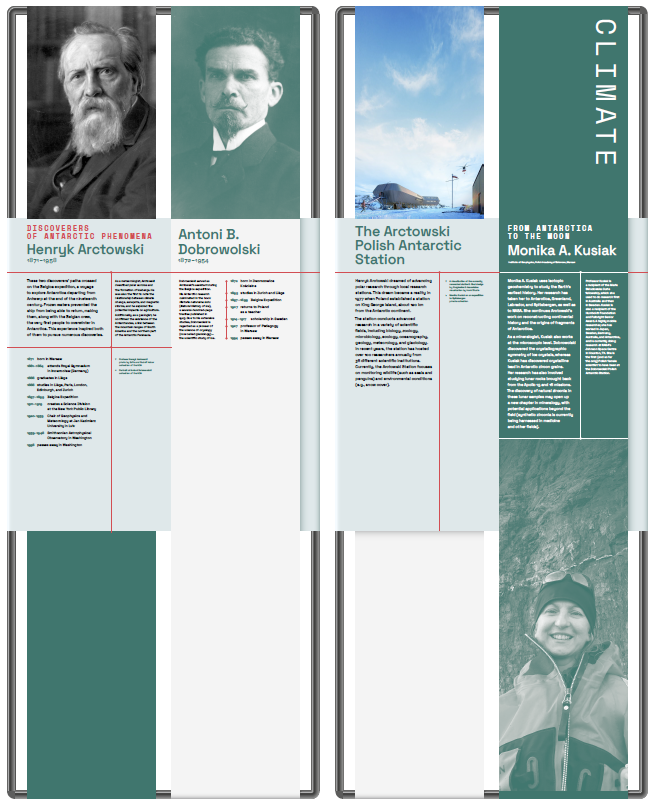
Henryk Arctowski (1871–1958) was a geophysicist and meteorologist who participated in the Belgian Antarctic Expedition, contributing to polar research. Antoni Dobrowolski (1872–1954) was a geophysicist and glaciologist who also took part in the expedition, later becoming a pioneer in Polish polar studies.
Prof. Monika Kusiak is a geologist and geochemist specializing in polar research. She has led multiple expeditions to Antarctica and contributed to the revitalization of the Polish Antarctic Station named after Dobrowolski. She is the mineralogist who discovered crystalline lead in Antarctic zircon grains (her talent and work was recognized by MSCA grants or invitation to NASA).
SUMMARY
By highlighting these intergenerational connections, the exhibition underscores the virtue of heritage as a living force in science. It reminds us that progress is not a rejection of the past, but a conversation with it — one where ideas evolve, but values endure.
In this way, the Polish Academy of Sciences affirms its role not only as a scientific institution, but as a guardian of memory and builder of the future, ensuring that excellence, mobility, and cooperation remain at the heart of Europe’s research agenda.
EXHIBITION PREMIERE IN BRUSSELS
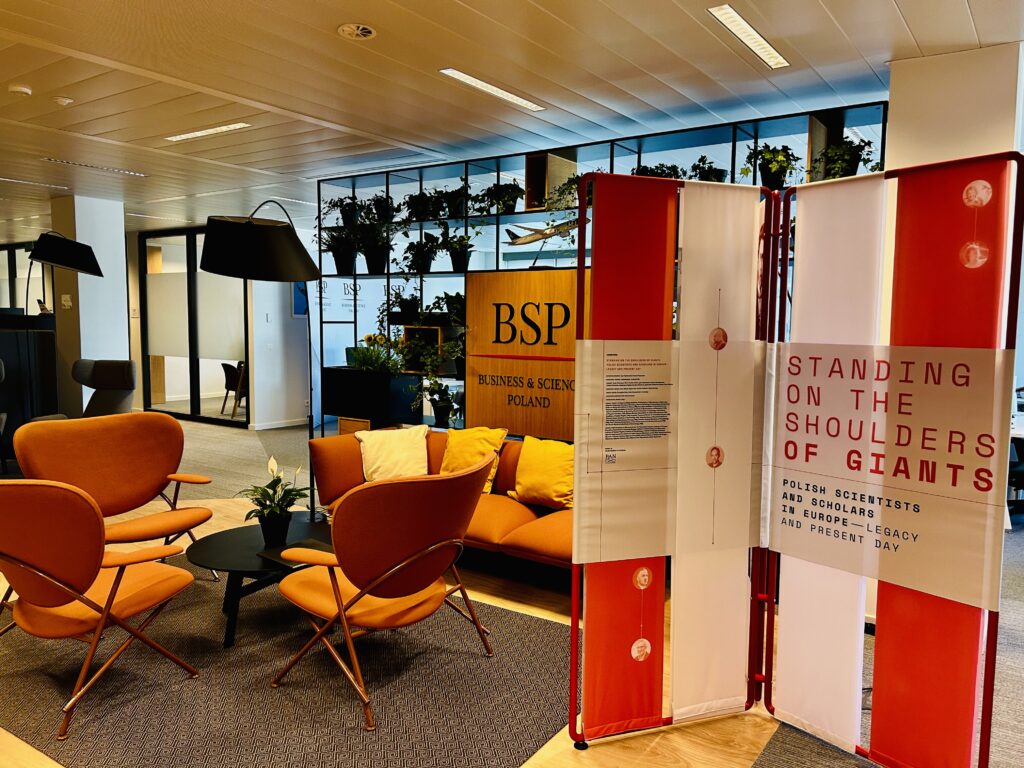
The exhibition had its premiere at the Transnational Science Cooperation: Fostering Collaborative Research in Europe and Poland conference organized by Polish National Agency for Academic Exchange – NAWA that was held on 23 and 24 June 2025. The conference brought together about 100 researchers, policy-makers and institutional leaders to discuss the evolving landscape of international science cooperation. The event was hosted at the NCBR Office Brussels where, thanks to NCBR’s exceptional hospitality, the exhibition will be presented until mid-July 2025.
On 30th June 2025, at the very end of the Polish presidency, the exhibition was presented at the cocktail party that was hosted by Magdalena Kula, Polish Research Attaché at the residence of the Permanent Representation of the Republic of Poland to the European Union. The event gathered research attachés from other EU/EFTA countries that work the Council of the EU in the Working Party on Research. The representatives of General Secretariat of the Council and DG for Research and Innovation of the European Commission were guests at the reception.
While the inauguration took place in Brussels, the exhibition will begin a European tour in the second half of the year, with stops planned especially in cities hosting the PAS foreign stations — including Berlin, Kyiv, Paris, Rome, and Vienna — thus reinforcing its pan-European reach and diplomatic visibility.
ABOUT THE PROJECT
The driving force in developing the concept was Prof. Igor Kąkolewski (director of CBH PAs in Berlin) and Dr Tomasz Poprawka (director of PolSCA PAs in Brussels), while Andrzej Hoja (CBH PAS, Berlin) was responsible for coordinating the curatorial project.
However, all six the foreign stations were involved in gathering materials for the exhibition, searching the archives and contacting the researchers, they are as follows:
Berlin – Centre for Historical Research (CBH PAN)
Brussels – Polish Science Contact Agency (PolSCA)
Kyiv – PAS Representative Office
Paris – PAS Scientific Centre in Paris
Rome – PAS Scientific Centre in Rome
Vienna – PAN Scientific Centre
The whole project was carried out thanks to the cooperation of a team of researchers, curators, graphic designers and experts from scientific institutions in Poland and abroad and was financed entirely with PAS own funds via grant to CBH Berlin.
The exhibition will travel to several other European capitals later this year.


