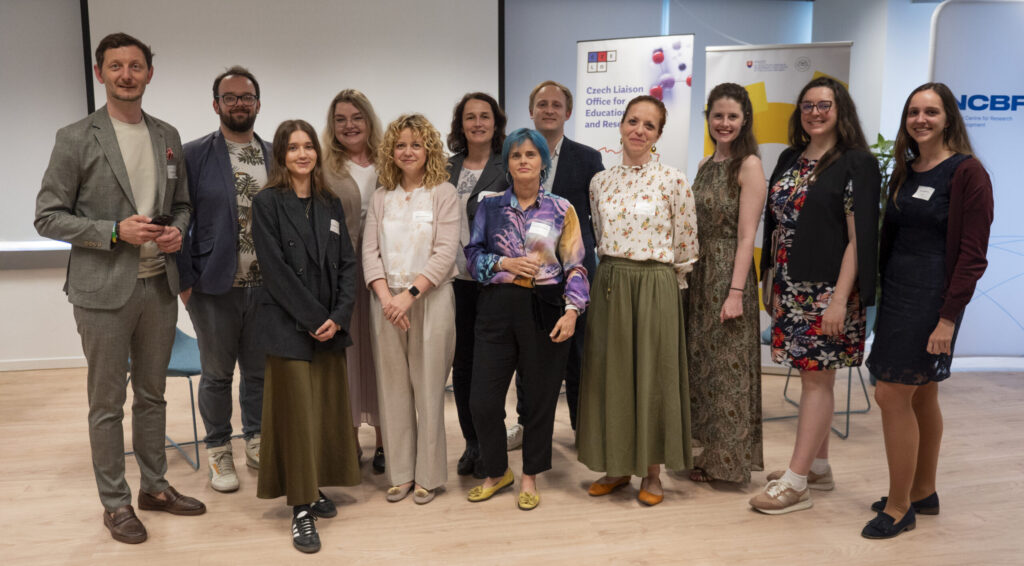
On 17 June 2025, the V4 R&I Liaison Offices in Brussels, together with the National Science Centre Poland, convened key voices from across Europe to discuss how social sciences and humanities (SSH) can shape a fair, inclusive green transition. From EU policymakers to V4-region researchers, participants explored how Horizon Europe partnerships and evidence-based policymaking can ensure that no one is left behind in Europe’s climate transformation. Dive into the full event summary and find out how the upcoming European Partnership on Social Transformations and Resilience plans to bridge innovation and social impact.
The 2025 edition of the annual V4 R&I Liaison Offices conference, titled “Towards a Fair Green Transition: Harnessing Research & Innovation for Social Impact”, explored the role of Social Sciences and Humanities (SSH) in guiding Europe’s green transition. The event reflected the ambitions of the upcoming candidate European Partnership for Social Transformations and Resilience (STR) and brought together EU officials, national policymakers, SSH researchers, and science diplomacy representatives from Central and Eastern Europe and beyond.
The conference offered an inclusive platform to debate how SSH-driven research and innovation can support the just, inclusive, and resilient transformation Europe needs in the face of climate change and societal disruption.

Session I: Framing the Green Future – Just Transition Starts with SSH
This opening session focused on the value of embedding SSH in European R&I frameworks to ensure that the green transition is socially inclusive and equitable.
Speakers: – Astrid Ladefoged (European Commission, DG R&I) – Jeanne Lenders (European Commission, DG Employment) – Clément Evroux (European Parliamentary Research Service) – Gabi Lombardo (European Alliance for SSH – EASSH)
Moderator: Maria Andrzejewska (UNEP/GRID, Warsaw)
Key Points:
Europe is accelerating its green transformation, yet it is increasingly evident that technological innovation alone is insufficient. The green transition constitutes a profoundly social process. At stake is not only the restructuring of energy systems and economies, but equally the transformation of societies in ways that are fair, inclusive, and democratic. Astrid Ladefoged cited the data that less than 50% of the EU citizens believe the society is fair, thus there is huge need for addressing this issue. Also, as pointed out by Jeanne Lenders, we have to think more broadly about the changes in the job market with the advent of green transition, as the so-called green jobs are not only the ones linked with transportation and energy production. On the other hand, the EU must not forget its need for innovation, that could be driven in a larger scale by innovation financed by the private sector – as mentioned by Clement Evroux. Yet, the main focus of the panel remained the critical role of the Social Sciences and Humanities (SSH) – disciplines that provide insights into human behaviour, culture, institutions, and social systems – in advancing a just and sustainable transition. SSH are indispensable for shaping inclusive, participatory, and resilient policy frameworks, particularly in light of the existing disconnect between political ambition and public perception. In light of this, it is essential that the upcoming Framework Programme (FP10) explicitly integrates Social Sciences and Humanities (SSH) as a core component, ensuring these disciplines have a substantial and strategic role in shaping policies that foster a fair, inclusive, and socially grounded green transition.
Finally, the panelists also mentioned the forthcoming European Partnership on Social Transformations and Resilience (STR), to be launched under the Horizon Europe Strategic Plan 2025–2027, which aims to address these challenges and offer actionable solutions.
Further reading:
EASSH report on: R&I for Fair Green Transition
More on EASSH reports: here
Report of European Environmental Agency (EEA) on Social fairness in preparing for climate change: how just resilience can benefit communities across Europe
EEA’s briefings titled: Delivering justice in sustainability transitionsand Towards ‘just resilience’: leaving no one behind when adapting to climate change
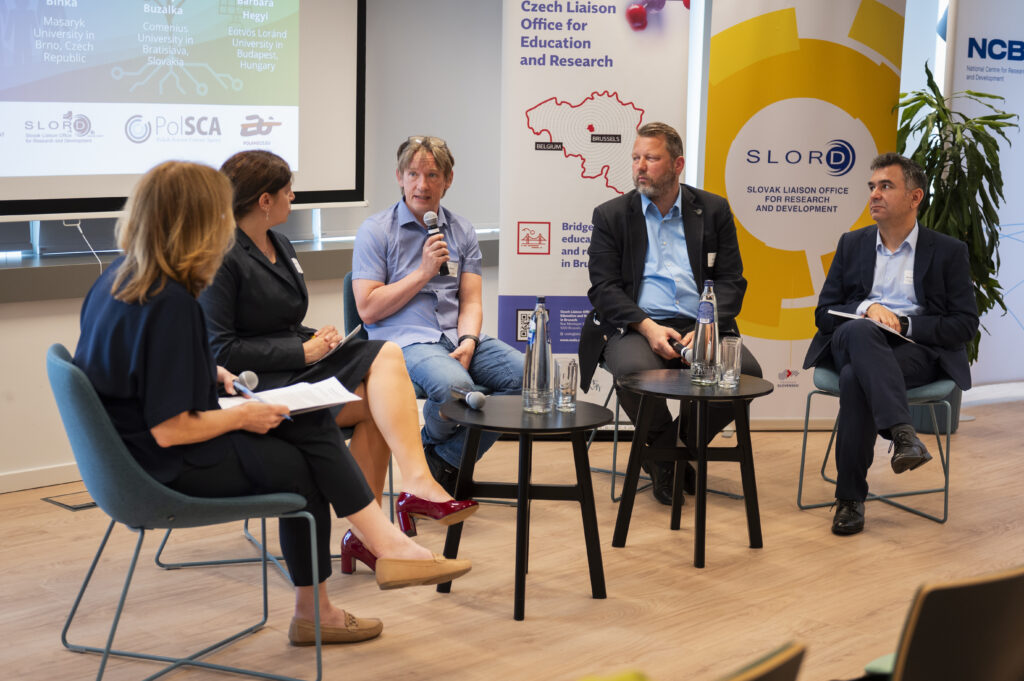
Session II: Understanding the Complexity of the Green Transition – Empowering the Change
Researchers from V4 countries provided empirical insights into public attitudes toward climate change and the social dimensions of transformation.
Presenters: – Dr. Michał Kotnarowski (Institute of Philosophy and Sociology, Polish Academy of Sciences) – Prof. Bohuslav Binka (Masaryk University, Czech Republic) – Prof. Júraj Buzalka (Comenius University, Slovakia) – Dr. Barbara Hegyi (Eötvös Loránd University, Hungary)
Moderator: Maria Andrzejewska (UNEP/GRID, Warsaw)
Key Points: All the presenters addressed the ways in which SSH can study society’s attitudes towards green transition, for example, shedding light on its impact in rural areas Juraj Buzalka) or on efforts to truly incorporate sustainability education of future entrepreneurs (Barbara Hegyi). It was brought up by Michał Kotnarowski that public support for climate action exists, but expectations for equitable cost-sharing are strong. What is also an important aspect of climate actions are human values and emotions that come into play and how attitudes towards green issues change within societies (Bohuslav Binka).
The discussion that followed the presentations emphasized that the EU narratives must be tailored to resonate with citizens’ values such as security and identity, as their resistance to change often stems from social marginalisation and a lack of inclusive messaging.
Presentations:
Michał Kotnarowski – Institute of Philosophy and Sociology of the Polish Academy of Sciences in Warsaw, Poland
Bohuslav Binka – Masaryk University in Brno, Czech Republic
Juraj Buzalka – Comenius University in Bratislava, Slovakia
Barbara Hegyi – Eötvös Loránd University in Budapest, Hungary
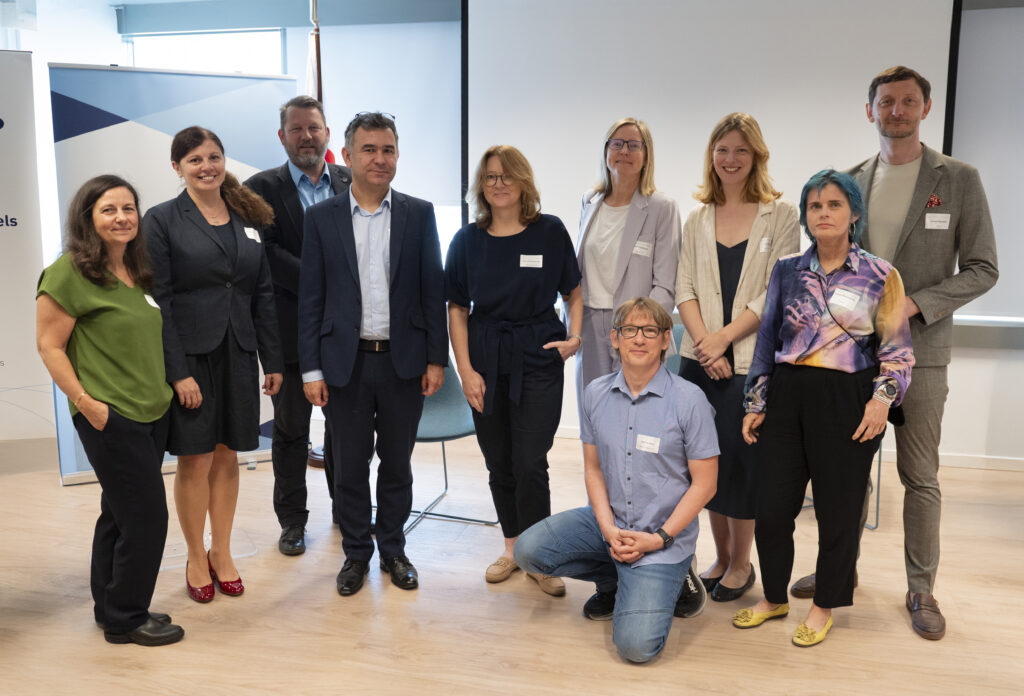
Session III: Aligning Strategies – Translating EU Policies into National Actions through HE Partnerships
This panel addressed how Horizon Europe Partnerships can help align national and EU strategies, with a focus on inclusive governance and strategic coordination in CEE countries.
Opening Speech: Barbara Świątkowska (National Science Centre, Social Transitions and Resilience Coordinator)
Panelists: – Táňa Hálová Perglová (Technology Agency of the Czech Republic – TACR, Czech Republic) – Borbála Schenk (National Research, Development and Innovation Office – NRDIO, Hungary) – Julia Rosend (Ministry of Education and Research, Estonia) – Jürgen Kroseberg (Federal Ministry of Research and Education, Germany)
Moderator: Maria Śmietanka (National Centre for Research and Development – NCBR, Poland)
Key Points: Barbara Świątkowska from National Science Centre in Poland presented the Social Transitions and Resilience Partnership, coordinated by NCN, as a pioneering initiative with a focus on fairness, resilience, and inclusiveness. The key areas for the STR include social protection, future of work, education and skills, and the just transition to climate neutrality. It is planned that the STR will implement six calls from 2027–2034, promoting cross-country collaboration, open science, and policy relevance.
The panel discussion on translation of the EU policies at national levels featured examples from Germany, Estonia, Hungary and Czech Republic and the respective actions aimed at the policy alignment were different, reflecting the country-specific conditions – with highly decentralized ones in Germany and relatively consolidated in Estonia and Hungary. The panelists agreed that national coordination mechanisms are crucial to the success of European Partnerships. Representatives of Czech Republic and Hungary shared their experiences with attracting researchers from both countries to engage in the HE partnership projects. Thus, CEE countries can lead to creating adaptable models that streamline EU policy implementation.
Further reading:
Social Transformations and Resilience – Foresight Platform– the platform will connect stakeholders and help prepare the future STR partnership via a foresight process towards developing the Strategic Research and Innovation Agenda (SRIA) that will guide the Partnership activities.
STR partnership candidate – the website provides information on the future STR Partnership, its aims and impact areas, expected partners and also the timeline of the preparation process.
STR presentation by Barbara Świątkowska– National Science Centre, Poland
Session IV: Bridging Science, Policy, and Practice – Participatory Dialogue
Hosted by the European Commission’s Joint Research Centre (JRC), this session included a presentation of key takeaways from the TSI project on evidence-based policymaking and a participatory exercise on green and just transition.
Speakers: – Elias Kock (JRC-Brussels) – Ventseslav Kozarev (JRC-Ispra, Italy)
Highlights: Elias Kock presented conclusions from the recently finished Technical Support Instrument on building capacity for policy-informed policy making. Based on the JRC’s experience, it can be stated that successful evidence-informed policymaking (EIPM) requires coordinated multi-level interventions and the establishment of shared language and trust across communities.
Report on the lessons learnt from the EIPM project
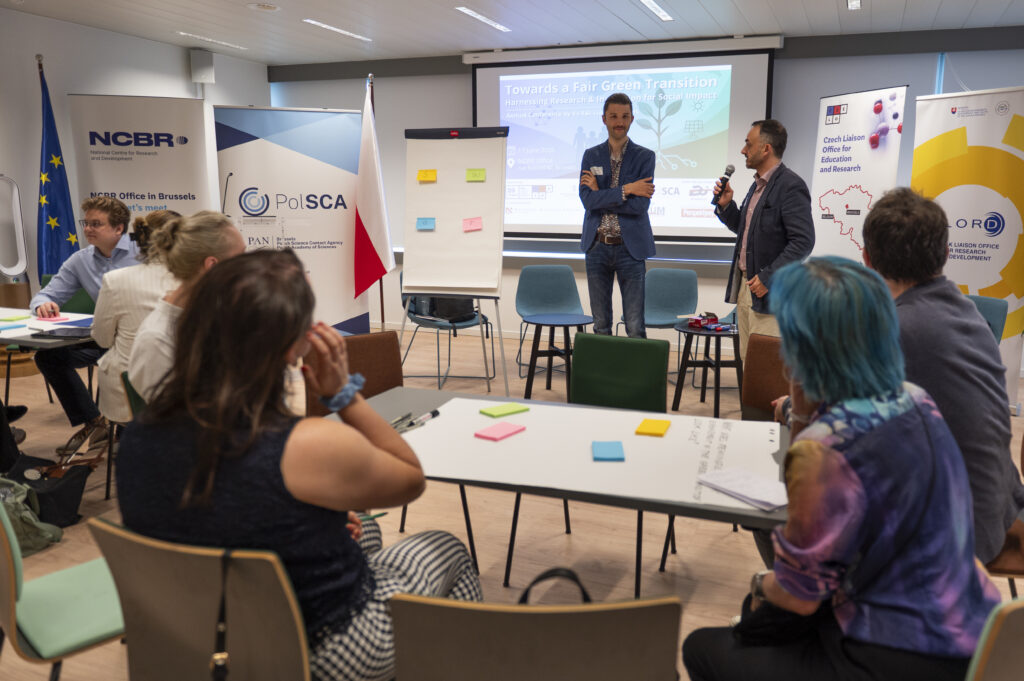
The second part of the session was held in the world-café format, where participants were divided into 4 groups, who in turn tried to share their ideas on four following questions:
How are current green transition policies fair and socially inclusive?
During the world-café session, participants assessed how fair and socially inclusive current green transition policies truly are—drawing on a SWOT-inspired lens to reflect on strengths, weaknesses, opportunities, and threats.
Among the strengths, they pointed to existing tools such as the Just Transition Fund, Social Climate Fund, and various incentives that aim to support vulnerable groups and regions. Efforts like education, living labs, and participatory workshops were seen as useful enablers of behavioural change.
However, several weaknesses were noted. Key among them was the lack of a clear, shared definition of what “fair” and “inclusive” mean in practice. Participants highlighted fragmented implementation between EU and national levels, vague or overly broad incentives, and a communication gap that leaves many citizens disconnected from transition goals.
At the same time, opportunities emerged. There was a strong call to embed social sciences and humanities more firmly in policymaking, tailor communication to public values, and foster trust through meaningful engagement. The upcoming STR Partnership was seen as a promising framework for inclusive, evidence-based approaches.
Yet, threats remain: social disparities, marginalization, and policy fatigue risk undermining trust. Participants stressed that inclusiveness must be more than rhetoric—it must shape both process and practice.
How can social sciences and humanities contribute to addressing barriers in the green transition?
Strengths of Social Sciences and Humanities (SSH) in addressing green transition barriers lie in their ability to provide interdisciplinary insights and multiple perspectives on complex societal issues. SSH contributes by explaining how society works, identifying behavioural patterns, and offering systemic approaches to complex challenges. These fields can also drive innovation, especially in digital contexts, and are essential in bringing evidence-based facts to policymakers to shape more inclusive and socially attuned green policies.
However, weaknesses hinder SSH’s full potential. They are often seen as not important in Widening and LS (Life Sciences) projects and are involved too late in technological developments. There is also a lack of tangible results often perceived in SSH outputs, and research assessments frequently exclude or undervalue SSH metrics. Additionally, societal disconnect from nature, partly due to urbanisation, weakens the contextual grounding of SSH contributions in environmental discourse.
There are rich opportunities to leverage SSH more effectively. Applied SSH research can help people understand and accept changes, foster new behaviours, and educate adults and citizens, strengthening societal cohesion. By engaging in dialogue with communities and developing accessible tools, SSH can support people in navigating and embracing the complexities of the green transition.
Still, threats remain prominent. Reduced funding and lack of respect for SSH disciplines jeopardise their integration. Populism, green disinformation, and widespread distrust in science undermine SSH credibility. Moreover, political cycles often prioritise short-term results, impeding long-term SSH-informed strategies. These risks can marginalise SSH’s role in crafting socially just and democratic pathways toward sustainability.
How has research and innovation led to social change in the green transition?
Strengths of research and innovation (R&I) in driving social change in the green transition lie in their ability to build trust through well-communicated results, shape policy, and make sustainable practices like green transport more accessible. R&I also supports affordability, which is essential for inclusion. Through tailored tools used across communities, innovation can adapt to local needs, while reinforcing education and shaping interdisciplinary feedback loops between science, policy, and society.
Despite this, weaknesses persist, most notably the lack of communication between researchers, policymakers, and the public. In many cases, R&I is still highly dependent on policy and funding structures, limiting its flexibility and responsiveness. This dependence can stifle innovation and hinder rapid adaptation to evolving societal needs, slowing the pace of change.
There are several opportunities to enhance the role of R&I in social transformation. These include promoting science communication, fostering education, and encouraging lifestyle shifts among citizens. Tools that connect actors at various levels—policy, practice, and research—can help bridge knowledge gaps and drive behavioural change. R&I also has the potential to positively influence the economy by supporting new green industries and innovations that benefit both society and the planet.
However, key threats remain. Social and political polarisation, populism, and regional disparities between countries can block or distort the uptake of science-based solutions. When R&I becomes politicised, or when its benefits are unevenly distributed, it risks being perceived as elitist or irrelevant, which can erode public trust and stall progress in the green transition.
What does meaningful citizen engagement in the green transition look like?
Strengths of meaningful citizen engagement in the green transition include a knowledge-based approach, which empowers individuals through informed participation. When citizens understand the issues at stake—such as climate change, energy transition, or circular economy—they are more likely to contribute effectively and advocate responsibly. This builds societal capacity for sustainable action and helps anchor long-term environmental change in community values.
However, weaknesses persist. Engagement is often a time-consuming process, requiring repeated interactions, learning curves, and institutional coordination. This can lead to consultation fatigue, especially when citizens feel their input doesn’t lead to visible change. Overextended or poorly structured engagement processes risk eroding trust and diminishing willingness to participate in the future.
There are significant opportunities to make engagement more meaningful. Emphasizing that even small actions matter can motivate people who feel powerless. Expanding tools for continuous engagement—such as digital platforms or participatory methods—can foster long-term involvement. Education initiatives and cultural shifts toward active citizenship also play a vital role, as does demonstrating direct local benefits like improved quality of life or energy savings.
Nonetheless, threats to effective engagement include the complexity of green technologies, which can be difficult to grasp and thus alienating. A lack of stable rules or policy inconsistency undermines confidence. Additionally, radical narratives may intimidate or exclude less vocal participants, while disinformation can mislead citizens and reduce support for green policies.
Conclusions & Recommendations
SSH research should stand alongside technological innovation in transition frameworks and green narratives must go beyond the focus on technological innovations but also citizen-focused and value-oriented. European Partnerships within Horizon Europe serve as entry point for many researchers and help build long-term, cross-border research cooperation. The new Social Transitions and Resilience partnership will engage SSH researchers to build resilience, ensure fairness and inclusiveness and foster social cohesion in the light of climate, environmental, technological and demographical changes.