Happy Easter
We wish you peace, love and happiness.
Have a pleasant time with your families and a joyful Easter!
PolSCA team
The next issue of PolSCA newsletter
We kindly invite you to read the latest issue of newsletter of the Polish Science Contact Agency in Brussels (PolSCA)!
In this issue we have listed the most important events in which we actively participated or which we organized in the first quarter of 2019, as well as those planned for the coming months. In addition, we have briefly summarized negotiations on the Horizon Europa programme and informed about open calls under the Horizon 2020. We wish you interesting reading!
On behalf of the Polish Science Contact Agency
director Małgorzata Molęda-Zdziech
Easter holidays – change the opening hours of PolSCA office

We would like to kindly inform you that on 19 April 2019 (Friday) the office of PolSCA, located at Rue du Trone 98, will be open until 12.00, and on 23 April (Tuesday) will be closed.
Wishing you a happy Easter!
Polish Science Contact Agency team
Who was professor Józefa Joteyko? Konieczna’s paper in quarterly ‘Nauka’ (no 1/2019)

We kindly invite you to read the article of Seweryna Konieczna ‘Professor Józef Joteyko – The distinguished Polish scientist of the 19th and 20th century’, which was published in the quarterly ‘Nauka’ (no 1/2019)!
Józefa Joteyko was the outstanding scientist in the end of the 19th and in the beginning of the 20th century. Together with Maria Skłodowska-Curie she was the most famous woman and scientist of Polish origin in Europe. She was given the right to present her lectures in the Collége de France and she was, after Adam Mickiewicz, the second Polish lecturer at this great academy. She had committed her life to scientific disciplines which included child neurology, neurophysiology, psychology and pedagogy. She had managed to develop each of them evenly with the same progress and in relation to children. Such approach was aimed at understanding the child and gathering the knowledge about its character and predisposition. These was also meant to help in determining what kind of educational and professional way the child should take. The present-day psychological and pedagogic clinics are the practical fulfilment of Józefa Joteyko’s idea and we cannot imagine the contemporary education without the support of such institutions.
(wiecej…)‘Horizon 2020 Dashboard – an online presentation of implementation data on the EU framework programme’
On April 16 2019 at 9.30 am, the meeting ‘Horizon 2020 Dashboard – on-line system for visualizing data on the EU framework programme. Discussion on the EU-13 participation’, will be held in the PolSCA Office. During the meeting, Tomasz Poprawka is going to present the basic functions and options of the Horizon 2020 Dashboard in the light of previously published data on participation in the EU framework programmes, gathered by the European Commission and the European Parliament.
The Horizon 2020 Dashboard is user-friendly but at the same time offers powerful new analytical functions that will inform programme reporting, impact analysis, feedback to policy-making as well as decisions on future priorities. All data can be viewed and analysed in aggregated form. In addition, the new tool also offers detailed views on individual calls, topics, countries, organisation types etc. down to the level of individual projects and beneficiaries.
The registration link for the meeting can be found here.
Horizon 2020 INFO DAY – Bio-Based Industries
The BBI JU Info Day 2019 will take place on 12 April 2019 in Brussels.
The aim of the event is to bring together potential participants interested in the BBI JU 2019 Call for proposals.
The morning sessions will provide information about the BBI JU initiative and all aspects of the Call process. Details of the 2019 Call topics as well as more information on the event are available on the BBI JU website.
The afternoon will provide an opportunity for participants to hold face-to-face meetings that can be scheduled as of 8th of March using the professional/corporate profile in the BBI JU Partnering Platform.
Throughout the day, participants will have the opportunity to speak to representatives from BBI JU’s founding partners and Member States as well as exchange views with entities in synergy with BBI JU. The BBI JU’s Programme Office staff will also be available to answer questions about the Call process and procedure.
Conference ‘Capitalism, personality and culture’
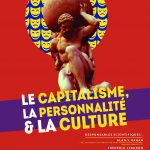
On April 11-13, 2019 a conference ‘Capitalism, personality and culture’ will be held in Paris. One of the co-organisers is the Scientific Station of the Polish Academy of Sciences in Paris.
The aim of this conference is to present, in a multidisciplinary way, various relations between capitalism, personality and culture, and confront different contemporary perspectives, concerning this topic. The effects of trade and industry have been the subject of philosophers, playwrights and commentators’ reflection since ancient times. This reflection has increased with the development of commercial and capitalist enterprises in Europe since the 18th century. Theatre, novels and the development of new political and social theories were the source of enlightenment in the same way as philosophy. In the twentieth century, cinema and television often discussed these issues, which continue to be of interest to both public and academic environment.
During this conference director of the Polish Science Contact Agency, dr hab. Małgorzata Molęda-Zdziech will present a paper Which capitalism? – some scenarios of capitalism in postmodern sociological approaches (Z.Bauman, A.Giddens, R. Sennett), while dr Justyna Kramarczyk, specialist in PolSCA, will give a speech entitled Winners or losers? Capitalist transformation, time and personality – a Polish perspective.
The initial program and other information about the conference can be found here.
Conference “3rd Interdisciplinary FNP Conference”
On 11 and 12 April 2019, the 3 Interdisciplinary FNP Conference will take place in Warsaw.
The conference is addressed to the project leaders, as well as team members in projects selected in the open competitions managed by the Foundation for Polish Science (FNP), which received funding under the Smart Growth Operational Program. As part of the conference, which will be held entirely in English, two thematic scientific sessions and two sessions of the laureates’ projects presentation will be organized along with discussions at the posters in the intervals. There will also be discussions in smaller thematic groups, e.g. international cooperation, open science, training and mentoring for young generations of scientists. The Foundation’s current activities will also be discussed.
On the part of the PolSCA Offcie, dr Tomasz Poprawka will take part in the conference, who will give a lecture entitled “What is on the Horizon after Horizon 2020?”
More information about the conference, its agenda and participants’ bios can be found on the event website.
The Future of Gender Equality in European Research and Innovation
On 9th April, 2019 the Horizon 2020 GENDERACTION project is organising the conference The Future of Gender Equality in European Research and Innovation. The aim of event is to set the stage for the future of gender equality in Europe. In 2019 Europe celebrates 20 years of activities for gender equality in research and in 2020 ERA priorities of which gender equality and gender mainstreaming is one, will be reviewed. Given the recent backsliding of and backlash against gender research and gender equality in some European countries, it is of vital important to reinvigorate our joint efforts to promote gender equality in European research.
Research funders, structural change and innovation including open innovation will continue to play a major role in European research. The event will bring together policy makers and gender experts, practitioners and scholars to address their future concerns and needs for the future of gender equality in European research and innovation. The closing panel Gendering the future of R&I will discuss the vision for gender equality research and innovation and what is at stake.
A preliminary agenda, registration link and other detailed information can be found here.
Strategic planning in Horizon Europe

On Tuesday, 2nd April 2019an IGLO Open meeting took place – hosted by the Jakob Madsen from the DANRO Office. Theme of the event was “Strategic Planning and the Co-Creation Process in Horizon Europe” and it was delivered by Kurt Vandenberghe – director in Directorate A – Policy development & coordination of DG RTD, who presented the Commission’s plans for the new and imminently upcoming Strategic Planning, and in particular which opportunities there will be for co-creation process of the Horizon Europe framework programme.
(wiecej…)Next Page »« Previous Page


