Event :: How to shape a future EU research and innovation mission on cancer?
On 4 April 2019, the EuroTech Universities Alliance is organising an evening event to discuss a potential future EU research and innovation mission on cancer. In preparation for the potential mission, the EuroTech Universities Alliance has invited a diverse group of leading experts in cancer and health technologies across its member universities to develop some key recommendations. The members of the EuroTech cancer mission think-tank are:
- Douglas Hanahan, Professor and Director of the Swiss Institute for Experimental Cancer Research, EPFL (Chair)
- Sine Reker Hadrup, Professor at Department of Health Technology, DTU
- Alexis Gautreau, Chair of the Biology Department, L’X
- Yuval Shaked, Professor at Faculty of Medicine, Technion and Technion-Israel Integrated Cancer Center
- Jurjen Tel, Assistant Professor in Immuno-engineering, TU/e
- Wolfgang Weber, Professor and Director of the Clinic for Nuclear Medicine, University Hospital Rechts der Isar, TUM.
The recommendations will be presented at the event by Douglas Hanahan, Professor and Director of the Swiss Institute for Experimental Cancer Research, EPFL and Chair of the EuroTech cancer mission think-tank. Prof. Hanahan’s intervention will be followed by specific feedback from key stakeholders in the form of a panel debate and a broader discussion with the audience. The panel will include Isabelle Manneh-Vangramberen, Head of Health and Research Programmes, European Cancer Patient Coalition, and Barbara Kerstiens, Head of Unit for Non Communicable Diseases and the Challenge of Healthy Ageing , DG Research and Innovation at the European Commission.
This is an ‘invitation-only’ event. Should you be interested in attending, please send an e-mail to events@eurotech-universities.eu
In case of questions, please contact Alex van Nieuwland, TU/e Liaison Officer, EuroTech Universities Alliance.
Context:
The EuroTech Universities have a strong track record in research and innovation, receiving EUR 667 million in Horizon 2020 funding and 224 ERC grants between them. Health and bio-engineering represents an important focus area of EuroTech research collaboration for many years. Since the opening of our joint Brussels office in 2012, we have organized regular debates on areas of high relevance to Europe’s leadership in technology.
Invitation to the Horizon2020 Info Day

The National Contact Point for Research Programs of the European Union and the Ministry of Science and Higher Education invite you to the Horizon2020 Info Day, which will take place on 4 April 2019 at the Centre for Innovation and Technology Transfer Management of Warsaw University of Technology (CZIiTT PW), ul. Rektorska 4, Warsaw.
The meeting will be an opportunity to get acquainted with selected examples of Polish projects implemented under the Horizon2020 program and the possibilities of applying for funds within 2019-2020 Work Programmes competitions. As part of the event, it will be possible to take part in short, parallel thematic sessions conducted by NCP experts on selected activities in the Horizon2020 program and detailed rules for applying in open competitions. As part of the session, presentations of instruments such as the prestigious ERC or pilot EIC will take place, more about which development can be read HERE or activities within the framework of “Sharing excellence and widening participation” (SEWP) and many others.
The event is addressed to individuals and entities interested in applying to the framework programs, but above all to new participants who would like to get interested in EU grants and encourage participation in the Horizon2020 program.
The PolSCA office supports the efforts of researchers working in Poland and national scientific units in applying for funds from the Horizon2020 framework program as a natural element of the research and innovation support ecosystem, complementary to national and regional sources. It is worth emphasizing, however, that in accordance with the new rules regarding the evaluation of scientific units, participation in H2020 projects will be doubly rewarded, and in the case of ERC grants, quadruple.
Individuals and teams having an idea for the project and preparing applications are also invited to individual consultations with our experts. Registration for individual consultations is carried out with the help of an additional application form available from mid-March.
Admission to the event is free, but registration is required! We invite you to participate!
Event :: European AI strategies

European AI Strategies: Where Do Member States Stand, and Where are They Headed?
To remain competitive in the global race for artificial intelligence (AI), the European Union will need more investment, more workers trained in AI-relevant skills, more shared resources including data, and a regulatory environment that will foster the development and use of AI. To that end, in December the European Commission released a “Coordinated Plan on AI” which encourages all member states to develop their own national AI strategies by mid-2019 and to work with the Commission to develop common metrics to measure AI adoption.
While some member states have already created national AI strategies, others have not or have only included dimensions of AI within broader digital strategies. Moreover, every member state is different, so the policies, priorities, and financial commitments in each national AI strategy will vary.
Join the Center for Data Innovation for a discussion that will take stock of the progress achieved so far across member states; compare targets, priorities, and dimensions; and assess the extent to which these national strategies will support Europe’s goal of becoming a global leader in AI.
Speakers confirmed:
- Eline Chivot, Senior Policy Analyst, Center for Data Innovation
- Irina Orssich, Policy Officer at DG CONNECT, European Commission
- Janne Peltola, Counselor for Competitiveness (Industry and Internal Market), Permanent Representation of Finland to the EU
- Pascal Rogard, Digital, Telecom and Postal Service Counselor, Permanent Representation of France to the EU
- Virginijus Sinkevičius, Lithuania’s Minister of Economy and Innovation
- Claudine Vliegen, Attaché for Telecom and Digital Affairs, Permanent Representation of the Netherlands to the EU
Follow @DataInnovation and join the discussion on Twitter with the hashtag #datainnovation.
The Center for Data Innovation is a non-profit, non-partisan think tank working at the intersection of data and public policy. It conducts high-quality, independent research and educational activities on the impact of the increased use of information on the economy and society. In addition, the Center for Data Innovation formulates and promotes pragmatic public policies designed to enable data-driven innovation in the public and private sector, create new economic opportunities, and improve quality of life.
Forum Future Europe – Berlin 2019

At the end of February, the representatives of national academies of sciences and arts, leading universities and research organisations, as well as scientists from the EU13 member states, have gathered in Berlin at the invitation of the German National Academy of Sciences Leopoldina and the Leibniz Association to discuss our contribution to the future of Europe. Since then, a joint communique has been published, followed by a series of press releases and commentaries, including one featured at Science Business.
All participant of the “Forum Future Europe” agreed that that decisions on the future of the EU must be evidence-based, and the research community should and will provide and better communicate scientific advice for such decisions.
(wiecej…)‘V4 Training’ spring edition 2019
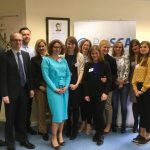
Recently, the spring edition of “V4 Training” has been concluded – training for managers of European research projects organized by the Polish Science Contact Agency, Slovak Liaison Office for Research and Development (SLORD), Czech Liaison Office for R&D (CZELO) and Permanent Representation of Hungary to the EU.
The training took place on 27-29 March, and its participants were employees of universities and research institutes not only from the Visegrad Group countries, but also from Slovenia, Romania, Lithuania and Cyprus. This year, we received over 40 applications from Poland, out of which we selected 7 Polish participants of the “V4 Training”.
(wiecej…)The meeting of vice presidents of the Europa Association
On March 29, 2019, the meeting of vice presidents of the Europa Association will be held in Limoges, France. The meeting will be attended by the head of the Polish Science Contact Agency Małgorzata Molęda-Zdziech, acting as one of the vice presidents of the association. Among the matters to be discussed are: the main theme of next Colloque EUROPA conference in 2019, list of topics of the European seminar, work on the next issue of Reveu Europeene de l’Action Publique or consolidation and institutionalization of the EUROPA network.
The list of the meeting participants could be find here.
V4 Training
On March 27-29, 2019, the spring edition of the ‘V4 Training’ will be held in Brussels. The training is organized by Polish Science Contact Agency (PolSCA), Czech Liaison Office for R&D (CZELO), Slovak Liaison Office for Research and Development (SLORD) and the Permanent Representation of Hungary to the EU.
It is addressed to employees of universities and research institutes who are managers of European projects, mainly Horizon 2020 projects. The language of the training is English, and the subject is focused both on the most important issues related to the 8th framework programme Horizon 2020, and the next one, Horizon Europe. Lectures and workshops are conducted by specialists from the European Commission and European institutions, dealing with research and innovation.
A final training agenda is available here.
Future of the blue planet: Parliament conference on oceans
On 19 March, 2019 the Parliament, together with the European Commission, will host a conference on the future of oceans, with panel discussions covering global ocean governance; sustainable blue economy; and healthy, clean seas and oceans.
The conference will start at 14.00 CET with doors opening at noon.
Registration form and conference programme on the event website.
Integration of Social Sciences and Humanities in EU framework programmes – Horizon 2020 and Horizon Europe

What are the most important research trends in the social sciences and humanities, which can be financially supported within EU funds? How to strengthen cooperation between SSH representatives and representatives of other sciences, business organizations as well as industry? What is the level of integration of social sciences and humanities in the current framework programme Horizon 2020?
Partial answers to these and other questions were provided by two events taking place in Brussels on 27-28 February 2019. The first of them Co-creating Horizon Europe. The impact of Social Sciences and Humanities on future generations was devoted to the role that social sciences and humanities should play in the next framework programme Horizon Europe, which aims to address the current social challenges affecting Europe. What is more, attendees could familiarize themselves with the results of the ACCOMPLISSH project, which can be seen as a platform connecting the academic community, representatives of European governments, industry and citizens. The second initiative Launch event for social sciences and humanities (SSH) integration report, was related to the publication of the latest report of the European Commission, monitoring the state of integration of social sciences and humanities in the current framework program Horizon 2020. One of the editors of the report is Mr. Krzysztof Kania, working in Directorate-General for Research and Innovation.
(wiecej…)The European Commission publishes “She Figures 2018” report

The number of women with a career in research is slowly growing in Europe. Still, they remain significantly underrepresented, and their potential not fully recognised and valued.
Equality between women and men is a core value of the European Union, actively promoted in all aspects of life by the European Commission. What is the situation in Research and Innovation? Are women participating and contributing to it to the same extent as men? Or is the so-called ‘leaky pipeline’, the phenomenon of women dropping out of research and academic careers at a faster rate than men, still prevalent?
(wiecej…)Next Page »« Previous Page


