‘Together we can do more’ – about PolSCA activities in the “Academia” (no. 3/55) 2018
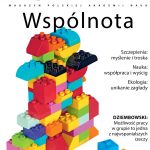
We would like to recommend the issue of the PAS magazine, entitled “Academia”, which is devoted to the subject of “Community”!
In this issue, prof. Małgorzata Molęda-Zdziech, director of the Polish Science Contact Agency, writes about the value of cooperation nowadays and explains how the Scientific Station in Brussels works.
(wiecej…)Horizon 2020 INFO DAY – Secure Societies

The event will take place on the 13 – 14 of March 2019 at the Hotel Metropole in Brussles.
It is organized by the Network of Secure Societies National Contact Points – SEREN4, in collaboration with the European Commission. This information day and brokerage event gives details on the 2019 calls for proposals to be published mid March 2019 under the Societal Challenge 7 “Secure Societies – Protecting freedom and security of Europe and its citizens”.
These calls offer new research funding opportunities to research institutions, universities, industries, SMEs, civil society organizations and other security stakeholders. Participation to the event is free of charge and the number of participants is limited due to the capacity of the rooms.
Main topics
- Critical Infrastructure Protection
- Disaster Resilience: Safeguarding and securing society
- Fight Against Crime and Terrorism
- Border Security and External Security
- General Matters on Security
- Digital Security
Why to participate
- Information about the calls
- Networking possibilities
- Answers to your questions linked to call areas
- Details on the legal and procedural condition
Researchers, entrepreneurs and other stakeholders are invited to present their pitch presentations addressing one of the topics from the 2019 Work Programme of Societal Challenge 7. Such matchmaking event is a quick and easy way to meet potential cooperation partners.
Vice-Presidents of the Polish Academy of Sciences in the PolSCA Office
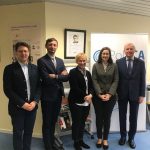
On March 5, 2019, we had the pleasure to host prof. Roman Słowiński, vice-president of the Polish Academy of Sciences and dr Anna Plater-Zyberk, director of the Foreign Affairs Office of the Polish Academy of Sciences in our office in Brussels. During the visit, the most important aspects of PolSCA activities were presented and issues related to its day-to-day operation were discussed.
(wiecej…)The Ulam Programme for foreign scientists – call for applications!
Polish National Agency for Academic Exchange has announced The Ulam Programme for foreign scientists within which they have the opportunity to complete a postdoctoral fellowship, conduct didactic classes, obtain materials for research or a scientific publication or conduct research in a Polish scientific institution. The aim of the Programme is to increase the internationalization of Polish universities and scientific institutions by gradually increasing the number of foreign researchers in Poland and establishing or deepening international contacts between Polish and foreign institutions.
(wiecej…)Next PhD in the PolSCA team!
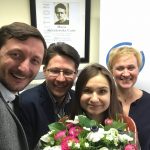
We are happy to announce that a member of the Polish Science Contact Agency team — Miss Justyna Kramarczyk – defended her PhD in sociology at the Adam Mickiewicz University in Poznan on March 1, 2019. The doctoral supervisor was prof. Krzysztof Podemski.
Her PhD dissertation “Living in your own rhythm: a sociological study of slow life in an era of social acceleration”, presenting the results of research carried out within the National Science Centre grant, was published by Universitas in 2018. A detailed description of the book can be found on the publishing house’s website.
Congratulations!
Conference :: Brain Research & Tech
Understanding and healing the human brain is one of the most exciting challenges of the 21st century. For centuries we have been attracted by the mystery of thought and consciousness, but it is only now that we have the technical and scientific foundation to advance. Is consciousness fundamental for the emergence of thought? Will Artificial Intelligence need to be conscious? And can we repair our mind once it has been damaged?
Addressing these questions requires boldness, is necessarily interdisciplinary and needs close coordination amongst scientists, clinicians, industry partners and policy makers. In Europe, we decided to accept this challenge and push the frontiers of our knowledge through efforts such as the European flagship Human Brain Project, the European Open Science Cloud, and our investments in High Performance Computing.
But how will we succeed? Aix-Marseille University – AMU, a European leader in brain health and technology, responds together with its scientific and industrial partners across the continent. The event will take place on the 6th of March 2019 at the European Committee of the Regions
More information, agenda and regiastration is available at EVENTBRITE
Withdrawal agreement or no-deal scenario? About Brexit and its potential consequences in the PolSCA Office
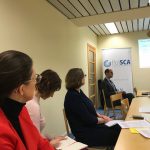
On Tuesday, February 12 at at 9.30 am in PolSCA office, the next meeting with an expert, devoted to the theme of disinformation, for representatives of Polish regional offices and Polish economic organizations in Brussels took place. This time we had the pleasure of hosting Mr. Błażej Thomas from the UK Research Organization (UKRO), who as European Advisor advises British universities and research institutions in the field of obtaining European funds within Horizon 2020, Erasmus + and COSME programs. (wiecej…)
V4 Training Spring Edition 2019 – call for applications!
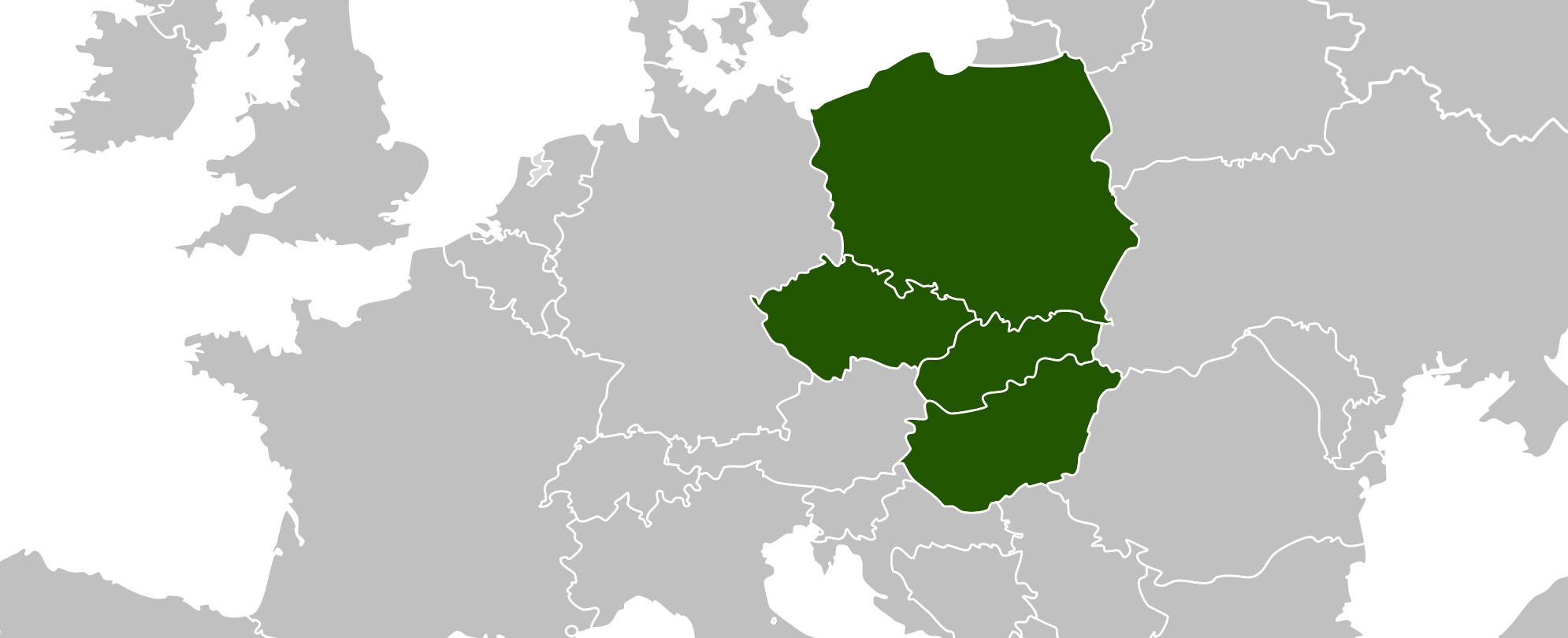
The Polish Science Contact Agency cordially invites managers of European research projects from Poland to take part in the next edition of “V4 training” organized by the V4 group!
The training will be held on 27-29 March 2019 in Brussels.
V4 Training is addressed to employees of the Polish Academy of Sciences’ institutes, universities and research institutes from Poland who are in charge of managing European projects on a daily basis, in particular, the EU Framework Programme for Research and Innovation – Horizon 2020. The training is carried out in English and it covers the most important issues related to Horizon 2020 as well as next EU proposition – Horizon Europe. Lectures and workshops are conducted by specialists from the European Commission and other European institutions in Brussels for research and innovation.
Candidates shall complete the questionnaire, which is available here, and send your CV.
The online questionnaire should be filled out via the Google application, whereas the CV in English should be sent at email address: polsca@polsca.pan.pl.
Applications will be accepted until Friday, 15 February 2019, at 12.00.
Participation in training is free of charge. Participants cover travel costs to / from Brussels and accommodation in Brussels.
The preliminary training program will be published in February on the PolSCA website.
We look forward to receiving your applications!
V4 Training spring edition 2019 – invitation
Second Call for Dioscuri Centres!
The Max Planck Society (MPG) and the National Science Centre in Poland (NCN) are running jointly call for proposals in the second edition of the international competition for the establishment of Dioscuri Centres of Scientific Excellence in Poland!
The Dioscuri program, mutually funded by the Polish Ministry of Science and Higher Education (MNiSW) and the German Federal Ministry of Education and Research (BMBF), was initiated by the Max Planck Society. Its objective is to strengthen and develop scientific excellence through the creation of Dioscuri Centres in Central and Eastern Europe by promoting outstanding researchers who want to conduct their research in this region. Within them, each call awardee has the opportunity to build his or her own research teams in the best Polish scientific institutions.
How to fight against disinformation? A series of meetings in the PolSCA Office and in the European Parliament
On December 5, 2018, the European Commission presented an Action plan against disinformation, which can be defined as a verifiable false or misleading information that is created, portrayed and disseminated in order to achieve economic benefits or misleading public opinion. This plan assumes increasing the capacity of EU institutions and Member States to reveal, analyze and disclose fake news, to find methods of responding to disinformation campaigns, and also to raise public awareness in this area. This is extremely important because this type of information effectively disrupts public debate, affects democratic processes, at the same time undermining citizens’ trust in institutions and the media.
Due to the growing problem of disinformation, the Polish Science Contact Agency in the first quarter of 2019 started a series of meetings for representatives of Polish regions devoted to this issue. (wiecej…)
Next Page »« Previous Page


