Building community, exchanging perspectives and discussing the future of European research and innovation policy – this was the spirit of the first meeting in the PolSCA Connects Brussels series. The New Year edition brought together more than 40 professionals engaged in the European R&I ecosystem, creating space for networking and discussion on the future direction of EU programmes, as well as examples of projects implemented and coordinated by Polish research institutions
On 6 February 2026, a New Year networking meeting was held at Atelier 29 in Brussels as part of the renewed PolSCA Connects Brussels series, organised by the Polish Science Contact Agency PolSCA of the Polish Academy of Sciences in Brussels. The event gathered over 40 participants involved in shaping and implementing European science policy.
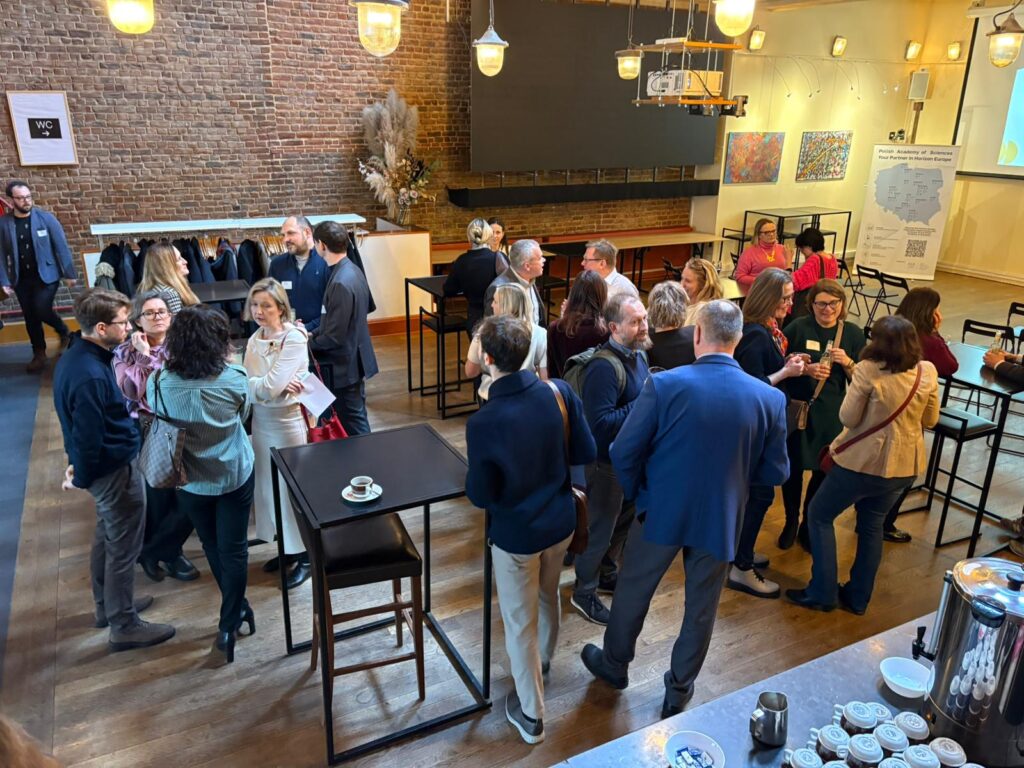
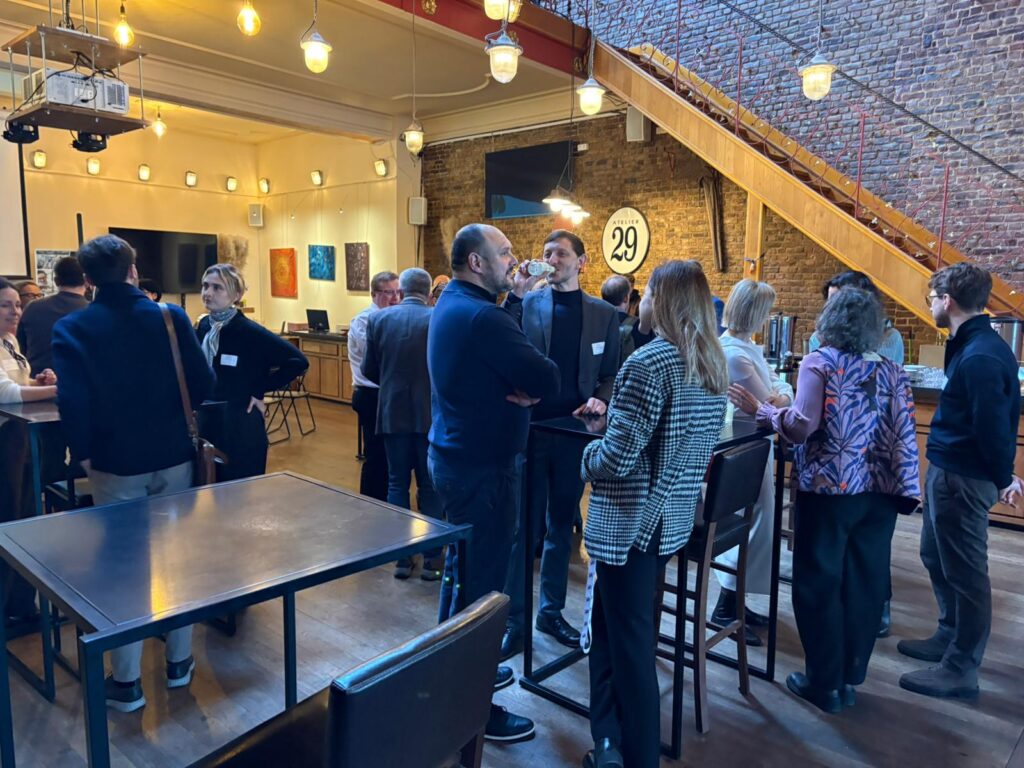
Participants represented institutions such as the European Commission, including the Directorates-General for Research and Innovation (DG RTD), Agriculture and Rural Development (DG AGRI), and Regional and Urban Policy (DG REGIO), as well as the Joint Research Centre (JRC) and the European Parliament. Attendees also included representatives of EU agencies, such as the European Research Executive Agency (REA), the European Innovation Council and SMEs Executive Agency (EISMEA) and the European Space Agency (ESA), as well as organisations active in the broader R&I landscape, including the Lisbon Council, the European University Association (EUA) and the European Regions Research and Innovation Network (ERRIN). Representatives of national and regional offices, as well as partners from the National Centre for Research and Development (NCBR) office in Brussels, were also present.
Why do we initiate PolSCA Connects Brussels?
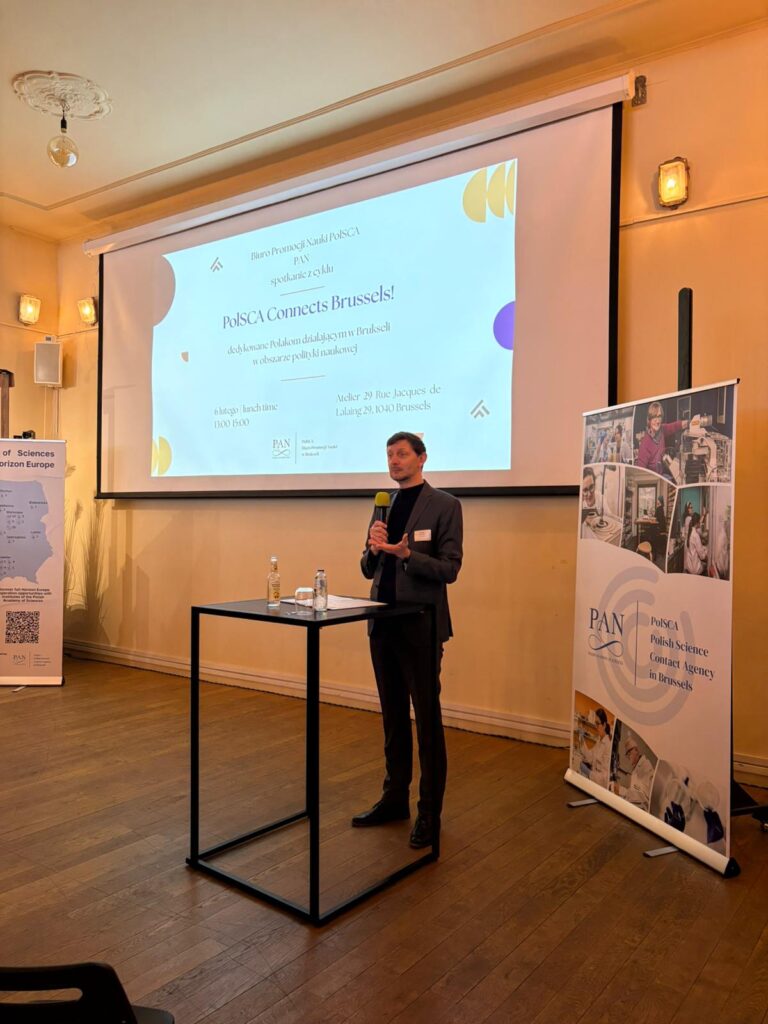
As the PolSCA PAN Office in Brussels, we see our role not only as a bridge between Poland and EU institutions, but above all as a platform bringing together people who co-create European research and innovation policy. As emphasised by Director Tomasz Poprawka in his opening remarks:
“We operate at the intersection of science and European administration. We strive to be a connector: between Poland and Brussels, between research and decision-making processes, and – what is particularly important to us – between people.”

This relational and community-oriented dimension is the foundation of the PolSCA Connects Brussels series. The Office aims to create a space for open discussion, exchange of perspectives and building long-term relationships among professionals engaged in the European R&I ecosystem, while keeping Polish national interests as a key priority.
FP10 – different perspectives, a common goal
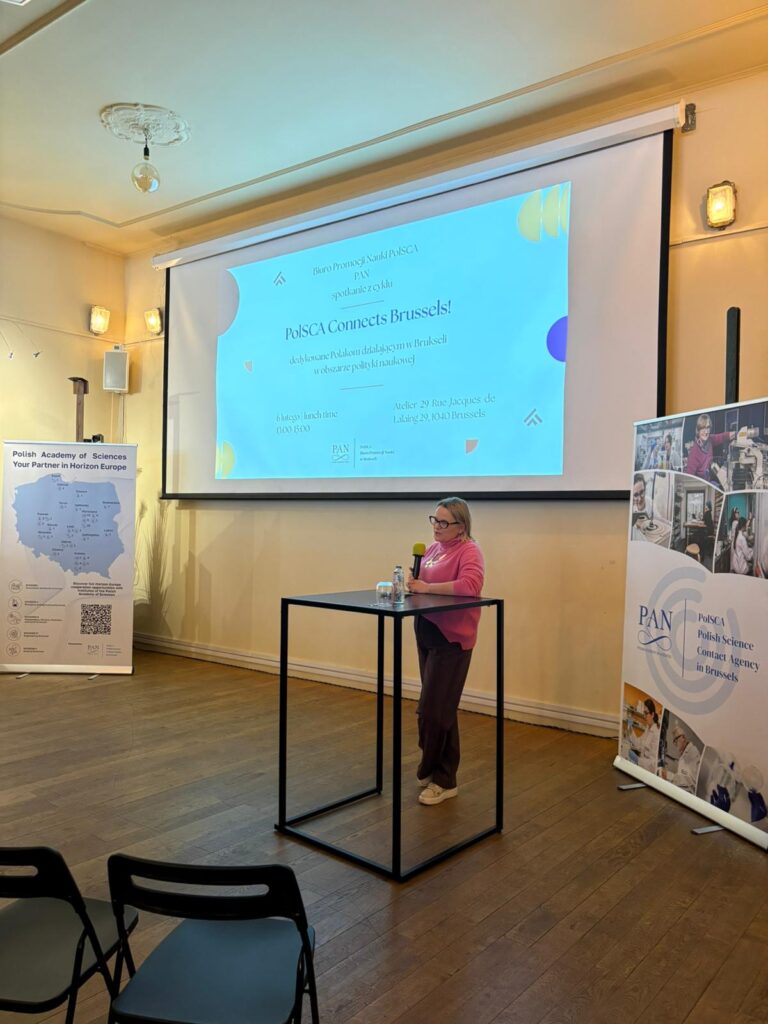
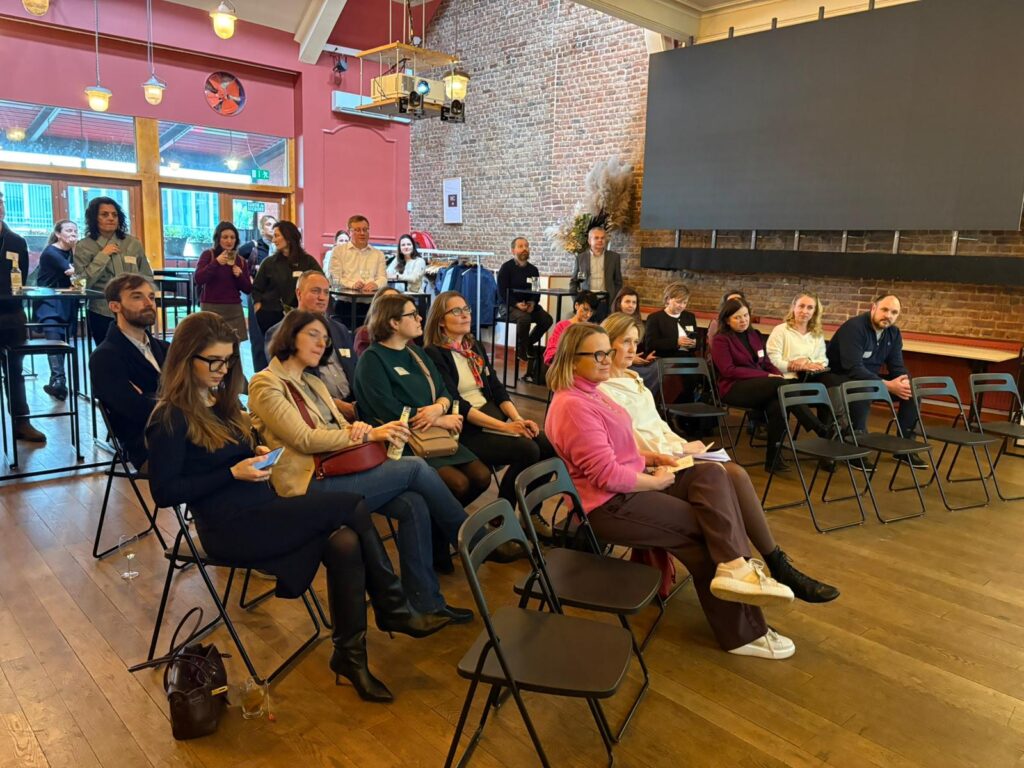
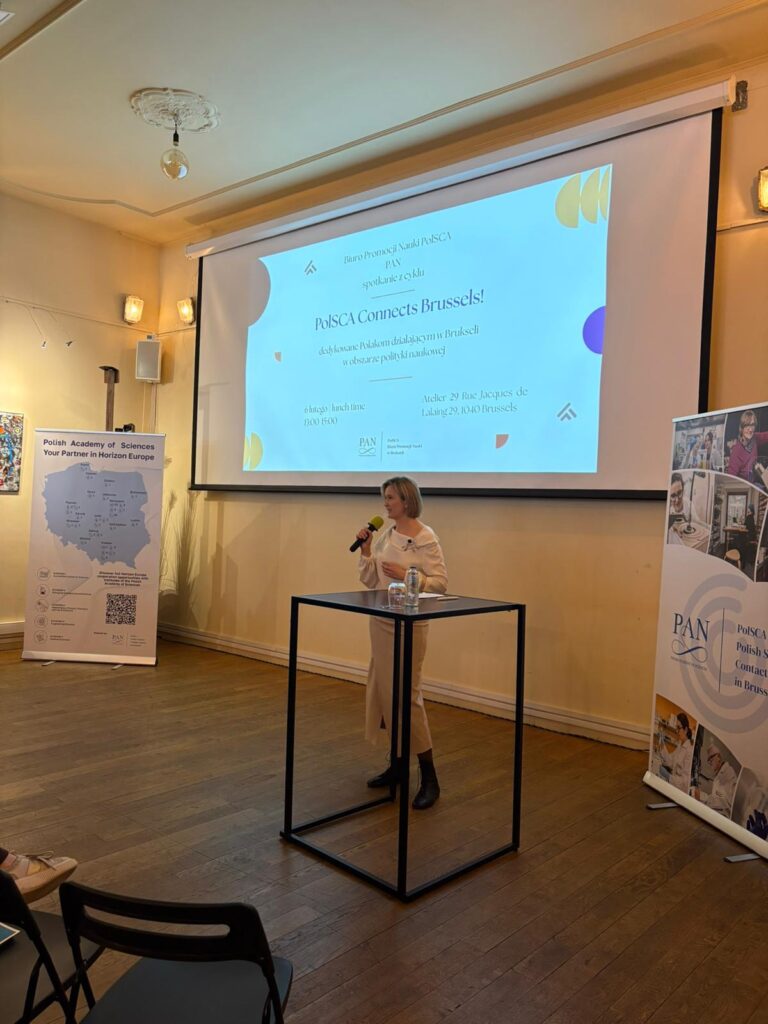
The first part of the meeting focused on the future of the 10th Framework Programme (FP10). The discussion highlighted complementary perspectives on the negotiation process – both from the European Commission (Małgorzata Misiewicz, DG RTD) and from the Permanent Representation of the Republic of Poland to the EU (Magda Kula). The exchange provided valuable insights into the dynamics of FP10 negotiations, key tensions and priorities, and the importance of early dialogue between the national and EU levels.
IMPULSE – European cultural heritage in virtual worlds
In the second part of the event, Dr Żaneta Żegleń (Jagiellonian University) presented the project IMPULSE – IMmersive digitisation: uPcycling cULtural heritage towards new reviving StratEgies, funded under Horizon Europe (HORIZON-CL2-2023-HERITAGE-01-03).
The project aims to develop ground-breaking methods and solutions for the digitisation of European cultural heritage and its innovative reuse – including in metaverse environments and Multi-User Virtual Environments (MUVEs). IMPULSE focuses on interoperability, standardisation, adaptation of legal frameworks and the development of recommendations for the cultural heritage sector in the context of the digital transition.
Coordinated by researchers from the Jagiellonian University in Kraków, the project includes the development of metaverse prototypes, UX research, storytelling approaches and the creation of a Community of Practice (IMCo), bringing together experts interested in digital cultural heritage and immersive technologies.
Dr Żegleń’s presentation is available here.
Summary
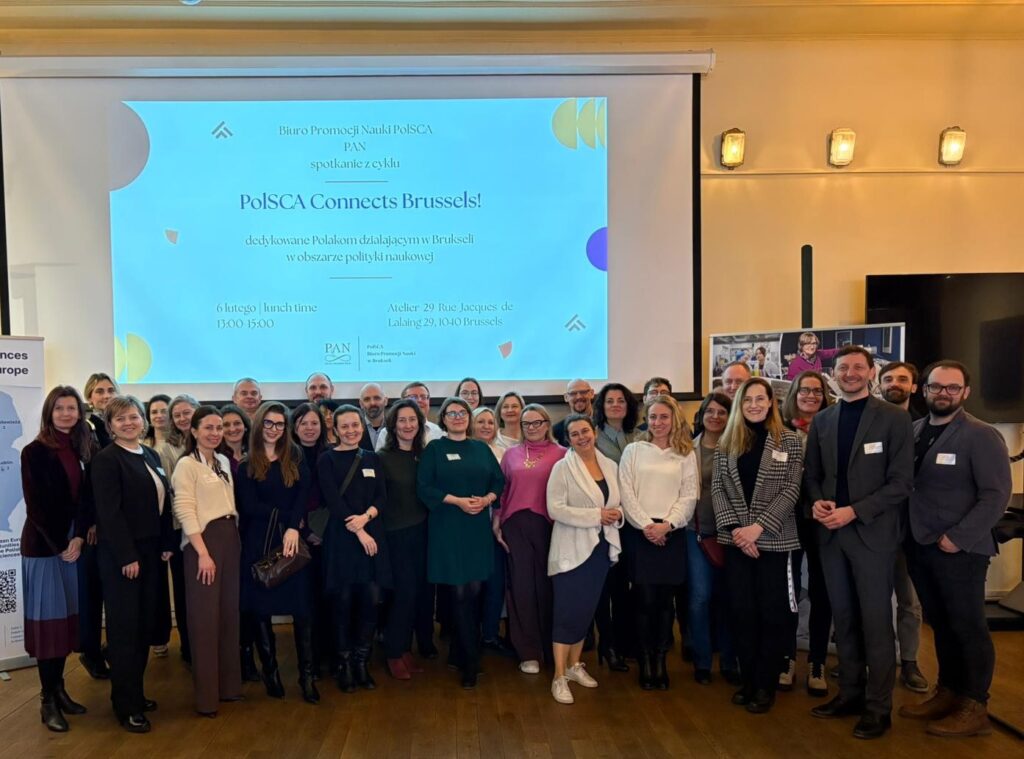
The meeting confirmed that Brussels hosts a strong, diverse and collaboration-oriented community of experts engaged in European research and innovation policy. The PolSCA Connects Brussels initiative is intended to remain a space where – without excessive formalities – participants can connect perspectives, initiate cooperation and simply discuss issues important for Poland. This is one of the ways in which the mission of the PolSCA PAN Office is put into practice.
The next meeting is planned for late spring 2026.


