First Central and Eastern European Congress for Research Managers in Brussels comes to an end.
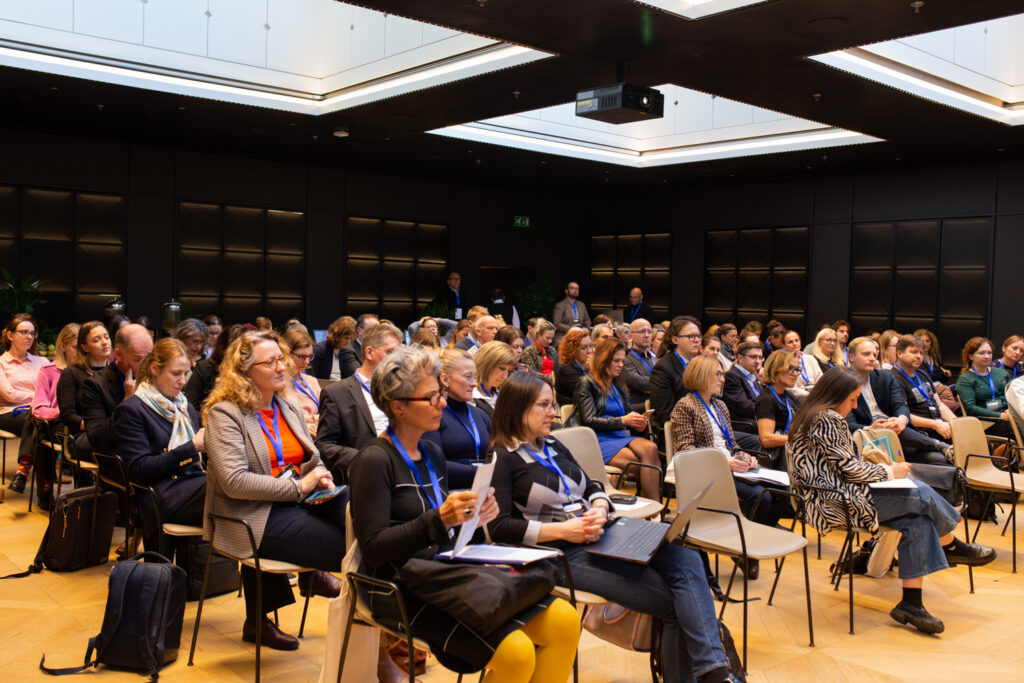
On a surprisingly warm Brussels morning, we opened the doors to something the region has been working toward for nearly ten years: a space where Central and Eastern European research managers could finally meet as equals, not just attendees. People showed up carrying real experience – small wins from finance departments and labs, hard lessons from proposals that almost worked, and a stubborn conviction that solid research ecosystems are built by the professionals who rarely get the spotlight. For two days, they had it.
The Programme
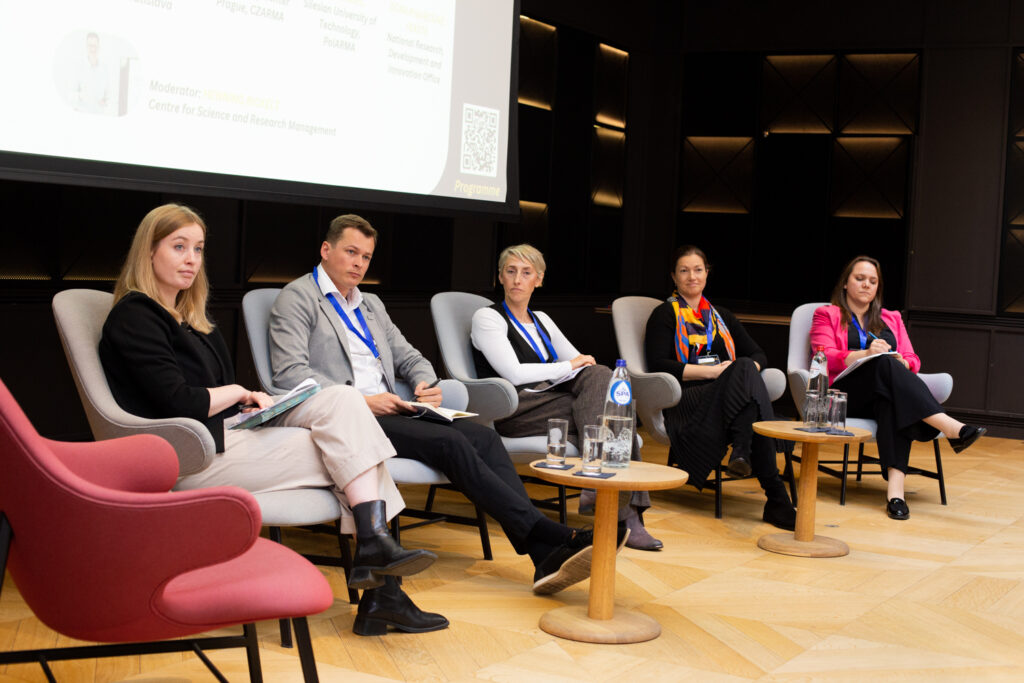
The agenda was intentionally eclectic, but we started by establishing some common ground. Virág Zsár (Hétfa Research Institute) kicked things off with a keynote on advancing research excellence in CEE through professional research management. Her point: skills, structures, and recognition aren’t nice-to-haves – they’re what makes everything else possible. Anna Seip (Spreading Excellence & Research Careers, European Commission) followed with a strategic view of building a stronger ERA, showing how policy goals translate into real tools for institutions and funders.That perspective carried into the panel Unlocking CEE’s Research Potential: The Role of Institutional Collaboration and National RMA Support. Henning Rickelt (Center for Science and Research Management) moderated a conversation that brought together people from institutions and national systems – Anna Seip (European Commission), Peter Cuninka (Slovak University of Technology), Lenka Chvojková (Technology Center Prague & CZARMA), Ewa Mendec (Silesian University of Technology & PolARMA) and Dóra Fekete Pivarcsiné (National Research, Development and Innovation Office). Pretty quickly, “professionalisation” stopped being buzzword territory and became something practical: a competence framework you can use to justify roles and salaries, a roadmap that gives ministries something concrete to fund, quality training that turns skills into actual career progression. What sounds abstract from a distance became immediately useful in the hands of people who build these support structures daily.
Thematic sessions – project lifecycle as a RMAs’ compass
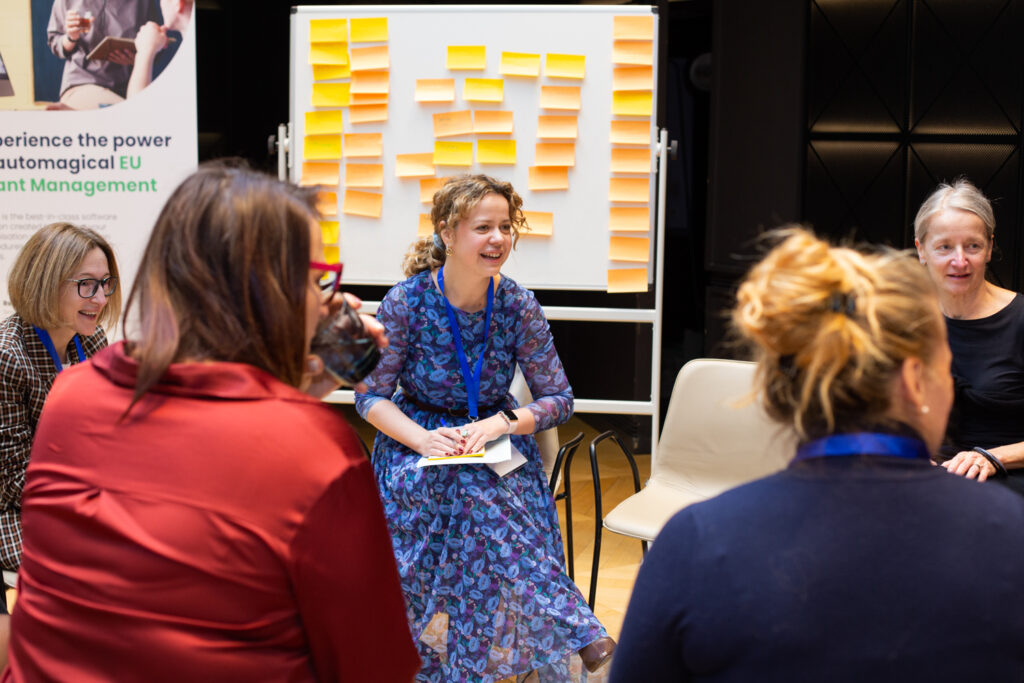
From there, we got into the human side of pre-pre award – the soft skills that decide whether a good idea ever makes it to a call. In Pre-Pre Award: Developing soft skills for successful RMAs, Dagmar Vokounová Franzeová (University of West Bohemia in Pilsen) showed how empathy, cross-disciplinary listening, and staying calm under pressure translate into real, practical techniques. Participants mapped these to their own teams and left with five-minute habits to make complicated days more manageable. Earlier, Pre-Pre Award: RMA Talent Development: Building the next generation of professional research managers in CEE, led by Jiří Sýkora (International Visegrad Fund), looked at pipelines and recognition – how mobility and regional programs help identify and keep emerging talent across the CEE ecosystem.
The mood shifted in the pre-award track, where the mechanics of competitive proposals took center stage. Pre Award: Application Scoping: From idea to proposal, with Judit Fekete (Corvinus University of Budapest), demonstrated how to turn scientific ambition into fundable, evaluable stories that match what calls are actually looking for. In Pre Award: Budgeting & financial planning for research proposals, Joanna Bosiacka-Kniat (Poznań Science and Technology Park; Horizontal Contact Point, Western Poland) reframed budgeting as strategy: if a budget tells the story of what a project will do, then cost lines aren’t just about compliance – they’re about making a case. Across both sessions, RMAs swapped institutional rules of thumb, walked through evaluation rubrics, and tested narratives against the numbers that need to support them.
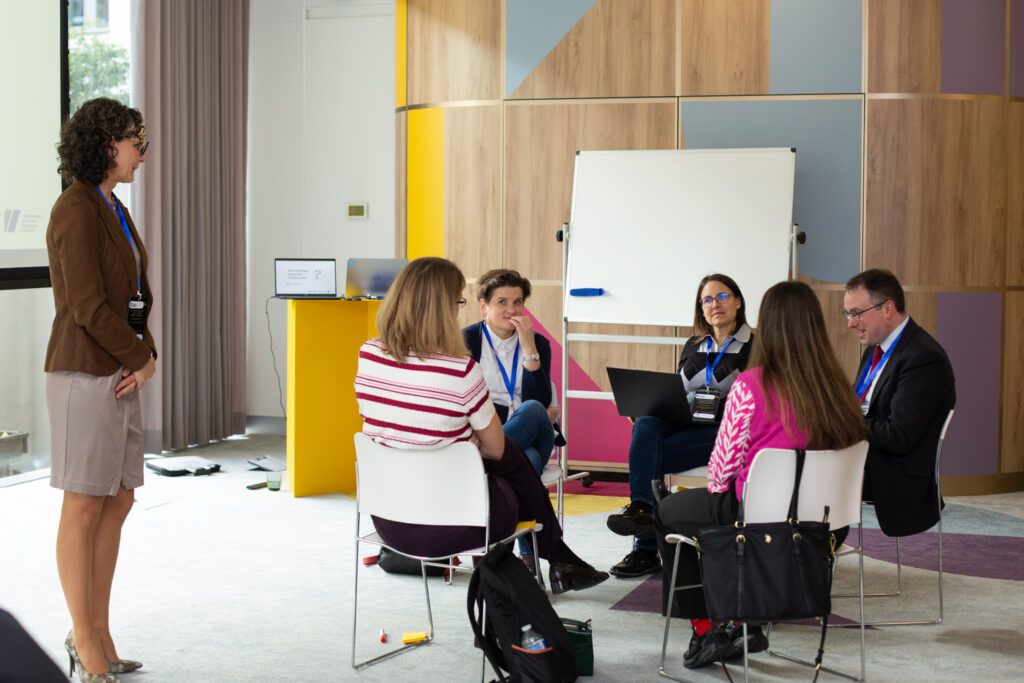
Post-award sessions completed the lifecycle picture. Post Award: Implementation – Efficient project execution, with Toni Skeen and David Kurz (European Research Council), broke down governance, risk management, and communication rhythms that keep teams on track. The second day brought Post Award: Ensuring impact effectively, led by David Kurz (ERC), which treated impact as something you manage from month one – stakeholder mapping, clinical or industry pathways, feedback loops that make results matter beyond the final report.
Glimpse of the future challenges
The AI panel was practical, not hype-driven. Lars De Nul (European Commission, AI in Science & Critical Technologies) led a discussion about what’s usable right now and what needs to change organizationally to use it safely and effectively. Kristjan Zemljic (Global Disruption) pushed for clear problem definitions and quick pilots that prove value. Tomasz Parkoła (Poznań Supercomputing and Networking Centre) explained why procurement and infrastructure need to keep up with the tools – from data pipelines to compute access. Gergely Szertics (HUN-REN) focused on governance: policies for data protection, model selection, human oversight, and training that turns curiosity into responsible daily practice.
The message was straightforward: AI isn’t a silver bullet; it’s a new literacy. Research offices will either learn it – through procurement that supports innovation, policies that protect trust, and hands-on training – or they’ll be playing catch-up.
Practical tools
We also got practical with tools. In the Showcase & exchange on networking & collaboration tools for competent RMAs, Simon Cullen (VIDATUM) and Miguel García González (Kronis) walked people through platforms that help RMAs find partners, manage proposal workflows, and sustain collaboration after awards. It was more exchange than demo: colleagues compared how they map expertise internally, track proposal readiness, and keep cross-institutional teams aligned between milestones. The takeaway was straightforward: choose tools that support your processes, not the other way around, and make sure every platform has a clear place in your workflow.
Supporting RMAs and their position in the region
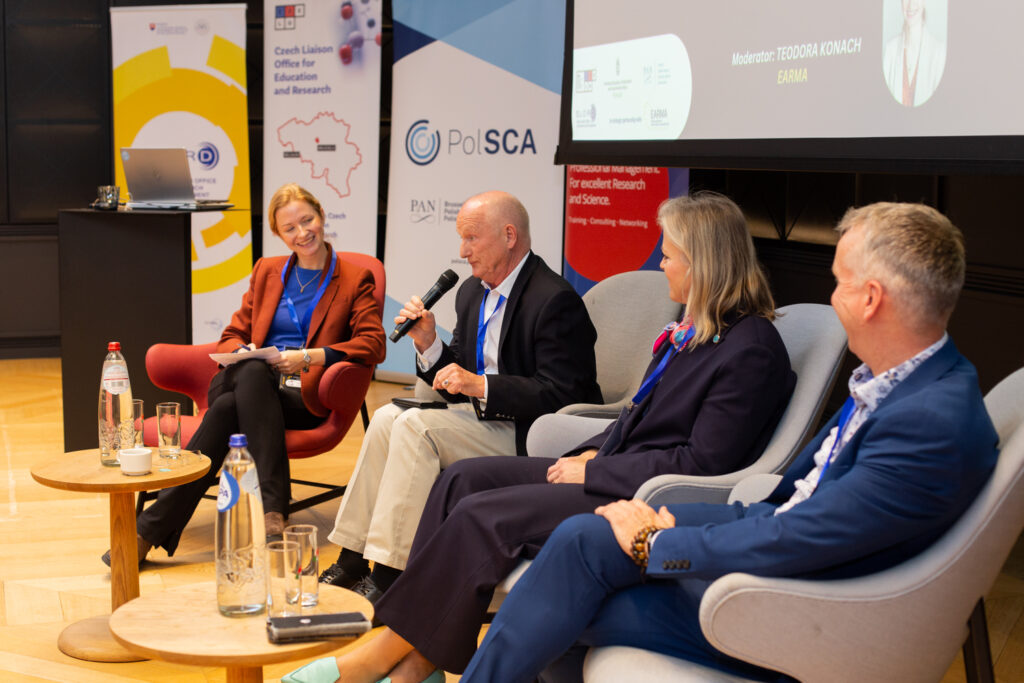
Cross-border collaboration came up in the hallways as much as in the formal sessions. Mobility schemes and small seed grants – the kind regional programs can enable – were discussed as infrastructure that levels the playing field. If we want RMAs in the region to collaborate more effectively, we need easy, frequent ways to meet, learn from each other, and test ideas together. This became especially clear during the Roundtable on cross-border collaboration, regional support & shared solutions, moderated by Teodora Konach(EARMA). Edwin Kanters(Utrecht University) made the case for practical shared services – templates, legal clauses, data management patterns that work across borders – so institutions don’t waste time reinventing basics. Linda Kapustová Helbichová(International Visegrad Fund) showed how micro-grants and mobility can build lasting connections if the application process stays simple and funding cycles are regular. Prof. Jacek Kuźnicki(International Institute of Molecular and Cell Biology in Warsaw) put it on leadership: “Rector or Director is the very first research manager of the institution he/she leads.” It was a pointed reminder that RMA work needs to cut across the whole organization, with executives setting expectations and clearing obstacles.
The Unicorns of Research and Innovation
Kanters’ main point was simple and stuck with people: RMAs are the unicorns. Not mythical founders or once-in-a-decade breakthroughs, but the professionals who make excellence repeatable. They turn ideas into fundable proposals and projects into real results. He highlighted the everyday RMA work that multiplies impact: partner mapping, budget design, risk management, data and ethics oversight, and planning for impact from the start.
His message to leaders was direct: make RMAs visible, invest in clear career paths, and measure what they enable – time to grant, share of coordinated proposals, audit results, delivery on impact plans. “Treat RMA capacity as a strategic asset, not overhead, and the “unicorn effect” becomes standard practice instead of rare luck”.
Closing with facts
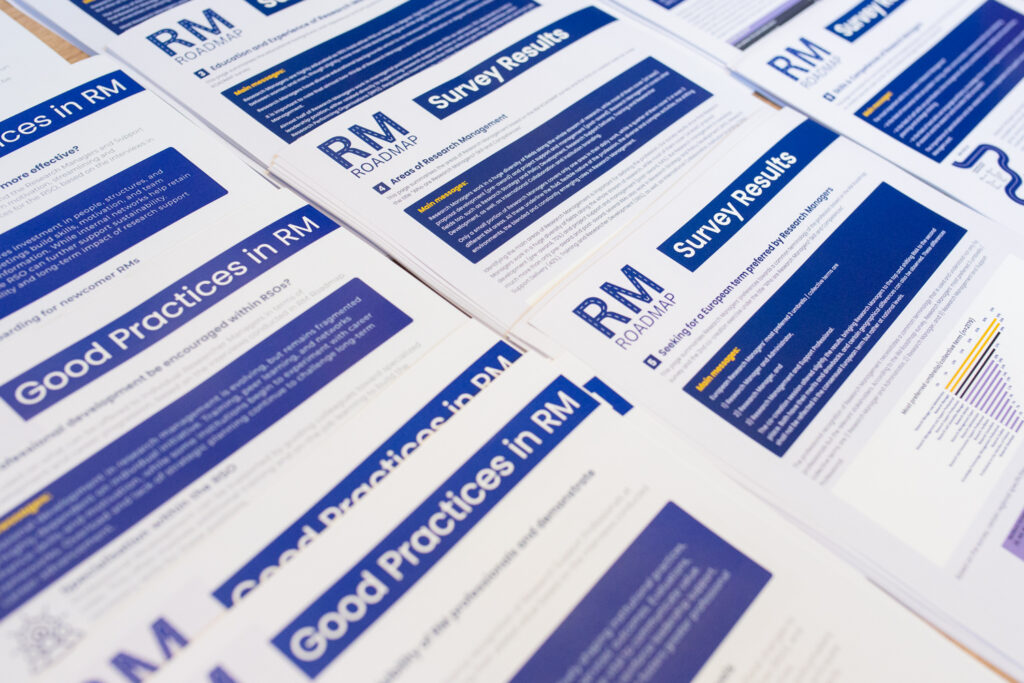
Nik Claesen (EARMA) laid out the future direction for research management in CEE with a practical roadmap built on three levels: system, organizational, and individual. The tools are already in motion: the ERA RM Action; the RM Roadmap (national dialogue, assessment, and planned interventions); the RM Framework (common training standards with a future quality label); and the EARMA Academy slated to open with online modules and certification. He walked through the RM Framework timeline – ecosystem mapping, policy recommendations, pilot testing – and highlighted leadership and change management as critical for building or strengthening Research Support Offices: better services, stronger networks, clear career paths, and real recognition. His message to ministries and institutions was clear: use the Roadmap as a coordinated response: run system-wide conversations, connect national actors, plan targeted measures, and embed RM across the ERA so fragmented practice becomes shared infrastructure.
Summary
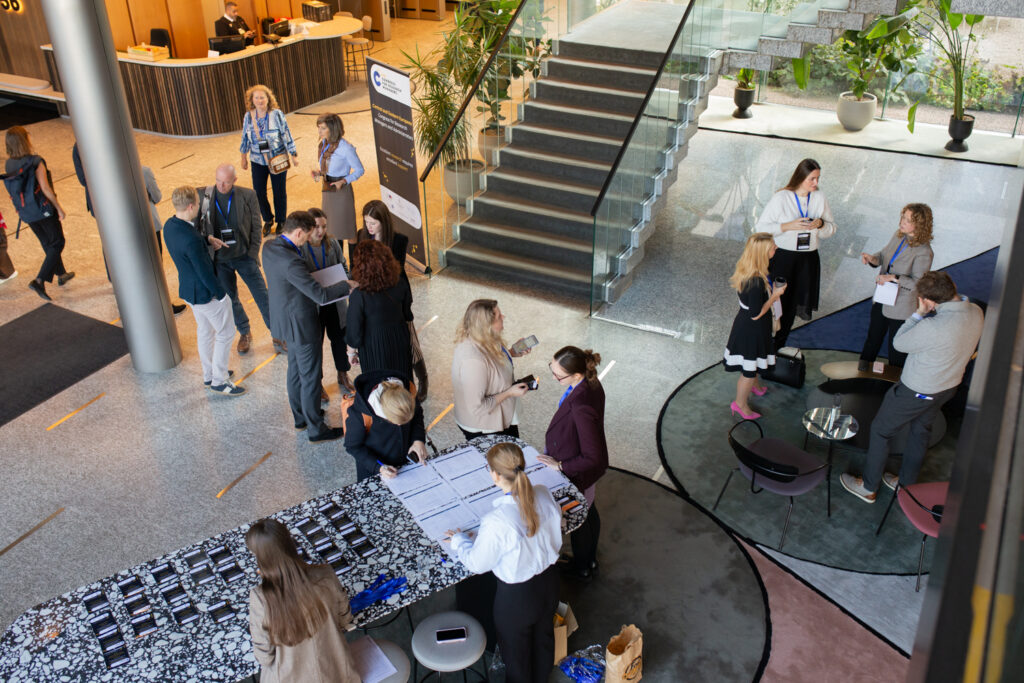
By the end, the room felt less like a debut event and more like a platform: shared references for HR and training, an emerging map for national conversations, and a clearer sense of what CEE can contribute to Europe when institutions and people develop together. The applause was brief, the to-do list longer. And that was exactly the point!
Key findings
- Professionalisation is the lever. Competence frameworks, national roadmaps, and quality training give leaders the evidence they need to define roles, build progression, and justify resources.
- Institutionalised national RMA network is a key. The established CZARMA Association and newly formed PolARMA inspired colleagues from Hungary and Slovakia to start building their own national associations for RMAs.
- Impact is managed, not merely reported. The strongest outcomes came from projects where post-award work – stakeholders, pathways, IP, spin-offs – was planned from day one.
- Mentored “learning by doing” accelerates maturity. Twinning-style coaching and working together move teams from reliable partners to credible coordinators faster than workshops alone.
- AI readiness is organisational. Without policy, procurement, and staff development, pilots fail regardless of how good the tools are.
- Regional instruments unlock participation. Mobility programs, micro-grants, and shared services lower barriers and connect the CEE support ecosystem.
- Tools must serve the workflow. Collaboration platforms add value when they simplify partner discovery and team coordination and when each has a clear owner and place in the process.
- Building network for RMAs is a must. Congress as a platform representing professionals from the field, experts and representative of institutions is what sector need and find crucial in further development of the profession.
Materials


