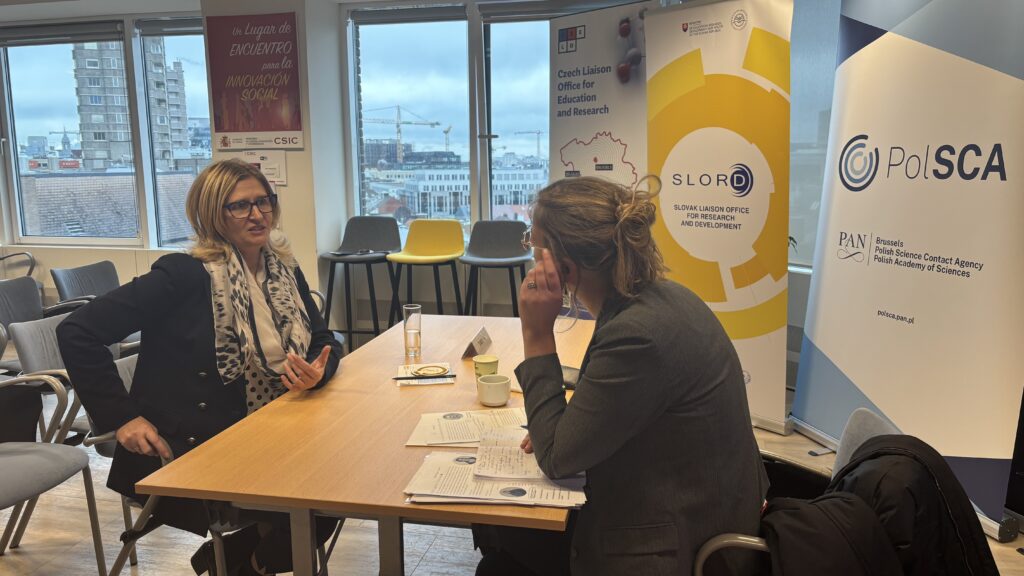
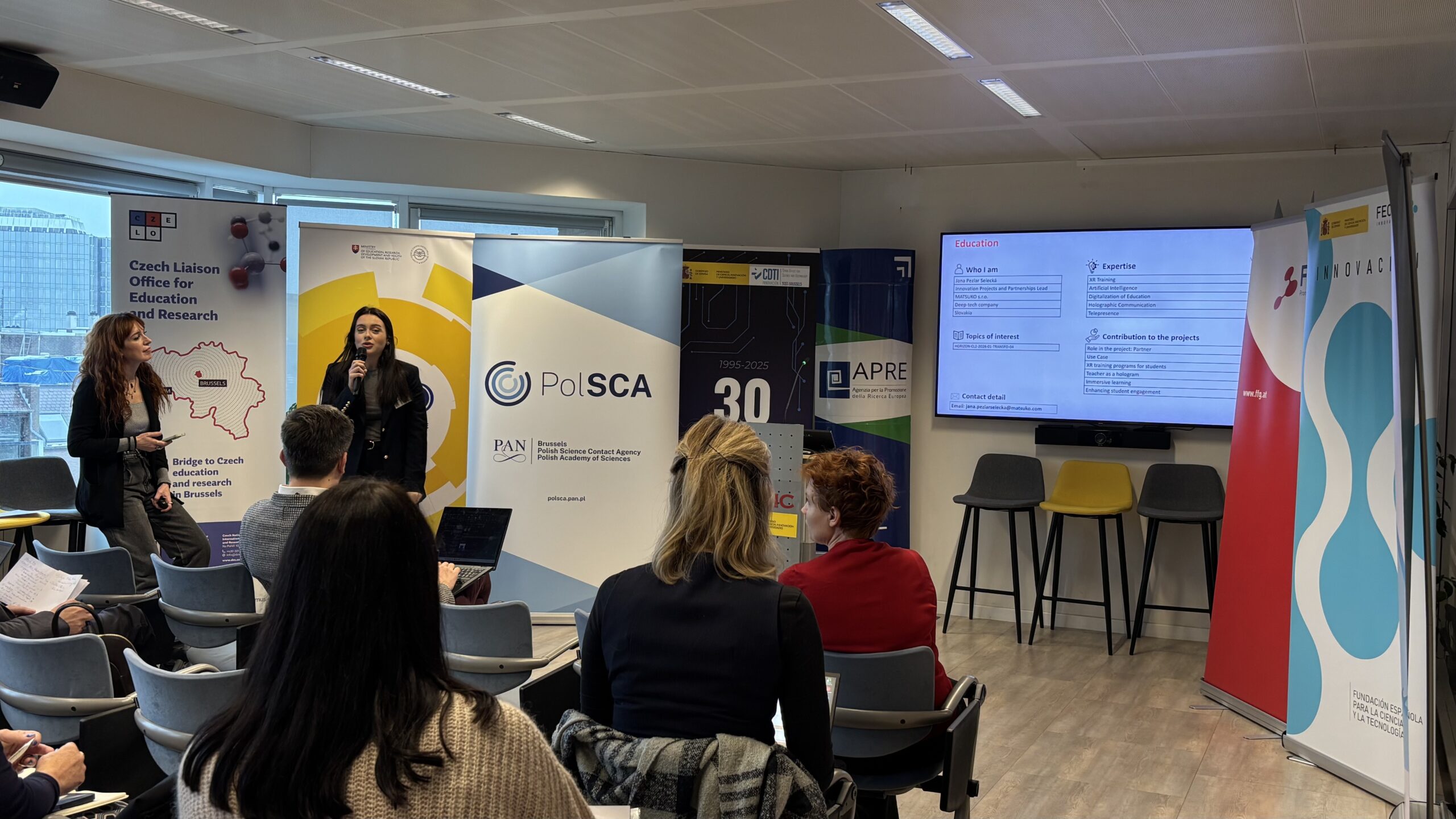
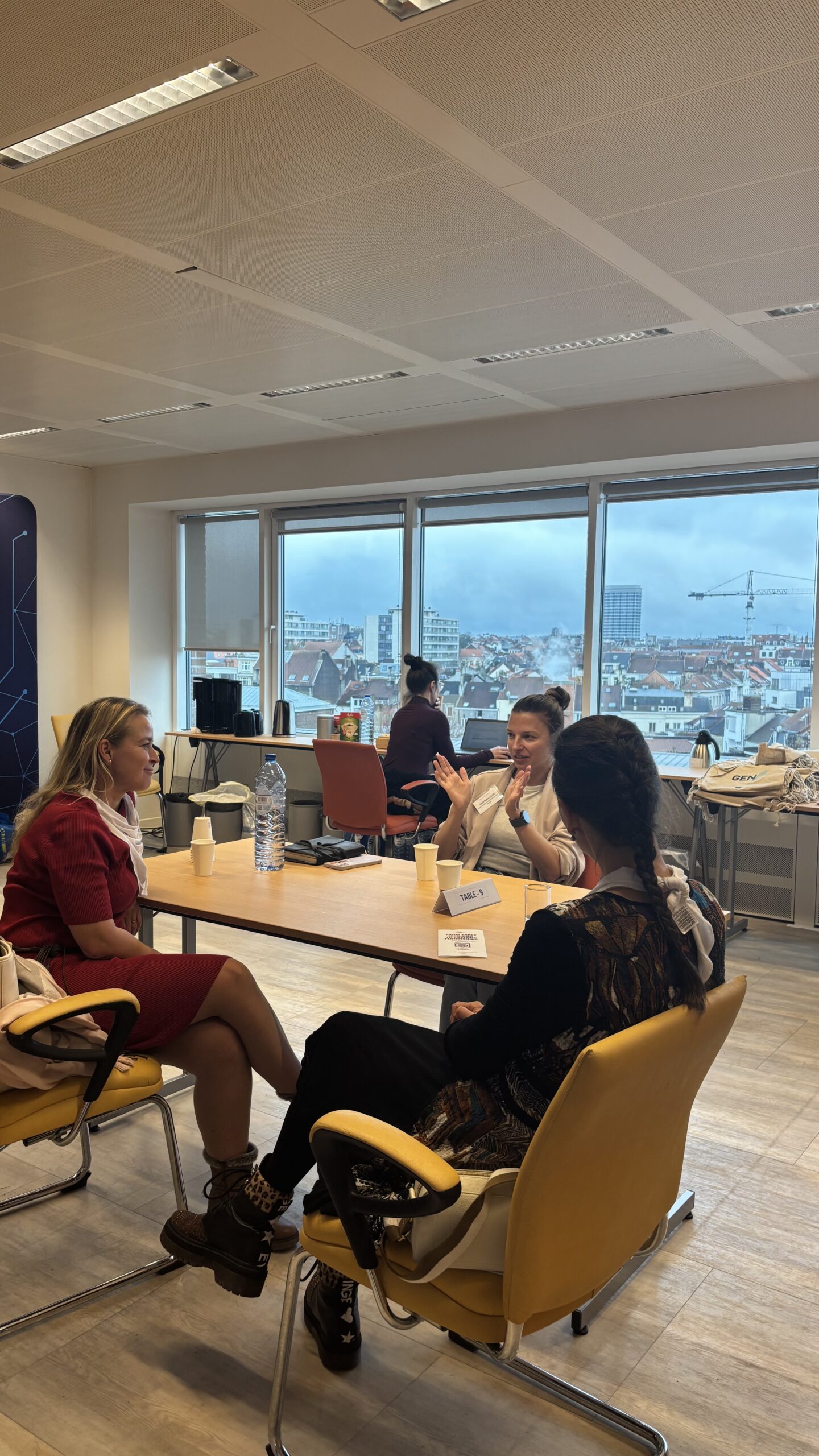
Summary of the event!
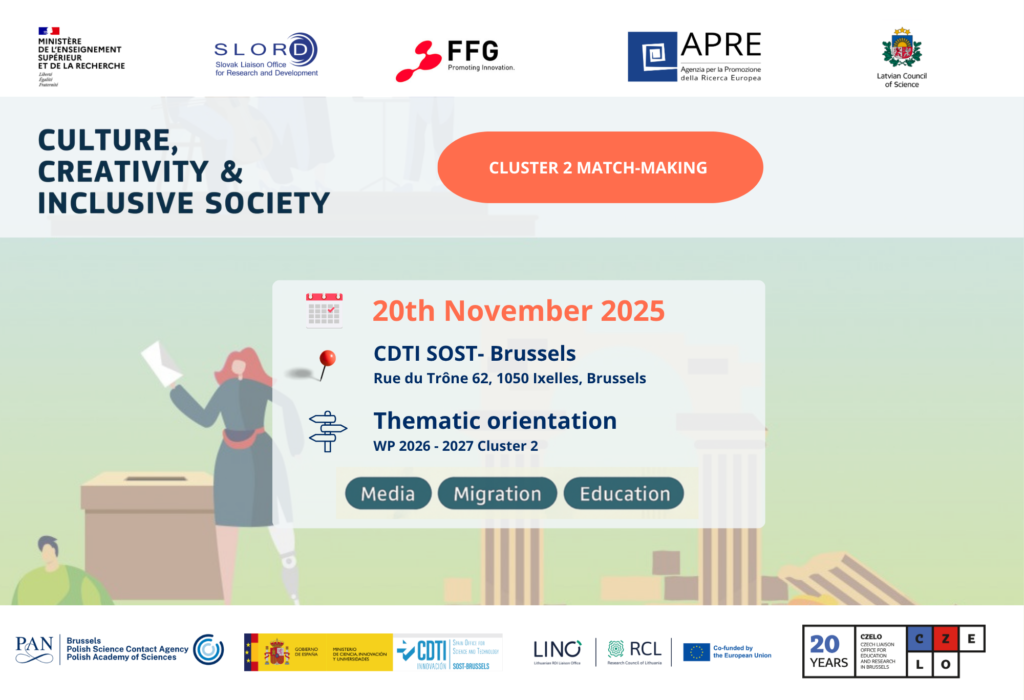
The “MEDIA, MIGRATIONS and EDUCATION” match-making event took place on 20 November 2025 in Brussels and was an international meeting dedicated to upcoming calls under Cluster 2 of the Horizon Europe programme, with a particular focus on media, migration and education topics. The event was organised by the PolSCA PAN Office in cooperation with liaison offices gathered in the IGLO network, representing a total of 10 EU Member States, including Austria, the Czech Republic, France, Italy, Latvia, Lithuania, Poland, Slovakia and Spain, with the participation of partners from the Netherlands. We had the pleasure of hosting almost 60 representatives of the European research and innovation community.
The organisers selected 12 topics on the basis of the draft 2026–2027 Work Programme officially published by the European Commission in the Comitology Register (see here).
The aim of the meeting was to support the building of international consortia for the forthcoming calls in the 2026-2027 Work Programme for Cluster 2 by matching potential partners, exchanging knowledge and fine-tuning project ideas. The organisers chose 12 proposed project topics on the basis of the European Commission’s working documents available in the Comitology Register so that participants could relate their concepts directly to the scope of future calls.
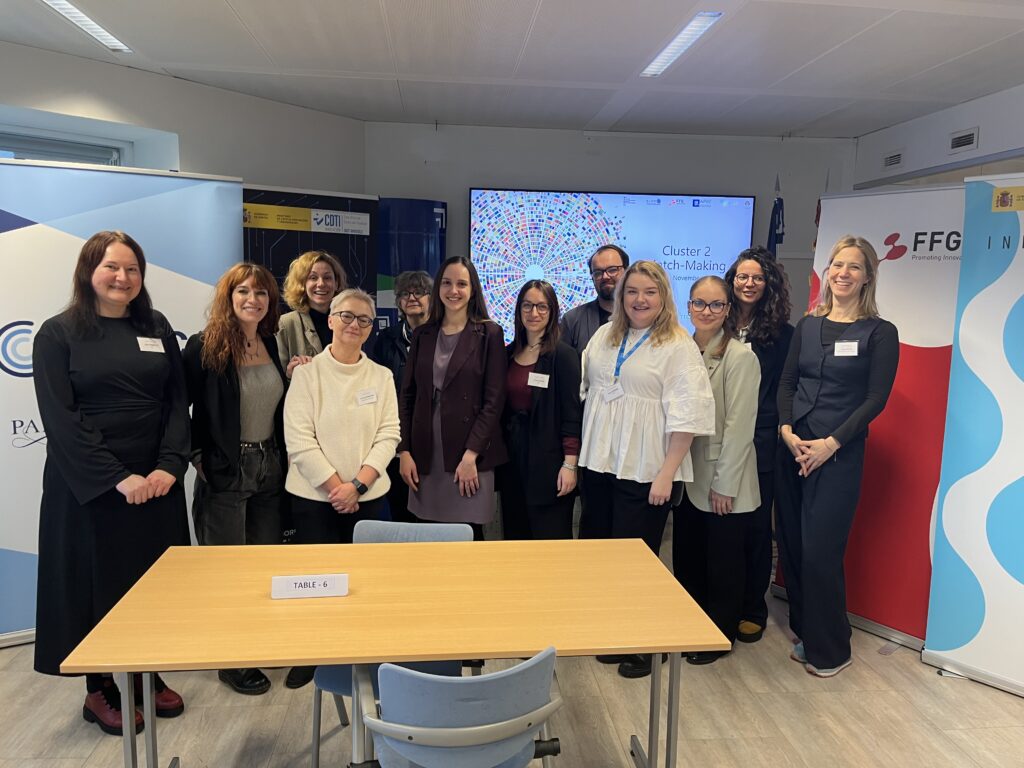
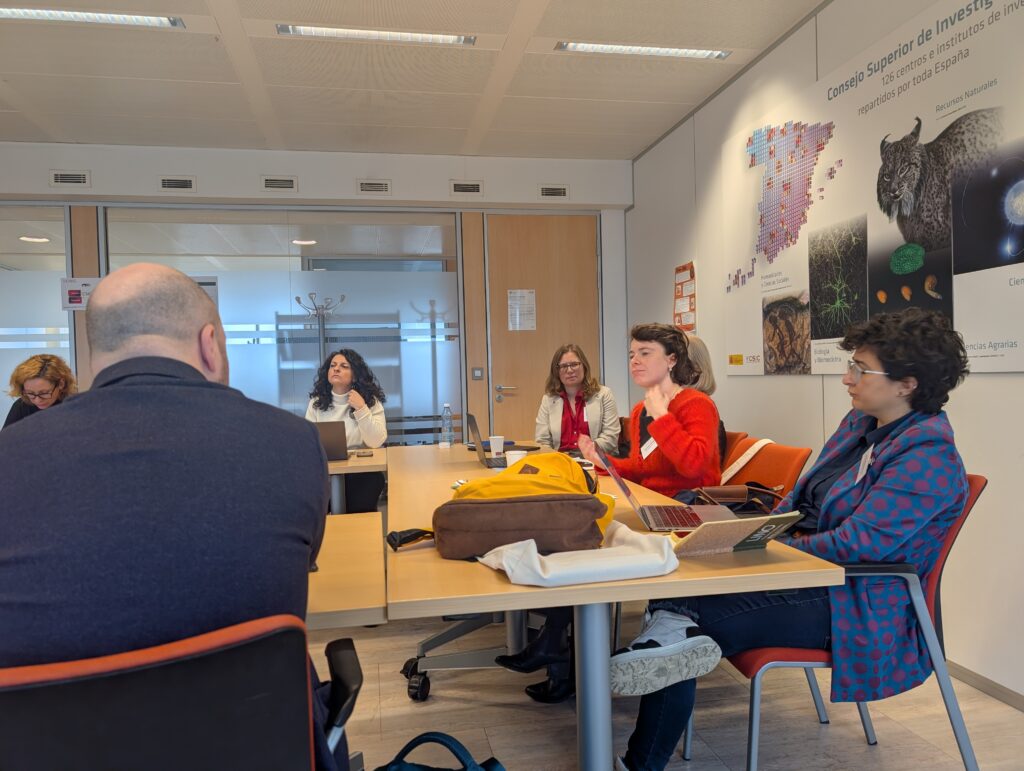
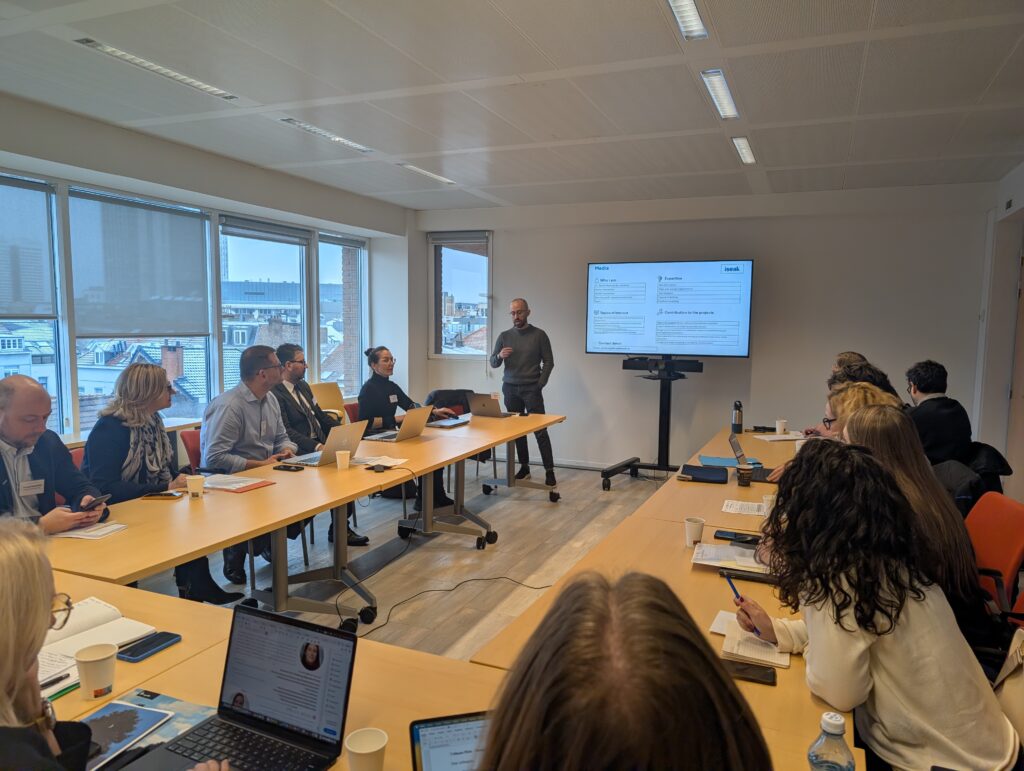
The day began with registration and morning coffee, followed by short opening remarks. In the first substantive part, participants received an overview of the policy landscape shaping Cluster 2 topics, followed by practical guidance from National Contact Point representatives (“NCP tips and tricks”), which helped to better understand both the EU policy context and the expectations towards project proposals. After a short break, two-hour pitching sessions were held in the EDUCATION, MIGRATION and MEDIA tracks. Participants presented their ideas and expertise, indicating the roles they could play in consortia and the types of partners they were looking for.
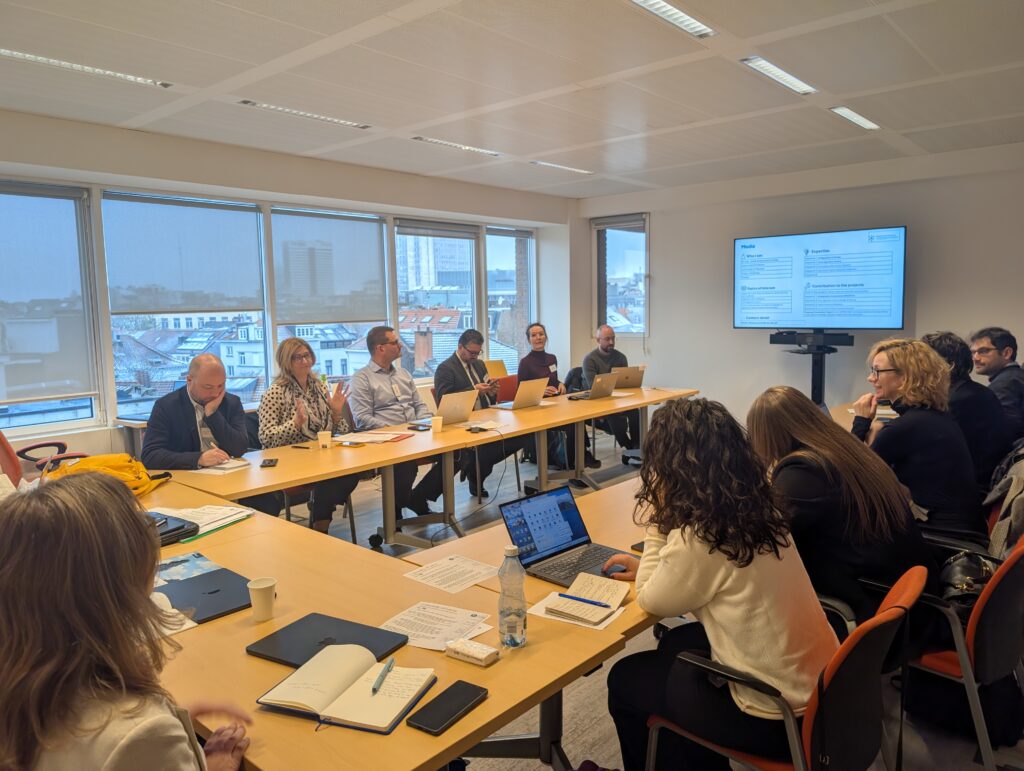
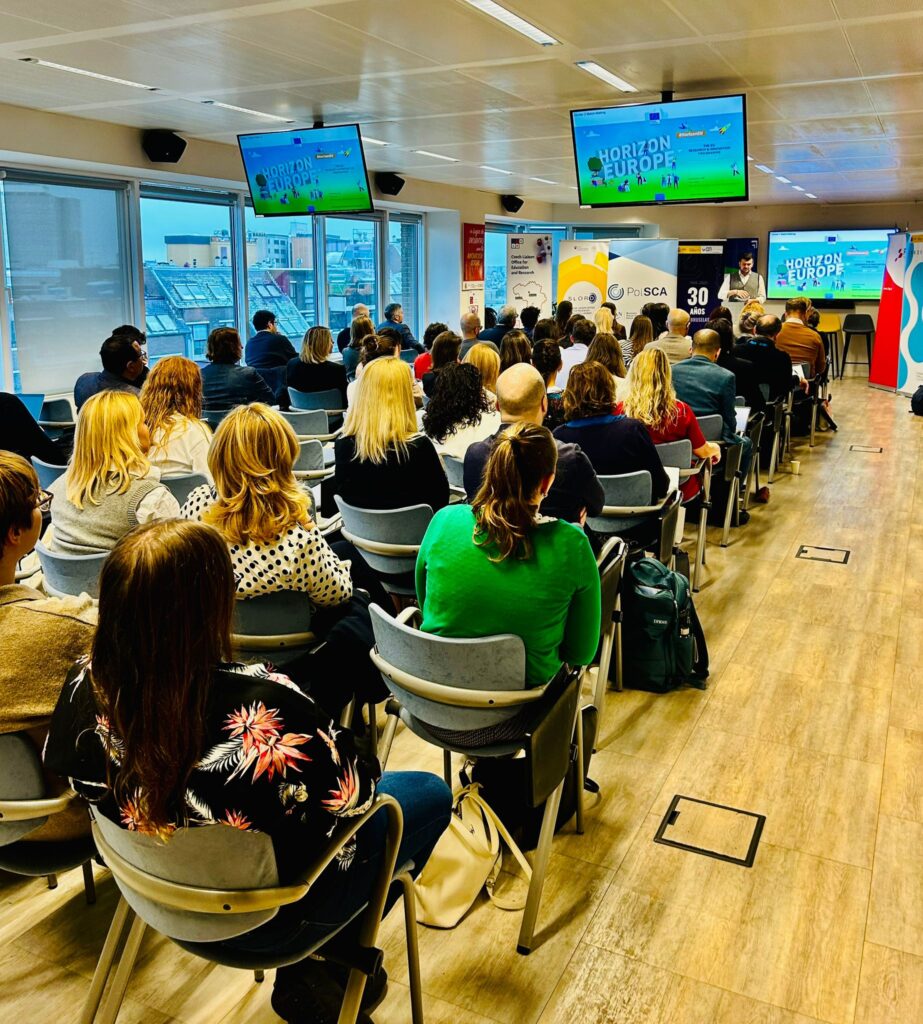
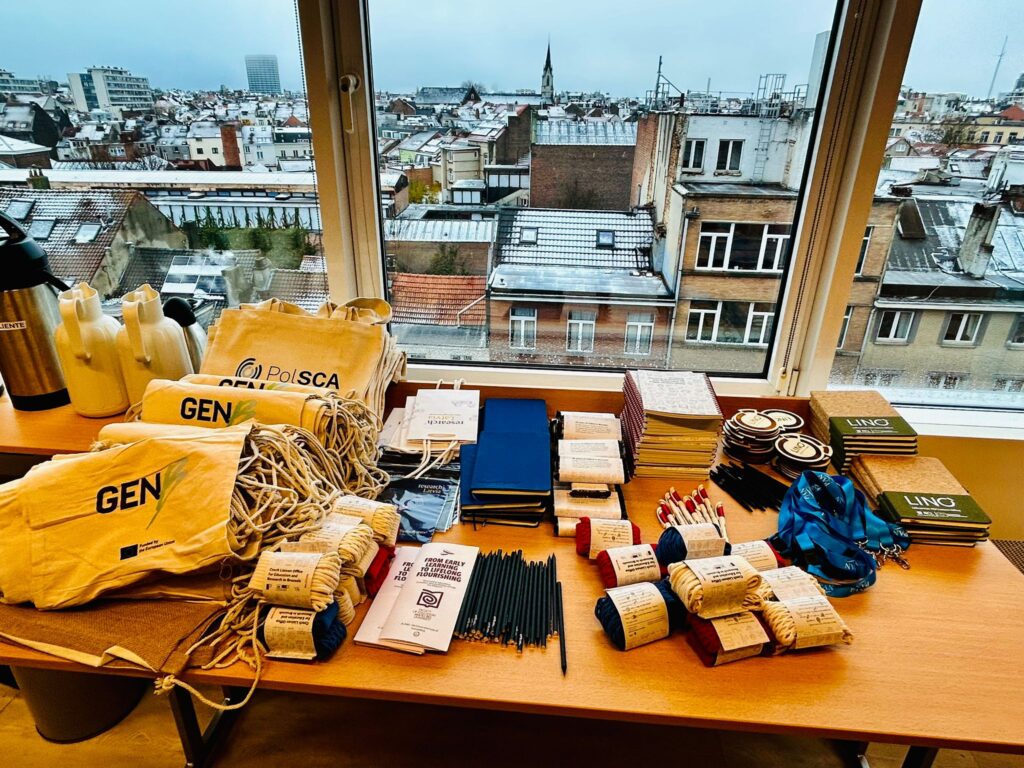
After the lunch break, the work continued in the form of bilateral meetings, which made it possible to hold in-depth discussions on potential cooperation, align roles within projects and sketch the first outlines of future consortia. The day concluded with a side event – the annual NethER network conference at the Residence Palace on Rue de la Loi 155 in Brussels – which broadened participants’ perspectives with wider discussions on European research and innovation policy and cooperation between liaison offices.
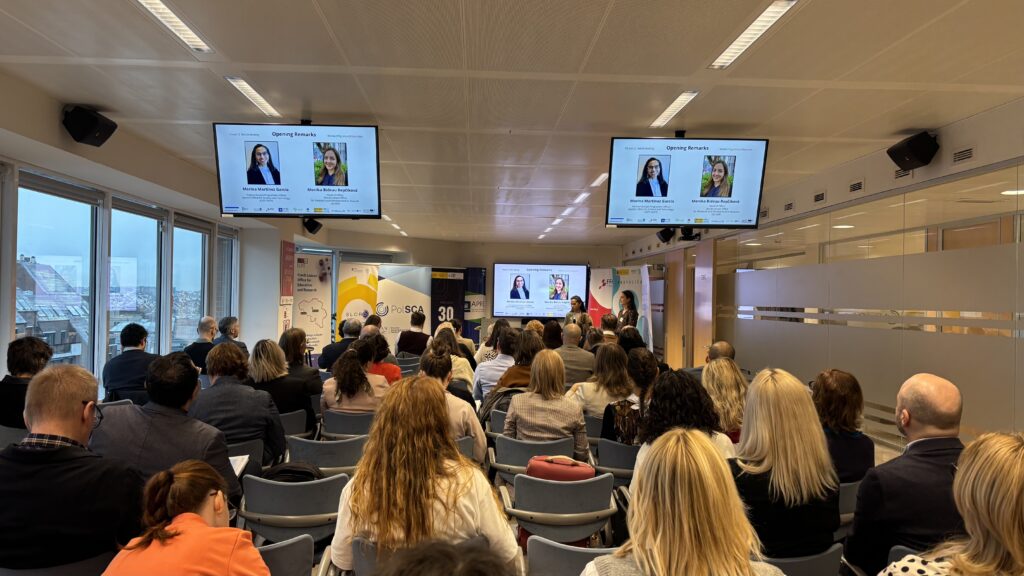
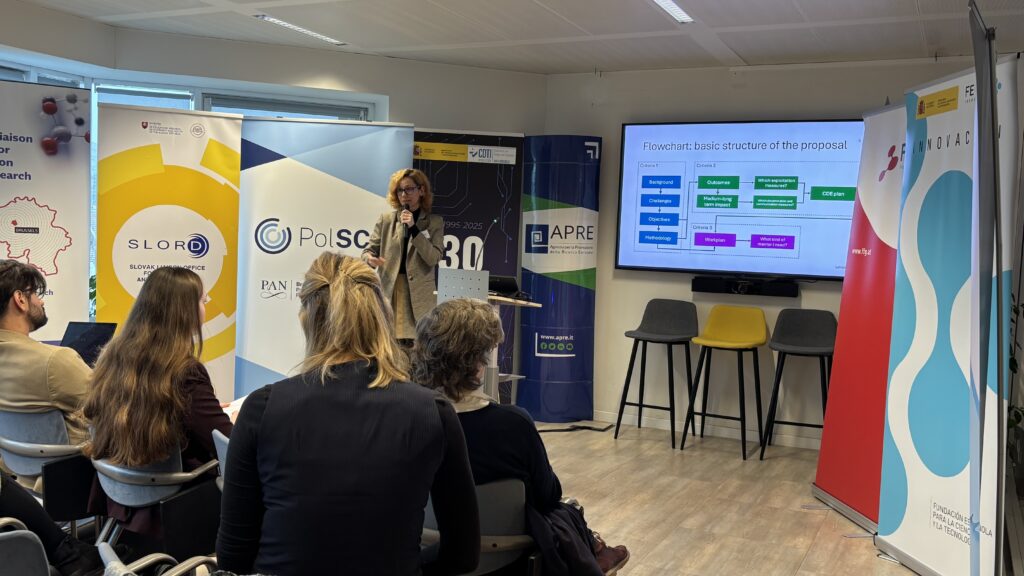
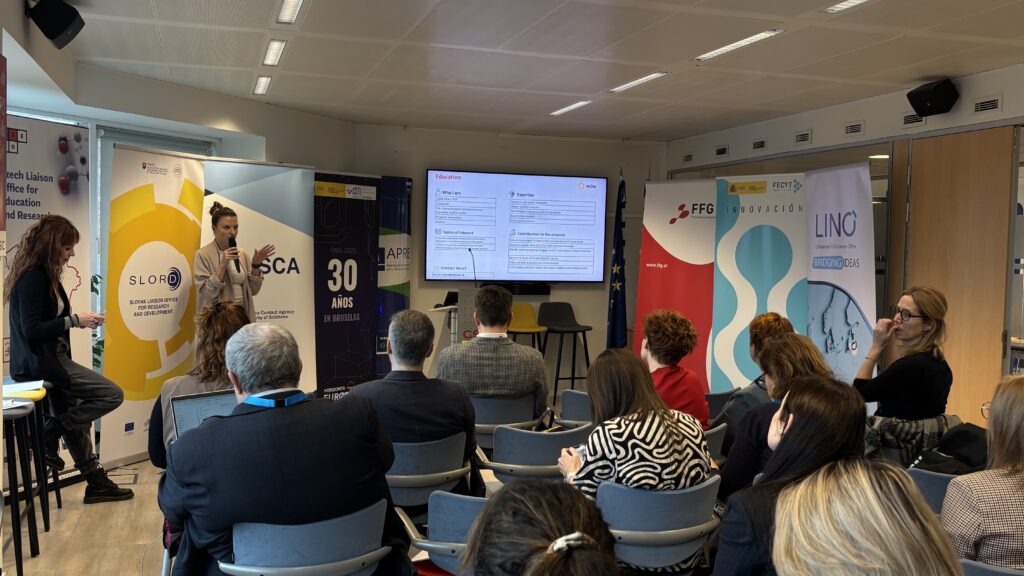
In summary, the event brought together the policy perspective, the practical know-how of NCPs, presentations of ideas in the areas of education, migration and media, as well as intensive networking, marking an important step in preparing for Horizon Europe Cluster 2 calls in 2026-2027.
Polish representation
Polish science in field of media, education and migration has been represented by:
- Izolda Bokszczanin-Gołaś, Warsaw University
- Oskar Chmiel, CASE – Center for Social and Economic Research
- Małgorzata Fijał, Polish Academy of Sciences – Scientific Centre in Rome / Jagiellonian University
- Kamila Radlińska – Koszalin University of Technology
- Michalina Kowala, Adam Mickiewicz University in Poznań
- Krzysztof Wasilewski – Koszalin University of Technology
Materials