V4 Training – 2020 edition
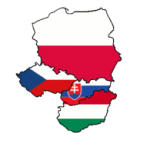
The next edition of the “V4” Training will be held online on 23-24 November 2020 in Brussels. The training is organized by the PolSCA PAN Office in Brussels, the Czech Liaison Office for R&D (CZELO), the Slovak Liaison Office for Research and Development (SLORD) and the National Research, Development and Innovation Office of Hungary (NRDIO).
It is addressed to employees of universities and research institutes who deal with the management of European projects on a daily basis, primarily within Horizon 2020. The language of the training is English, and the subject matter focuses on the most important issues related to the next EU framework program in the field of research and innovation – Horizon Europe. Lectures and workshops are conducted by specialists, mainly from the European Commission and European institutions operating in Brussels for research and innovation.
A final training agenda is available below.
V4 Training_23-24November2020_final agenda
European Research Area – new challenges and new opportunities

We already know the European Commission’s Communication on the new European Research Area (ERA) in the field of research and innovation (R&I) announced on September 30, 2020. Recently on our website we described the history of the ERA and its main objectives, while below we present the content of the release, which describes the renewed European Research Area. So what will the new ERA be like? What are its strategic goals and expected results? How it is going to differ from the “previous” ERA, especially at a time of social, environmental and economic challenges escalated by the Covid-19 pandemic? Feel free to read!
(wiecej…)Green Deal Call – practical information
The call for proposals in the special H2020 call of the European Green Deal has been launched! There are 20 new calls for proposals in 11 areas with a total budget of € 1 billion! The Green Deal Call (GDC) offers funding for research projects on the climate crisis and the preservation of unique ecosystems and biodiversity in Europe. The European Commission expects that the projects will lead to innovative solutions bringing concrete results for citizens. Below you will find the most important information, including a brief description of the call, as well as links to particular call topics. To support you in finding partners for project consortia we also provide you with the information on virtual brokerage events and examples of potential partners’ expression of interests.
(wiecej…)PAKT – a new bonus linked with Horizon Europe participation

At the end of September this year, The Ministry of Science and Higher Education has published on its websites the very first drafts of the so-called PAKT project, i.e. „Premia dla AKTywnych”(en. Bonus for active participants). Objective of the proposed model is to create an effective – as well as simple and transparent – bonus system recognizing the best scientists. This shall be achieved by adjusting the remuneration regulations implemented in research units. In the context of the Horizon Europe, the PAKT is to encourage national units and scientists to increase their activity in the upcoming framework program.
(wiecej…)Three Institutes of PAS are beneficiaries of last MSCA RISE call!
The development of a radar to explore the Martian surface, the use of functional dyes in 3D fluorescence imaging or the creation of innovative solutions in the search for “dark matter” are topics of the projects selected for funding under MSCA-RISE programme, in which the Institutes of the Polish Academy of Sciences will participate! Among 823 beneficiaries from 137 countries and 74 winning projects in the last call # H2020 MSCA-RISE there are three PAS Institutes: Space Research Centre, Institute of Organic Chemistry and Nicolaus Copernicus Astronomical Centre. We are pleased to present these projects below!
(wiecej…)The European Green Deal and Social Sciences and Humanities

The opening of the call for proposals in the special Horizon 2020 call dedicated to the European Green Deal is expected in the second half of September 2020. As it was written on PolSCA website – on the occasion of the announcement of the call in June (link) – its purpose is primarily to support fair and sustainable social transformation through research. In addition to technological development and demonstration projects the EU Green Deal call (GDC) is aimed at development of new ways to engage civil society and empowerment of citizens in the ‘green’ transition, and should therefore be of interest to social sciences and humanities researchers. In the light of this, we encourage you to read the short description of selected Green Deal Call topics and the expected results to be achieved by the projects financed under H2020. We also inform about events related to the GDC, including dedicated brokerage meetings organized by Net4Society or The Enterprise Europe Network, as well as about special sessions during EU Research and Innovation Days, which will take place online on 22-24 September 2020.
(wiecej…)Renewed team of the PolSCA Office!

We are pleased to announce that on 1st October 2020, Ms Joanna Komperda was entrusted with tasks as an expert of the PolSCA Office. Such strengthening the PolSCA Team is a positive result of the recruitment process completed in summer this year. Thanks to this, the PolSCA Office will be able to carry out its tasks more efficiently – especially towards the scientific community of the Polish Academy of Sciences – at the arrival of the new Horizon Europe framework program.
(wiecej…)NAWA launches the Seal of Excellence call under the MSCA IF!
The Ulam Programme – Seal of Excellence is the first nationwide instrument in Poland that supports research projects with the Seal of Excellence certificate obtained under the Marie Skłodowska-Curie Actions Individual Fellowships program. The objective is to help incoming researchers to develop their careers by intensifying international mobility and to allow them to establish scientific cooperation with excellent host institutions in Poland. Only applications under the MSCA-IF 2019 edition which received the Seal of Excellence certificate will be considered. The call for applications is open until October 15, 2020.
(wiecej…)Hire an outstanding social scientist or humanist! NAWA Chair

More than a month ago, the National Agency for Academic Exchange (NAWA) launched a call for applications for the NAWA Chair program, under which it is possible to hire an outstanding representative of social sciences or humanities from abroad and create his/ her own research team. The primary objective of the program is to improve the quality of research and teaching activities carried out in Polish institutions by including excellent scientists with international achievements in these activities. It is a great opportunity for academic and research institutions in Poland, including PAS Institutes, to strengthen their personnel. It is worth adding that the first edition of the program is addressed only to representatives of the humanities, social and theological sciences, and the call for applications is open until the end of July.
(wiecej…)Researchers in Poland are fighting the COVID-19 pandemic

There is no need to convince anyone about the importance of the voice and work of scientists in the fight against the coronavirus pandemic. An evidence-based discussion and an intensified activity in the field of research and innovation are essential at such a specific time. Therefore, we would like to introduce some of the activities undertaken, mainly by the Polish Academy of Sciences (PAS), for the fight against the SARS-CoV-2 virus. Below you could find information about the interdisciplinary COVID-19 Advisory Team, established by President of PAS, as well as a short description of selected – international or national – research projects carried out by the PAS Institutes and the International Institute of Molecular and Cell Biology in Warsaw.
(wiecej…)Next Page »« Previous Page


