Study Visit to Brussels on “Polish excellence for sustainable development of Bioeconomy in Europe”
Study Visit on “Polish excellence for sustainable development of Bioeconomy in Europe” will take place in Brussels on 17-18 October.
Agenda:
17th October
12:00 – 13:00 – Networking Lunch
13:00 – 13:45 – Opening session
Artur Orzechowski, Ambassador of the Republic of Poland to the Kingdom of Belgium
Sebastian Barkowski, Deputy Permanent Representative of the Republic of Poland to the EU
Jerzy Buzek, MEP, Chairman of ITRE Committee, former President of the European Parliament
Czesław Siekierski, MEP, Chairman of the European Parliament’s Committee on Agriculture and Rural Development
Zygmunt Krasiński, Director of the Polish National Contact Point for the EU Research Programmes
13:45 – 15:15 – Polish potential in Bioeconomy
Introduction to Polish strategy for Bioeconomy from governmental and industrial perspective.
Jan Staniłko, Deputy Director, Department of Innovation, Ministry of Economic Development
Tour de table – short self-presentations of participants
15:15 – 16:45 – Coffee Break & MINI BROKERAGE EVENT
Polish and Belgian partners – matchmaking event
16:45 – 18:30 – Bioeconomy opportunities for the European industry
Panel on the role of Bioeconomy in the European R&D&I policies and the opportunities for Polish stakeholders. Industrial cooperation windows under H2020 recommended by EC authorities; EU added value of European thematic initiatives (associations) active in research and development domain.
Tomasz Calikowski, Bio-based Products and Processing Unit, DG RTD/F.2, European Commission
Rob Peters, Head of the Research and Innovation Unit, DG AGRI/B.2, European Commission
Philippe Mengal, Executive Director of the Bio-based Industries Joint Undertaking (BBI JU)
Dirk Carrez, Executive Director of the Bio-based Industries Consortium (BIC)
Stanisław Bielecki, Member of the European Bioeconomy Stakeholders Panel
Aleksandra Małyska, Executive Manager of the European Technology Platform ‘Plants for the Future’
18:30 – 20:30 – Get together and Networking Dinner
18th October
09:30 – 11:30 – HORIZON 2020 and Bioeconomy
Presentation of the Polish Success Stories followed by discussion on the key factors behind them.
Michele Andolfo, Scientist and Project Manager, Selena Labs Sp. z o. o. Coordinator of BIOmotive project.
Artur Bartkowiak, CEO, Center of Bioimmobilisation and Innovative Packaging Materials, Natureef Association
Katarzyna Kaczanowska, Senior Research Manager, Apeiron Synthesis S.A.
Małgorzata Then, CEO, Biotrem Sp. z o.o.
Emil Łężak, General Manager, IZNAB Sp. z o.o.
Stefan Ruyters, Project Coordinator of Horizon2020 Innovation project SuperBIO
11:30 – 12:00 – Coffee Break
12:00 – 13:15 – Poland for European Innovations (in Polish)
National experiences and expectations on the participation of Polish stakeholders in the EU cooperative programmes:
advantages, challenges, opportunities and regional synergies. Session co-chaired by Members of the European
Parliament.
Jadwiga Emilewicz, Undersecretary of State, Ministry of Development
Czesław Siekierski, MEP, Chairman of the European Parliament’s Committee on Agriculture and Rural Development
Katarzyna Tarnawska, Polish Science Contact Agency “PolSCA”
Andrzej Siemaszko, Central and Eastern European Bioregions Platform
13:15 – 13:30 – CONCLUSIONS
13:30 – 14:30 – Networking Lunch
ORGANIZERS:


The European Research Council has announced its 2018 Work Programme
The European Research Council (ERC) has announced its 2018 Work Programme and grant competitions with a total budget of €1.86 billion.
One of the programme’s new elements is the reintroduction of Synergy Grants, the funding scheme for groups of 2-4 scientists who can jointly address ambitious research problems.
The ERC Starting Grants and Synergy Grants calls were open on 3 August 2017.
Other grant competitions will be launched according to the indicative calendar which is availabe at the ERC website: https://erc.europa.eu/news/nearly-%E2%82%AC2-billion-investment-top-european-researchers-erc-plan-2018
Source: ERC website
High Level Group on maximising impact of EU Research and Innovation Programmes
The High Level Group on maximising impact of EU Research and Innovation Programmes Report: “LAB – FAB – APP – Investing in the European future we want” was published on 3rd July 2017, on the occasion of the ‘Research & Innovation – Shaping our Future‘ conference in Brussels.
Report is availabe at: http://ec.europa.eu/research/evaluations/pdf/archive/other_reports_studies_and_documents/hlg_2017_report.pdf
Survey on intersectoral mobility

The European Commission is carrying out a study on fostering industrial talents in research at European level. The overall objective is to conduct a feasibility study into whether there is a place for additional EU level initiatives in order to increase the level of intersectoral mobility in Europe. The study foresees web-based surveys of individual researchers, higher education and publicly funded research institutions, industrial and non-academic research organisations, as well as those involved in intersectoral mobility schemes.
Survey is available at: https://euraxess.ec.europa.eu/euraxess/news/survey-intersectoral-mobility
Source: European Commission EURAXESS
Interview with Prof. Lucyna A. Woźniak
Open access to JRC Research Infrastructures
The European Commission’s Joint Research Centre (JRC) opens its scientific laboratories and facilities to people working in academia and research organisations, and private sector: industry, small and medium enterprises (SMEs). Scientists will have the opportunity to work in the following fields:
- nuclear safety and security (Euratom Laboratories);
- chemistry;
- biosciences/life sciences;
- physical sciences;
- ICT;
- Foresight.
For more information please visit JRC website: https://ec.europa.eu/jrc/en/research-facility/open-access
Source: JRC website
Circular economy in Visegrad Group (V4) countries – current state and challenges
A circular economy is an industrial system that replaces the ‘end-of-life’ concept with restoration, shifts towards the use of renewable energy, eliminates the use of toxic chemicals, which impair reuse, and aims for the elimination of waste through the superior design of materials, products, systems, and, within this, business models.
The elements of circular economy include:
- waste management,
- a strict differentiation between consumable and durable components of a product, replacement the concept of a consumer with that of a user,
- energy efficiency.
A circular economy requires improvements in material selection and product design (circular design), innovative business models, increase in general awareness and creation the skill base.
A transition towards circular economy will therefore generate new jobs, increase productivity and will boost R&I activities. The latter may be treated as a circular economy enablers.
The European Commission adopted an ambitious Circular Economy Package that establishes a concrete and ambitious programme of action, with measures covering the whole cycle: from production and consumption to waste management and the market for secondary raw materials.
For all V4 countries implementation of a circular economy is a chance for a faster economic growth respecting sustainability principle and taking into account social needs. The aim of the event is to share experience of V4 countries in implementation of circular economy, presentation of the best practices in this field including social innovation and discussion of main challenges.


AGENDA
9.30 – 10.00
REGISTRATION
10.00 – 10.30
INTRODUCTION
- Karolina D’Cunha, Deputy Head of Unit European Commission DG Environment, Directorate B Circular Economy & Green Growth
- Vasileios Rizos, Research Fellow, CEPS (Centre for European Policy Studies)
10.30-11.15
PART I – MAIN R&I ACTIVITIES RELATED TO CIRCULAR ECONOMY
Karolina Zázvorková – moderator, European Commission DG Environment
Directorate B3 – Waste Management & Secondary Materials
- Barna Kovács – advisor to BIOEAST, Hungarian Ministry of Agriculture, Hungary
- Pavol Alexy, Slovak University of Technology in Bratislava, Slovakia
- Vladimír Kočí, University of Chemistry and Technology, Prague, Czech Republic
11.15-11.30
LET’S TALK ABOUT GARBAGE EXHIBITION
- Marcin Szczelina, Architecture Snobs, Poland
11.30 – 12.00
COFFEE BREAK
12.00-13.30
PART II – GOOD PRACTICES
Małgorzata Gołębiewska – moderator, European Commission
DG Environment, Directorate B Circular Economy & Green Growth
- Tomasz Wojciechowski, Circular Economy Institute, Poland
- Katarzyna Barc, Oddam Odpady Initiative, Poland
- Miroslav Galamboš, Panaraplast, Slovakia
- Jiří Brejcha, MITAS a. s., Czech Republic
13.30 – 14.30
LUNCH
PRESENTATIONS:
COORGANIZORS


PARTNER

Aplikuj o stypendia PIASt – Polski Instytut Studiów Zaawansowanych
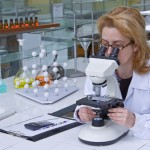
The Polish Institute of Advanced Studies (PIASt) invites applications for 5- or 10-month research fellowships, starting their residencies from October 2017.
ELIGIBILITY
At the time of the application, researchers must not have resided or carried out their main activity (work, studies, etc.) in Poland for more than 12 months in the 3 years immediately prior to the reference date – May 15th 2017 (short stays such as holidays do not count).
Applications are open to active researchers at two stages of their careers:
– juniors/postdocs, who have obtained their PhD in the last 10 years and have subsequent working experience as researchers for at least two years (PhD training is not considered in the calculation of research experience) – 4 fellowships;
– seniors/professors, who have minimum 10 years of full-time research experience after obtaining a PhD – 8 fellowships.
SELECTION PROCEDURE
The Institute attaches great importance to the quality and fairness of its selection process. All applications go through a four-stage procedure:
1/ formal preselection process of eligibility and completeness of documents by the Institute’s staff;
2/ peer-reviewing by independent assessors;
3/ ranking by international Scientific Advisory Board responsible for the final selection of successful fellows;
4/ detailed negotiations of individual Host Agreements.
The deadline for applications within this call is June 19th 2017, 12 PM (noon) GMT. Late applications will not be considered.
FOR MORE INFORMATION VISIT THE WEBSITE
Study visit to Brussels on Big Data for transformation into Industry 4.0
21 March
13:00 – 1:45 – Opening session
Welcome addresses:
Artur Orzechowski, Ambassador of the Republic of Poland to the Kingdom of Belgium
Sebastian Barkowski, Deputy Permanent Representative of the Republic of Poland to the EU
Zygmunt Krasiński, Director of the Polish National Contact Point for the EU Research Programmes
Krzysztof Szubert, Secretary of State/Deputy Minister, The Government Plenipotentiary for Digital Singe Market
prof. Jerzy Buzek, MEP, Chairman of ITRE Committee, former President of the European Parliament
13:45 – 15:15 – Polish potential in Big Data
Jan Staniłko, Deputy Director, Innovation Department, Polish Ministry of Economic Development
Selected industry show cases
Short self-presentations of all Polish participants
15:15 – 15:45 – Coffee Break
15:45 – 17:45 – Big Data opportunities for the European industry
Introduction:
Krzysztof Szubert, Secretary of State/Deputy Minister, The Government Plenipotentiary for Digital Singe Market
Leonardo Flores Anover, European Commission, DG CONNECT, Unit C2. High Performance Computing and Quantum Technology – Political drive of the Commission in the European Cloud Communication to the convergence of HPC/Cloud and Big Data
Kimmo Rossi, European Commission, DG CONNECT, Unit G1 – Data Policy and Innovation – Big Data in Programme H2020
Jiri Pilar, European Commission, DG CONNECT, Unit Data Value Chain – European Commission perspective on Data
Ana Garcia, Secretary General of Gig Data Value Association (BDVA) – Big Data Value Association and its activities. How Big Data Ecosystem works.
Roberto G. Cascella, Senior Policy Officer, European Cyber Security Organisation (ECSO) – European Cyber Security Organisation (ECSO)
18:15 – 20:00 – Get together and Networking Dinner
22 March
10:00 – 11:30 – HORIZON 2020 and Big Data
Big Data Industrial success stories
Panel:
Moderator: Cezary Mazurek, Poznan Supercomputing and Networking Center (PCSS)
Marcin Ostasz, Barcelona Supercomputing Center
Kimmo Rossi, European Commission, DG CONNECT, Unit G1 – Data Policy and Innovation
Joanna Kołodziej, Cracow Universiry of Technology, Research and Academic Computer Network (NASK)
Tomasz Boboli, Atende Software Sp. z o. o.
Wojciech Dziunikowski, COMARCH S.A.
11:30 – 12:00 – Coffee Break
12:00 – 13:00 Poland for European Innovations (session in Polish)
Andrzej Ryś, Director, DG SANCO, European Commission
Marek Bąkowski, Vice President, The Polish Chamber of Information Technology and Telecommunications
Piotr Gałązka, Polish Bank Association (ZBP)
Katarzyna Tarnawska, Polish Science Conact Agency “PolSCA”
Sebastian Serwiak, Deputy Director, Polish Natioanl Contact Point for Research Programmes of the EU
13:00 – 14:15 BROKERAGE EVENT
Polish and Belgian partners – matchmaking event
14:15 – 14:30 Conclusions
14:00 – 15:00 Networking Lunch
Organizers:

Spreading Excellence and Widening Participation in the FP9

AGENDA:
10.45 – Welcome : Dr Jan Krzysztof Frąckowiak
11.00 – Presentations, Q&A:
1. Dr Jana Kolar, CERIC-ERIC Jana_Kolar_24.02.2017
2. Dimitri Corpakis, Former Head of Unit at European Commission (Closing the innovation divide), “Introductory remarks” Dimitri_Corpakis_24.02.2017
2. Dr Marina Ranga, European Commission’s DG Joint Research Centre in Seville, “Chairing the DG RTD’s Advisory Group on Spreading Excellence and Widening Participation”
3. Prof. Krzysztof Jan Kurzydłowski, Warsaw University of Technology, “Participation of the Polish science and industry in EU programmes – view of an insider” Krzysztof_Kurzydłowski_24.02.2017
4. Dr Jan Krzysztof Frąckowiak, PolSCA 2005-2017, “Remunerations for the EU-13 FP participants since FP5 until FP9” Jan_Krzysztof_Frackowiak_24.02.2017
12.45 – Informal, walking lunch and discussion
Next Page »« Previous Page


