Move to a Circular Economy in Poland – Current State and Perspectives
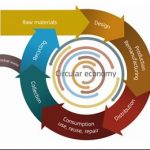
A circular economy means a continuous re-use and recycle of materials. It requires a new design of products so that they last longer, and become more repairable, reusable and recyclable and implementation of new technologies but also a change of societal mindset. Transformation towards a zero-waste economy and society entrains costs but also brings about benefits.
The European Commission is currently working on a legislative package on the circular economy that should become the EU law in the period 2016-2019.
The aim of the conference is to discuss how circular economy is implemented in Poland, what are the main challenges and benefits stemming from this process. This exchange of opinions will be a contribution to the EU deliberations.
Poniżej znajduje się agenda
PREZENTACJE
Szkolenie dla menedżerów badań naukowych organizowane przez Biura państw Grupy Wyszehradzkiej w Brukseli
Zachęcamy do przesyłania zgłoszeń na szkolenie, które odbędzie się w dniach 5-7 grudnia 2016 r. w Brukseli. Jest ono przeznaczone dla pracowników szkół wyższych oraz instytutów naukowo-badawczych, którzy mają już doświadczenie w zakresie aplikowania do Horyzontu 2020 i chcieliby rozwijać swoją wiedzę i umiejętności.
Program szkolenia znajduje się poniżej:
v4_training_agenda_version_22-11-2016_polsca
Zgłoszenie powinno zawierać curriculum vitae oraz list motywacyjny w języku angielskim i zostać wysłane na adres: polsca@polsca.pan.pl do dnia 10 listopada 2016 roku.
Spotkanie krajowych delegatów (TransPreM)

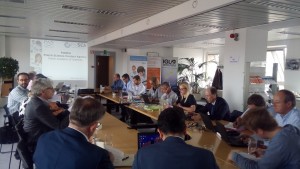
W dniu 26 września 2016 r. w siedzibie KOWI miało miejsce spotkanie delegatów krajowych w obszarze Transportu współorganizowane przez Biuro PolSCA.
W czasie spotkania została m. in. przedstawiona działalność Biura.
Magia i marka grantów

W kwietniu 2016 roku zostało powołane Biuro ds. Doskonałości Naukowej PAN, które będzie wspierać polskich naukowców w procesie aplikacji o granty European Research Council.
Wywiad z Wiceprezesem PAN prof. dr hab. Pawełem Rowińskim:
http://www.naukaonline.pl/teksty/item/2812-magia-i-marka-grantow
Kurs online Europejskiego Komitetu Regionów „EU budget and funding for regions and cities”
The European Committee of the Regions (CoR) offers this MOOC to contribute to capacity-building of regional and local authorities with regard to EU affairs, more particularly on EU budget and funding for regions and cities. While regions and cities matter in EU policy-making, they may have a limited knowledge of how the EU budget works and what are the possibilities for accessing EU funds. The course will attempt to fill this knowledge gap.
This MOOC has been co-created with the European Investment Bank (EIB) and the European Commission – Directorate-General for Regional and Urban Policy (DG REGIO) and Directorate-General for Budget (DG BUDG).
The course consists of videos, factsheets, infographics and web-streamed live debates with Q&A from the course participants. Moreover, course followers can interact and contribute via social media and fora. The course will last six weeks, starting on 31 October and ending on 9 December 2016. Studying time is about two hours per week. The course material will remain available online until 31 July 2017.
https://www.fun-mooc.fr/courses/CoR/114001/session01/about
Pojęcie oddziaływania w projektach badawczych finansowanych z programu Horyzont 2020

Biuro Promocji Nauki „PolSCA” PAN w Brukseli przedstawia publikację dotyczącą analizy pojęcia oddziaływania w projektach finansowanych z Horyzontu 2020
http://nauka-pan.pl/index.php/nauka/article/view/644/659
Ocena okresowa efektów Horyzontu 2020
http://ec.europa.eu/smart-regulation/roadmaps/docs/2015_rtd_005_evaluation_ie_horizon_2020_en.pdf
http://www.europarl.europa.eu/RegData/etudes/STUD/2016/572678/IPOL_STU(2016)572678_EN.pdf
ESFRI and national research infrastructures – current challenges from perspective of V4 countries
|
|
 |
AGENDA
| 9.30 – 10.00 | Registration |
| 10.00 – 10.10 | Welcome address, Sebastian Barkowski – First Counsellor, Permanent Representation of the Republic of Poland to the European Union in Brussels |
| 10.10 – 10.40 | Paving the way for an action plan for Long-term sustainability of Research Infrastructures, Antonio di Giulio – Head of Unit, B.4: Research Infrastructure, Directorate B – Open Innovation and Open Science, European Commission, DG Research & Innovation |
| 10.40 – 11.10 | Research infrastructure life cycle methodology, David Bohmert, Swiss delegate to ESFRI |
| 11.10 – 11.30 | Integrated approach to geophysical hazards induced by exploration and exploitation of georesources – to facilitate the way of attaining excellence, Prof. Stanisław Lasocki – EPOS „European Plate Observing System”, Polish Academy of Sciences |
| 11.30 – 11.50 | SOLARIS – the first large scale research facility in Poland, Prof. Marek Stankiewicz, Director of SOLARIS – the Polish national synchrotron, Jagiellonian University |
| 11.50 – 12.00 | Coffee break |
| 12.00 – 13.00 | Panel discussion – V4 research infrastructures and ESFRI – main challenges
Dominik Sobczak – ESFRI Executive Secretary, European Commission, DG Research & Innovation – moderator
Konrad Dębski – Department of Innovation and Development, Ministry of Science and Higher Education, Poland Dr. Wiesław Studencki – National Contact Point for Research Programmes of the EU in Poland David Bereczkei – ELI –DC, project manager- coordinator, Hungary Roman Hvězda – Deputy Director for Projects of Operational Program R&D&I, ELI project manager, Czech Republic Ondřej Hradil – Senior Analyst, CEITEC, Czech Republic Dr. Pavol Siman – Member of the Presidium, Slovak Academy of Sciences |
| 13.00 – 14.00 | Networking lunch |
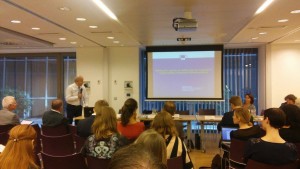
PRESENTATIONS
Paving the way for an action plan for Long-term sustainability of Research Infrastructures, Antonio di Giulio
https://drive.google.com/file/d/0B3OugwAmC182SEpzZVVCd2dtSk0/view?usp=sharing
Research infrastructure life cycle methodology, David Bohmert
https://drive.google.com/file/d/0B3OugwAmC182SE1MN2w3MVFJTXM/view?usp=sharing
Integrated approach to geophysical hazards induced by exploration and exploitation of georesources – to facilitate the way of attaining excellence, Prof. Stanisław Lasocki
https://drive.google.com/file/d/0B3OugwAmC182eXlHM0RZRkRweE0/view?usp=sharing
SOLARIS – the first large scale research facility in Poland, Prof. Marek Stankiewicz
https://drive.google.com/file/d/0B3OugwAmC182ejd3aVlMRkU3MDA/view?usp=sharing
Seminarium – UAS4EUROPE: Smart Partnerships for Regional Impact
Energy efficiency improvements in the health sector – best practices in European regions
Następna strona »« Poprzednia strona


