V4 Conference 2026: Summary
Brussels | 20 October 2026
How can artificial intelligence strengthen the quality of research rather than simply increase the number of proposals and publications? Where is the line between supporting expert judgement in peer review and influencing its outcome? And how can research institutions and funding agencies prepare for a change that now extends beyond working tools to skills, responsibility and the principles of research funding? These questions were at the heart of “Exploring the Role of AI in Research”, the annual conference of the V4 liaison offices, held in Brussels on 20 October 2026.
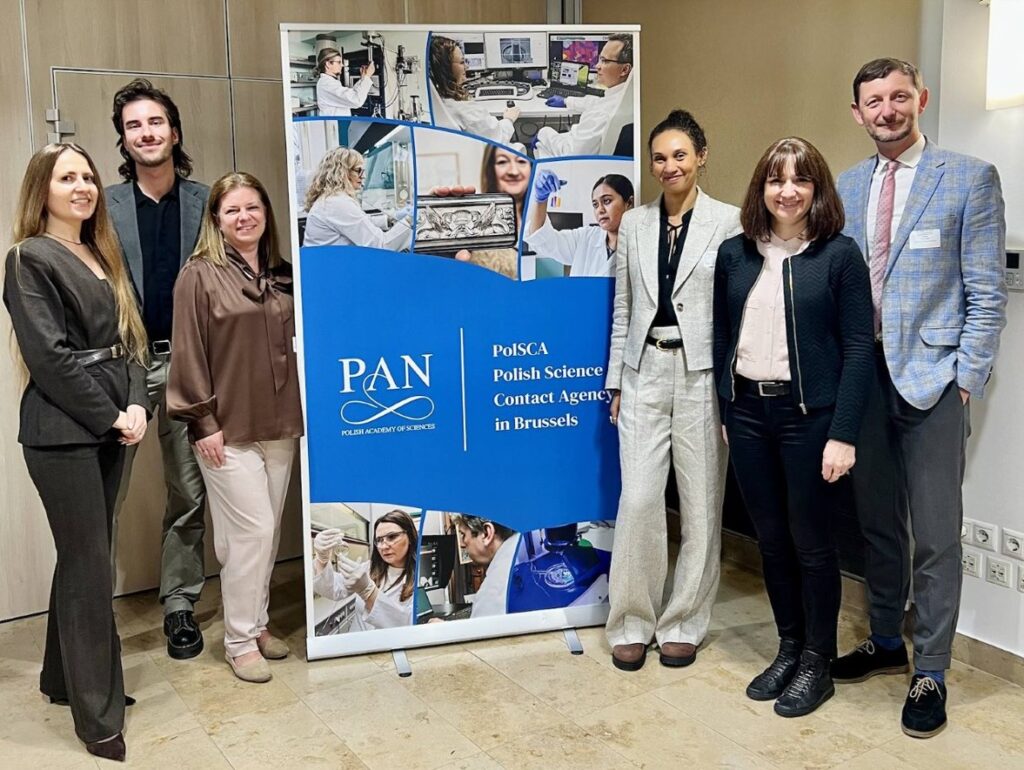
The event was hosted by the Permanent Representation of Hungary to the European Union. It was co-organised by the Brussels-based research and innovation liaison offices: Hungary’s NRDIO (coordinator of this year’s edition), CZELO from Czechia, SLORD from Slovakia, and the Polish Science Contact Agency (PolSCA) of the Polish Academy of Sciences. Following a welcome by Ambassador Katalin Molnár, participants heard a presentation by a European Commission representative on Europe’s AI in science agenda. The subsequent sessions focused on two interconnected areas: preparing grant proposals and evaluating them.
The conference brought together the perspectives of researchers, research funding organisations and European research policy. In line with its aims, it sought not to present a single, ready-made solution, but to contribute the experiences of the V4 countries to the wider European discussion. The exchanges showed that responsible use of AI requires reflection both on the technology’s capabilities and on the system in which its users work.
Europe’s AI in science agenda: from tools to a shared research environment
Liviu Stirbaț from the European Commission’s Directorate-General for Research and Innovation provided the strategic context for the conference, drawing on the European AI in Science Strategy. He emphasised that applications of artificial intelligence already extend beyond text editing to data analysis, programming, experimental design and laboratory automation. This change requires adjustments not only to researchers’ working practices, but also to infrastructure, skills and the organisation of research.
A central element of the presentation was RAISE — Resource for AI Science in Europe, an initiative intended to bring together European resources in talent, funding, data and computing power. Stirbaț stressed that simply making these resources more available is not enough: researchers need a coherent environment in which they do not have to navigate separate, successive procedures to secure a grant, obtain data and access computing time. He presented the integration of these resources as an important direction for the further development of RAISE.
He devoted particular attention to the ERA Living Guidelines on the Responsible Use of Generative AI in Research. Developed jointly with countries and organisations within the European Research Area, the document provides recommendations for researchers, research institutions and research funding organisations. Its core principles remain transparency, human responsibility, critical verification of results and the protection of confidentiality. The update published on 16 October 2026 expanded the guidance on proposal evaluation and peer review, and addressed AI agents capable of performing increasingly complex, multi-stage tasks.
The presentation also linked research competitiveness to equitable and reliable access to technology. The costs of advanced tools can widen disparities between institutions, with particularly significant consequences for those with fewer resources. Dependence on external providers, meanwhile, raises questions about continuity of access and the protection of unpublished ideas. Developing European technological capabilities was therefore presented as an issue with a direct bearing on the conditions in which research is conducted.
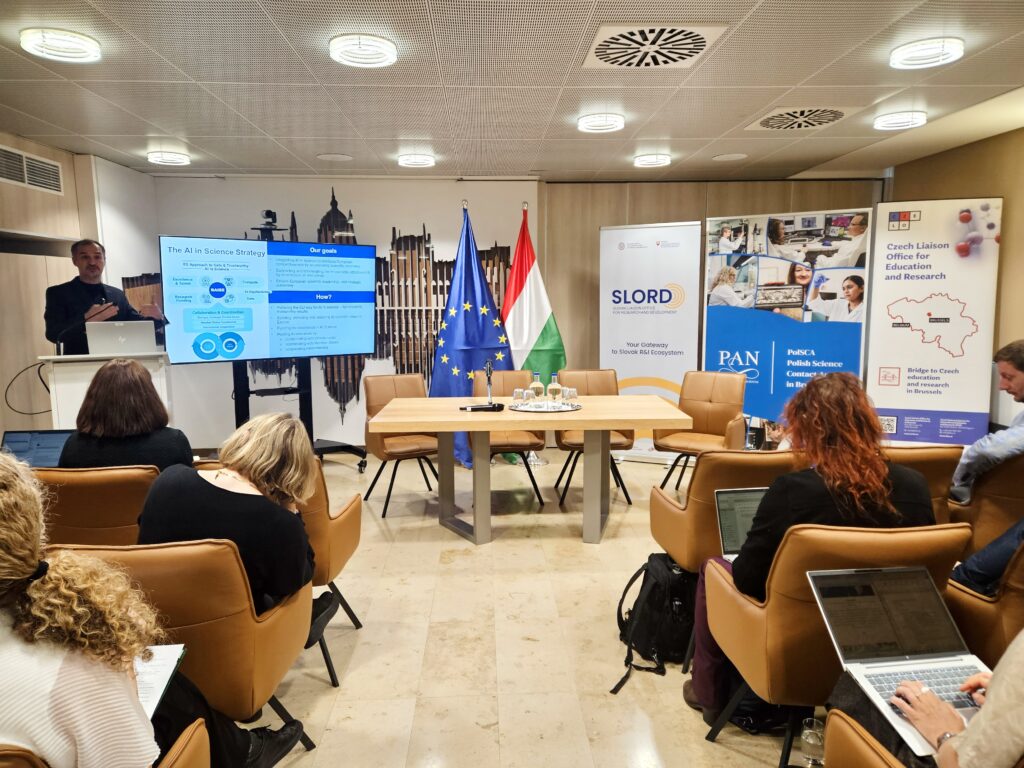
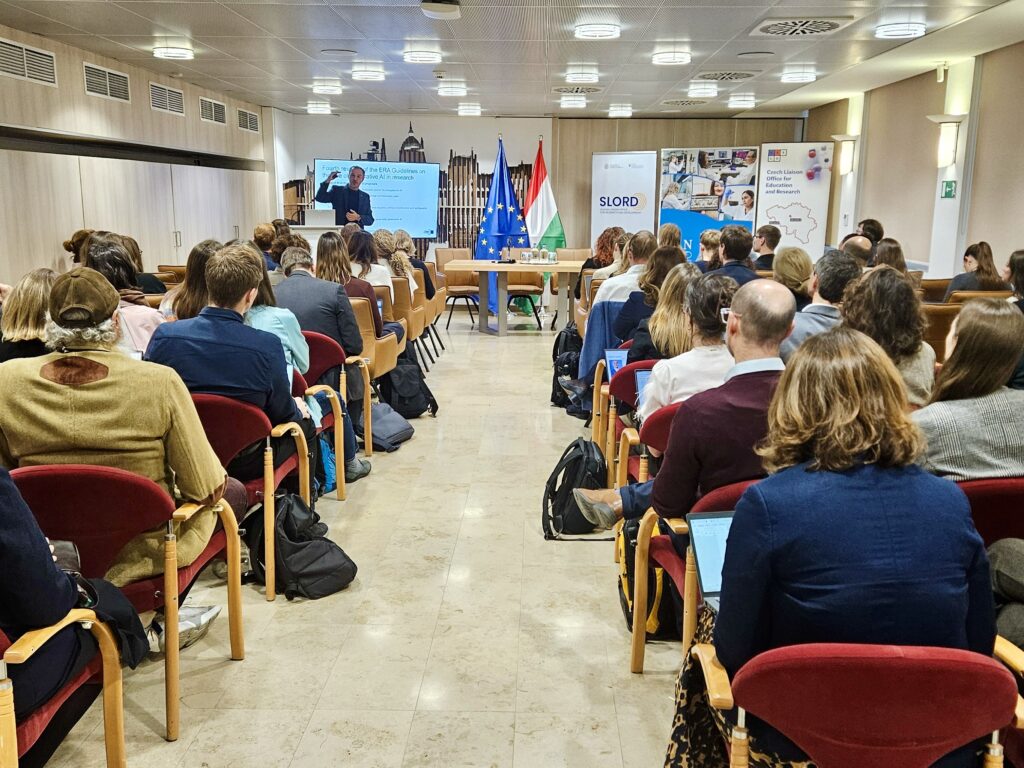
Liviu Stirbaț’s presentation, “European Strategy for Artificial Intelligence in Science”: PRESENTATION LINK.
The NCN perspective: setting the scene for the discussion on proposal preparation
Barbara Świątkowska from Poland’s National Science Centre (NCN) set the scene for the first panel by presenting the findings of the NCN survey on the use of generative AI, prepared by the Analysis and Evaluation Team led by Dr Anna Strzebońska. While 42% of respondents had used AI when writing proposals, 67% opposed its involvement in project evaluation. The gap between accepting support for authors and trusting algorithm-assisted evaluation provided a starting point for the discussion on responsibility, skills and rules for using new tools.
“For us, the point is not to ban AI, but to define clear boundaries based on transparency, responsibility, confidentiality and the leading role of human expertise,” Barbara Świątkowska emphasised. She also stressed that AI should support intellectual work rather than replace it.
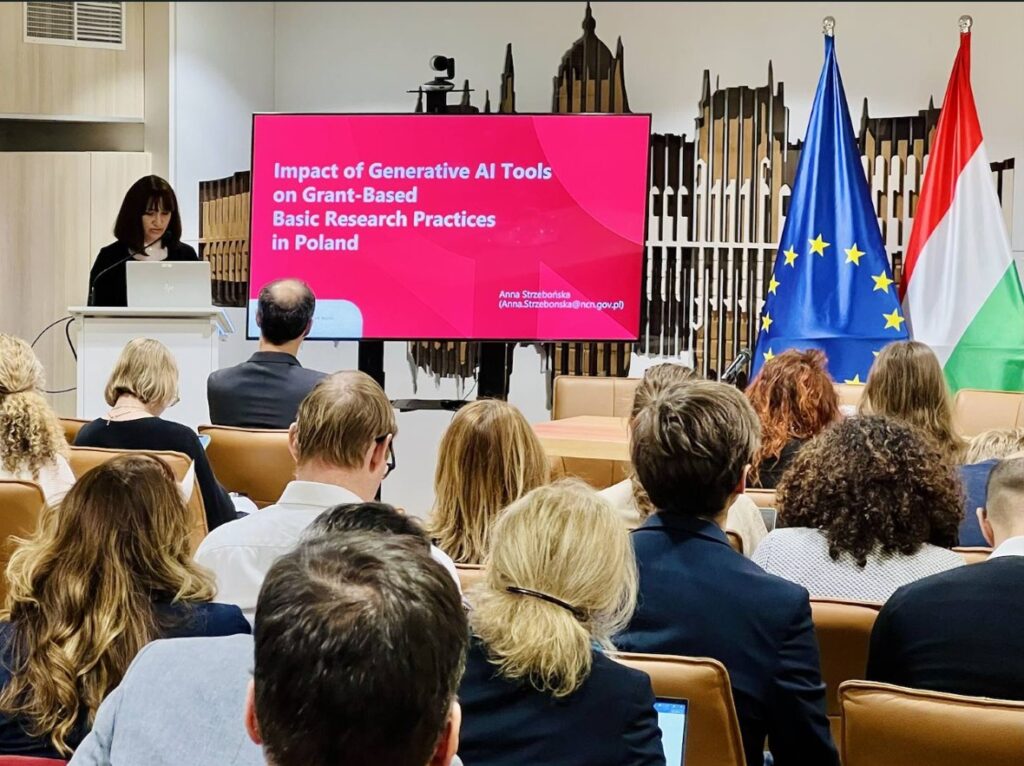
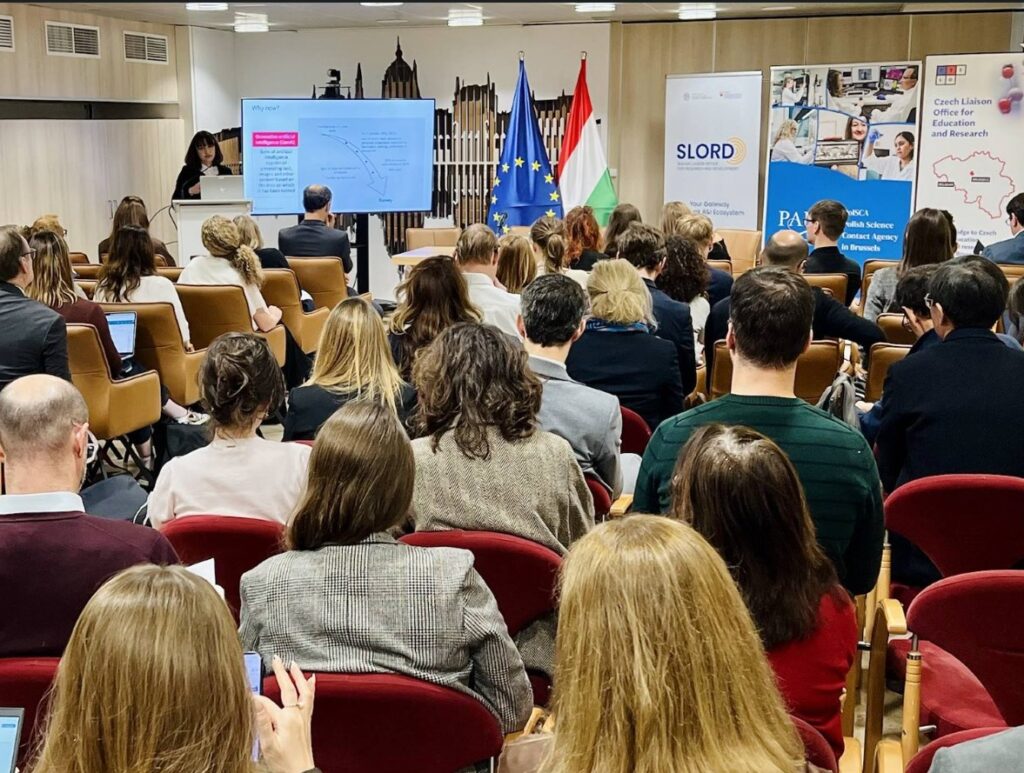
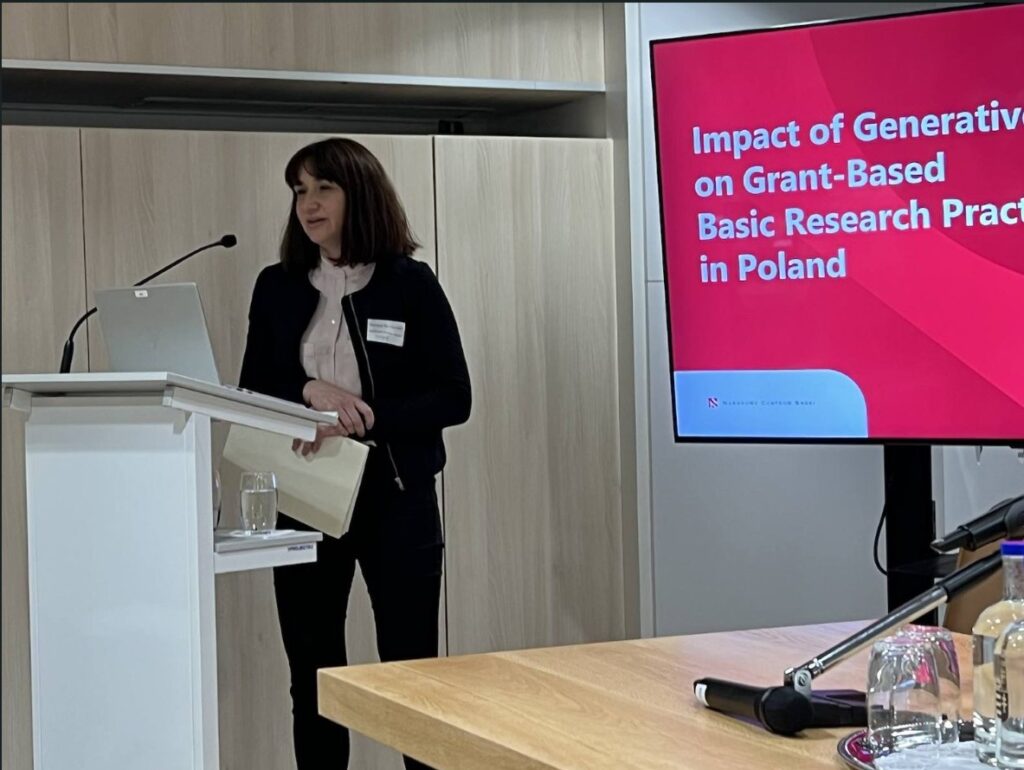
Barbara Świątkowska’s presentation, “When Ideas Meet Algorithms”: PRESENTATION LINK.
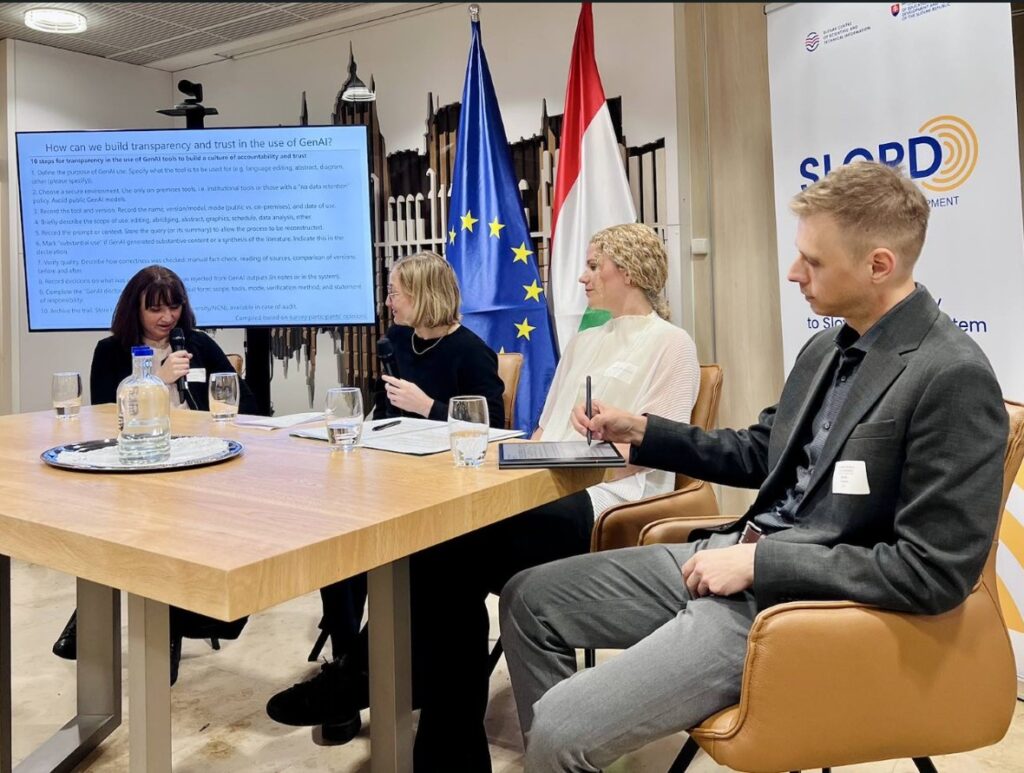
Proposal preparation: researchers’ skills and institutional responsibility
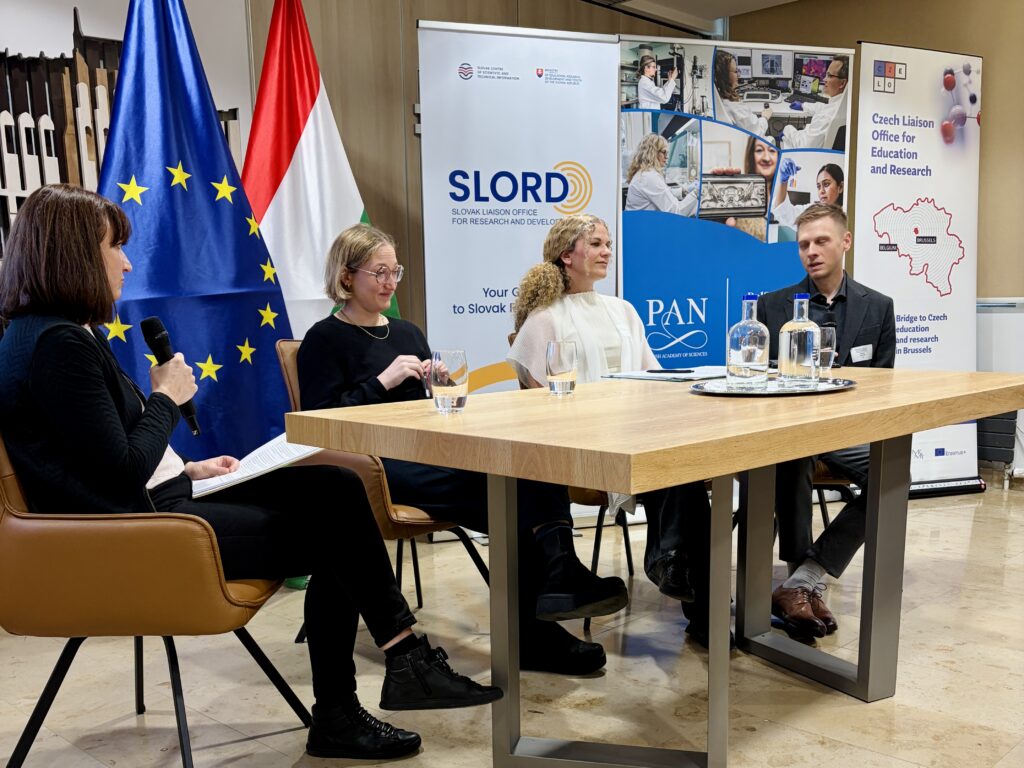
The panel, moderated by Barbara Świątkowska, featured Michal Kompan from the Kempelen Institute of Intelligent Technologies (KInIT) in Slovakia, Michaela Liegertová from Jan Evangelista Purkyně University and the Institute of Molecular Genetics of the Czech Academy of Sciences, and Sophie Pornschlegel from the European Policy Centre and Maastricht University. The discussion connected practical experience of working with AI with questions about education, transparency and the organisation of research funding.
Michaela Liegertová showed that greater openness to technology can go hand in hand with a more critical approach to its outputs. She drew on practical training programmes after which researchers used a wider range of tools while also becoming better at recognising errors in generated content. In her view, AI can provide material for thinking: helping to connect findings across disciplines, identify gaps in knowledge or detect weaknesses in an experimental design. In some areas, such support can reduce unnecessary expenditure, the use of laboratory animals or the consumption of scarce samples. It does not, however, relieve researchers of the need to verify sources and methods.
The distinction between technical correctness and scientific validity was particularly important. An agent may generate working code and a reproducible result while using a method that is inappropriate for the problem. It may also produce a convincing synthesis of the literature based solely on abstracts, without access to full publications. The panellists therefore proposed designing AI-assisted workflows so that researchers check sources, compare suggested approaches and independently justify their choices at successive stages. Such an approach is intended to safeguard not only the quality of results, but also researchers’ skills.
Michal Kompan emphasised that training needs differ. Experienced researchers may need encouragement to explore the tools, while younger users may need to develop greater scepticism towards their outputs. He also challenged the tendency to equate the benefits of AI solely with saving time. Some of the time saved in drafting should be devoted to checking evidence and critical analysis. He further highlighted the importance of languages that are less well represented in models: assessing tools’ usefulness on the basis of their performance in English is not sufficient for national grant systems.
Sophie Pornschlegel shifted the focus to the conditions in which researchers work. She argued that AI highlights pre-existing problems: pressure to publish, the need to keep applying for grants and a lack of stable core funding. If the system rewards quantity, technology that makes text production easier may reinforce these mechanisms rather than improve research quality. She therefore called for reflection on the balance between institutional and competitive funding, and on protecting researchers’ interests in their relationships with commercial technology providers.
How to disclose AI use remained a practical question. A general declaration says little about whether a tool was used for translation, developing an idea or analysing methodology. Among the ideas discussed was a shared classification of uses that would facilitate transparent reporting. Attention was also drawn to the risk that open disclosure could disadvantage an applicant assessed by an expert who is sceptical of AI. The discussion therefore considered whether this information should be visible at the initial evaluation stage. This remained a proposal for further consideration, illustrating that transparency must go hand in hand with protection against unequal treatment.
Proposal evaluation: opening the discussion on quality and trust
Miguel Ruiz Osés from the European Commission’s Directorate-General for Research and Innovation opened the afternoon panel by asking whether AI could not only accelerate proposal evaluation but also improve its quality. He noted that the boundary between assisting an expert and influencing their judgement is not always clear: even a summary can omit an element that is crucial to a project’s originality. Simply leaving the final decision to a human does not, therefore, guarantee an independent evaluation.
The speaker reiterated the Commission’s rules presented at the conference: experts must personally read the full proposal, assess its scientific merit and form their own judgement. Limited ancillary uses require confidentiality to be maintained and the use of tools to be documented; proposal content must not be submitted to AI systems, including those provided by universities. The presentation established three themes for the ensuing discussion: the boundaries of permissible support, evidence of improvements in quality, and protecting trust in the grant system.
Miguel Ruiz Osés’s presentation, “Evaluating Proposals in the Age of AI”: PRESENTATION LINK.
Independent evaluation, bias and the protection of original ideas
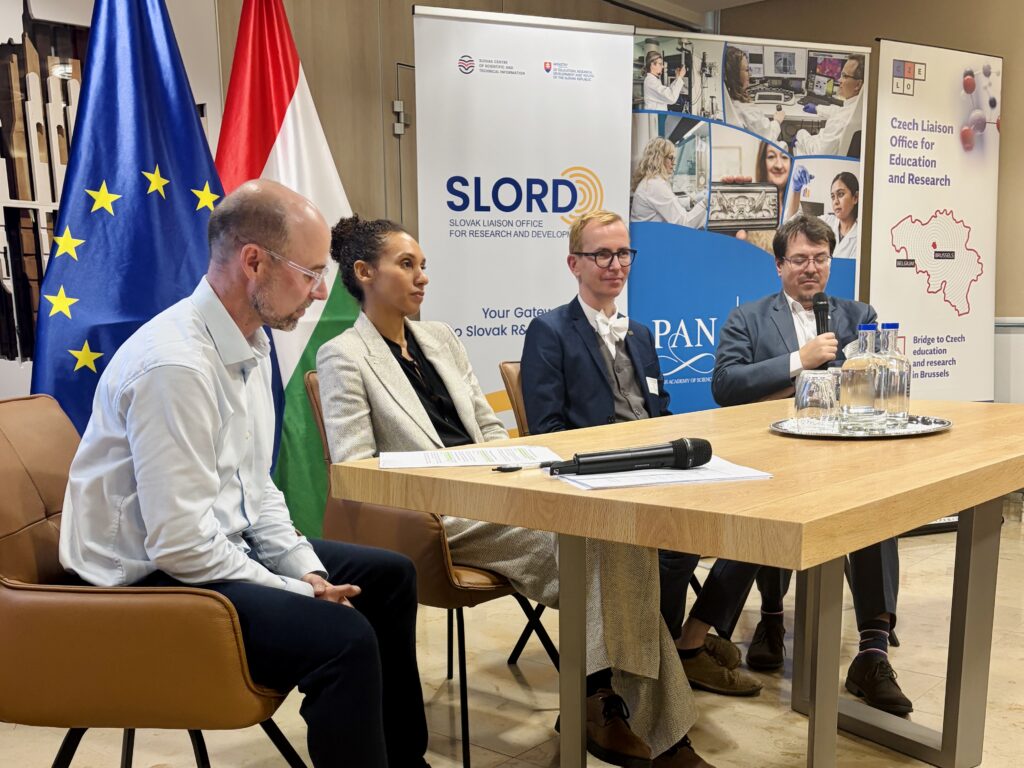
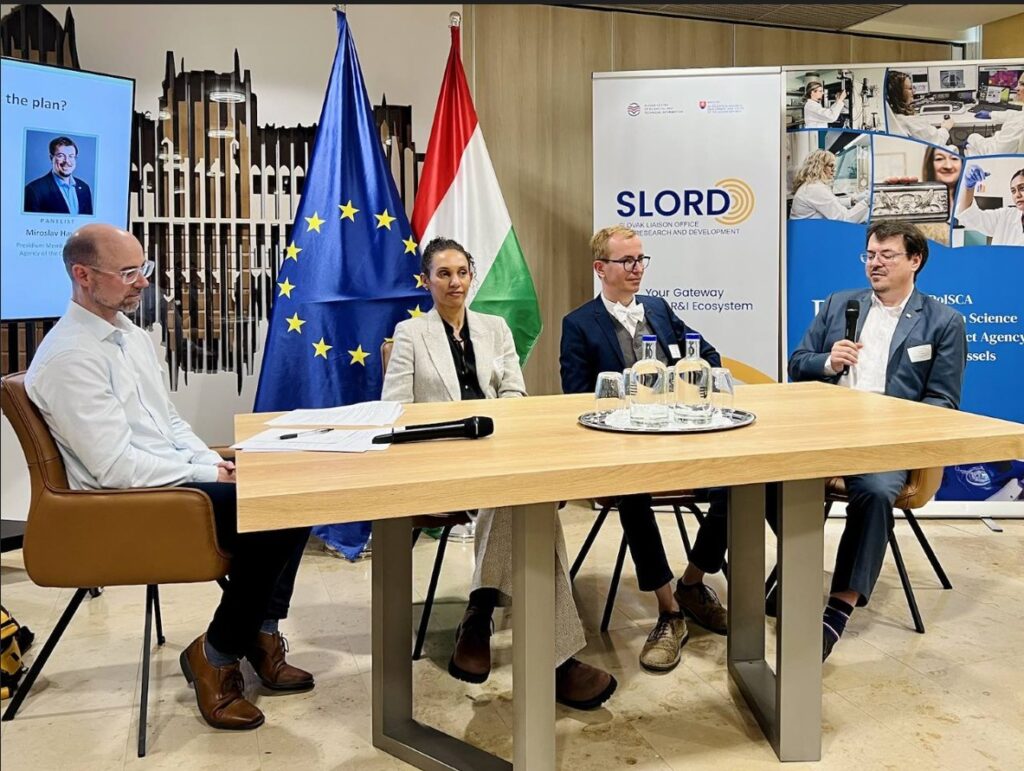
The panel “Proposal evaluation and AI: What’s the plan?”, moderated by Miguel Ruiz Osés, brought together Margaret Ohia-Nowak from Maria Curie-Skłodowska University in Lublin, Martin Weis from the Slovak University of Technology in Bratislava, and Miroslav Havránek from the Technology Agency of the Czech Republic. The discussion combined the experiences of a scholar researching bias in AI, a researcher and evaluator, and a representative of a research funding organisation.
Miroslav Havránek drew attention to “score compression”: results clustering within a narrow range of high scores, making it harder to distinguish between projects when budgets are limited. He asked whether all sections of application forms still provide information that helps assess the actual value of research. If AI can produce an almost exemplary response to a particular requirement, it is worth examining whether this assesses the quality of the project or primarily the ability to construct a persuasive narrative.
Martin Weis emphasised the difference between using AI in one’s own work and taking responsibility for someone else’s confidential project. Evaluators cannot pass applicants’ ideas to third parties. At the same time, they need practical guidance on permissible uses, rather than blanket prohibitions alone. Weis also warned that a model may identify minor shortcomings while missing a conceptual problem or the value of an unconventional approach. Secure infrastructure does not, therefore, automatically resolve the question of sound evaluation.
Margaret Ohia-Nowak broadened the discussion to include the risk of systematically reproducing bias. This concerns not only researchers’ gender or background, but also a proposal’s language, discipline, topic and methodology. Using the example of research into the experiences of a marginalised community, she showed how a model might dismiss a qualitative approach as insufficiently representative rather than assess it against criteria appropriate to the research question. Similarly, less fluent English may be wrongly associated with lower scientific quality.
“With AI models, the danger is that bias can become systematic. It can be replicated and multiplied unless it is prevented,” Margaret Ohia-Nowak noted.
She also pointed out that a tool may reinforce a reviewer’s existing beliefs rather than challenge them, for example by providing a convincing justification for an initial negative assessment of a project. This creates a need both for the skills to recognise biases in models and in ourselves, and for the deliberate inclusion of diverse communities, including representatives of marginalised groups, in shaping the rules governing AI use.
The panel also returned to the question of open science. Sharing findings and data supports the exchange of knowledge, but also makes it easier for model providers to use them. The discussion offered no simple resolution to this tension. It did, however, show that questions of proposal confidentiality, the openness of research outputs and European control over infrastructure need to be considered together.
Do we need new models of funding and evaluation?
Participants’ questions broadened the debate beyond the use of tools alone. During the first panel, a question was raised about whether the growing number of proposals could genuinely be attributed to AI. Responses also pointed to constraints on national funding, the pressure to sustain research teams and greater awareness of European calls. AI may lower the barrier to starting work on a proposal, but it does not, on its own, explain all the reasons for growing interest in grants.
The discussion on evaluation raised alternative organisational approaches: partial randomisation among highly rated proposals near the funding cut-off, interviews with applicants, limits on the number of applications, and distributed peer review, in which applicants also act as reviewers. These were presented as subjects of pilots and discussion, not as an agreed model for the future system. Contributions from the audience highlighted that each approach may create new burdens and sources of bias, and therefore requires an assessment of its effects.
Participants also asked about using AI to check a completed review — for example, to detect inconsistencies between comments and scores — and about a shared, trusted tool for European research funding organisations. Such cooperation could reduce duplication of effort and dependence on external providers. Responses nevertheless highlighted reliability, responsibility for errors and the costs of maintaining systems. A trusted tool would therefore require not only suitable infrastructure, but also common rules and testing within real evaluation procedures.
What does the conference mean for the research community?
The discussions did not result in a single agreed position or a universal model for using AI. They did, however, clearly identify areas requiring joint work. For universities and institutes, these include access to appropriate tools, practical training and ways of organising work that sustain independent thinking. For funding agencies, the priorities are clear rules, controlled testing of new applications, and checking whether procedures still recognise originality and scientific quality. At European level, cooperation is needed on standards, infrastructure and reducing inequalities in access.
From the perspective of the V4 countries, the costs of advanced systems, the availability of institutional support and model performance in national languages are particularly important. The discussion highlighted how difficult it is to expect up-to-date skills and responsible experimentation when access to tools is limited or left to individual researchers. The development of AI should not entrench a situation in which the main advantages accrue to institutions that can provide the best technologies and support.
One of the conference’s most important outcomes was to connect the debate on technology with questions about the aims of the research system. More efficient proposal preparation and processing do not necessarily lead to better choices about which research to fund. AI’s value should be assessed through its impact on the quality of research, procedural fairness and trust, rather than solely through the number of tasks completed. Questions remain about the limits of support for experts, the protection of groundbreaking and high-risk projects, and the balance between competition for grants and stable conditions for conducting research.
We thank the speakers, participants and our partners from CZELO, NRDIO and SLORD for helping to shape the conference, sharing their experiences and raising questions that enabled us to examine AI from different perspectives. We also thank the Permanent Representation of Hungary to the EU for its hospitality.
See also CZELO’s report on the conference.
The conference within Europe’s debate on AI in science
The V4 conference formed part of the debate surrounding European AI Innovation Month, an initiative of the European Commission and the Irish Presidency of the Council of the EU running from 14 October to 17 November 2026, with the AI in Science Summit in Dublin among its main events. Similar questions about the future of research funding were addressed in Brussels at the September ERC and Science Europe workshop “Research Evaluation in the Era of AI” and the October DG RTD meeting with European research funding agencies on the challenges of proposal evaluation. The debate is also developing in Member States, including at the EUA Funding Forum in Brno and the “AI for Science” conference in Poznań, organised on 23 October by the Commission for Computer Science and Automation of the Poznań Branch of the Polish Academy of Sciences together with the Faculty of Computing and Telecommunications at Poznań University of Technology. The meeting of the V4 R&D liaison offices contributed a Central European perspective to this European exchange, bringing together researchers’ and funding agencies’ experiences with reflections on quality, responsibility and trust in science.