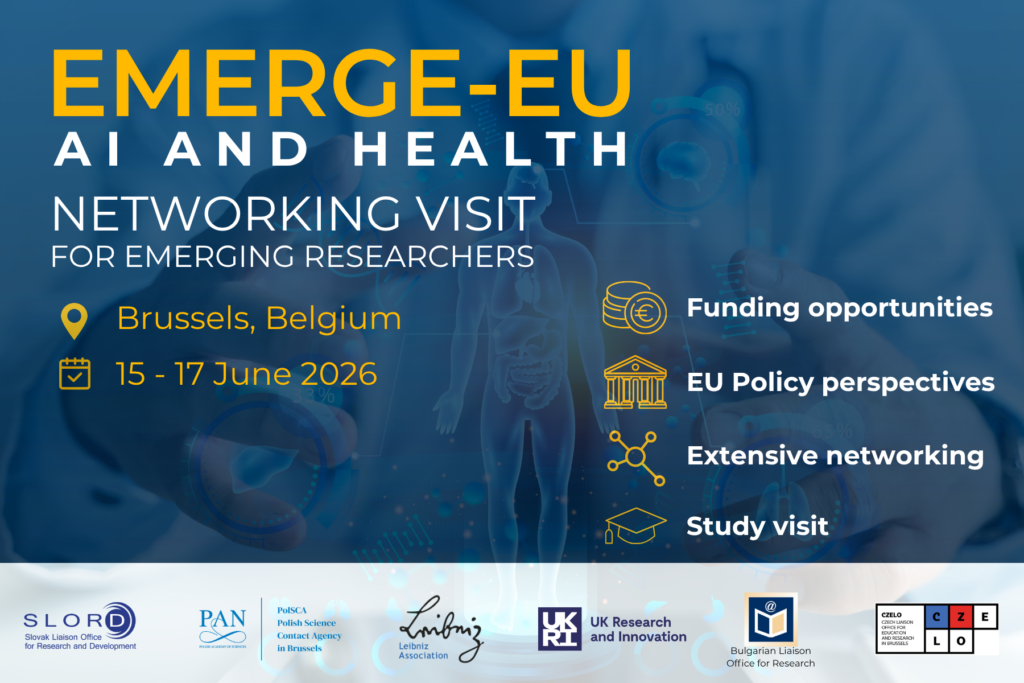
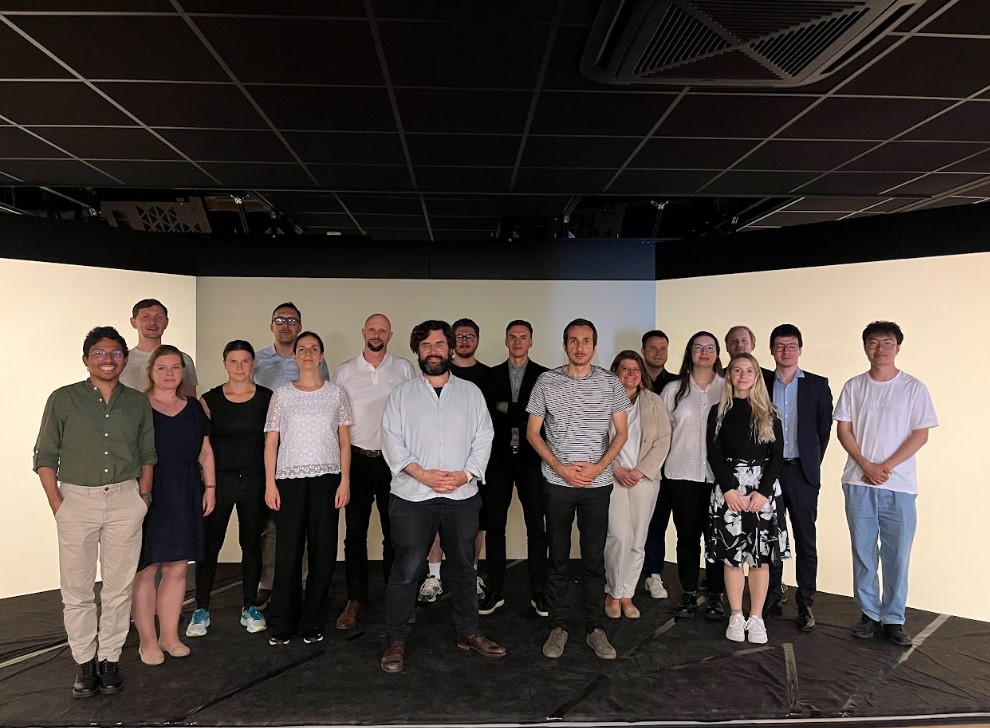
More than 20 researchers from Poland, Bulgaria, the Czech Republic, Germany, Slovakia, and the United Kingdom came together in Brussels for the EMERGE-EU AI & Health – Networking Study Visit for Emerging Researchers. Over three intensive days, participants explored the rapidly evolving intersection of artificial intelligence and health, exchanged ideas, and laid the foundations for future international collaborations. The programme was designed for researchers at the R2/R3 career stage who are building or strengthening their scientific independence and conducting research at the intersection of AI and life sciences. Through expert-led sessions, networking activities, and direct engagement with European stakeholders, participants gained valuable insights into both the scientific and policy dimensions of AI for health.
Day 1: Research Exchange and the European Perspective
The study visit began with an opportunity for participants to introduce themselves, present their research, and learn more about each other’s institutions and areas of expertise. Discussions highlighted the diversity of approaches to AI-driven health research, while creating space for knowledge exchange and new scientific connections.
Researchers from several Polish institutions took part in the event, including the Institute of Molecular Biology and Biotechnology of the Polish Academy of Sciences (IMol PAN), the Jerzy Maj Institute of Pharmacology of the Polish Academy of Sciences, the IDEAS Research Institute, Poznan University of Technology, Gdańsk University of Technology, and Jagiellonian University. Their work spans areas such as medicinal chemistry, pharmacogenomics, computational pathology, biomedical imaging, and machine learning applications in biomedicine.
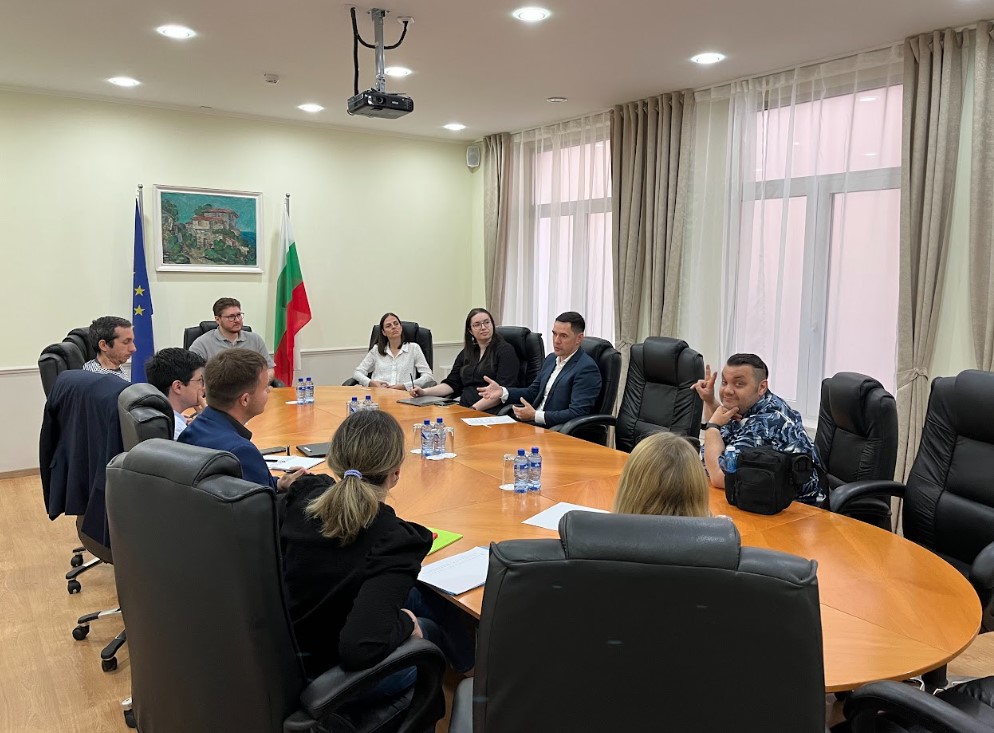
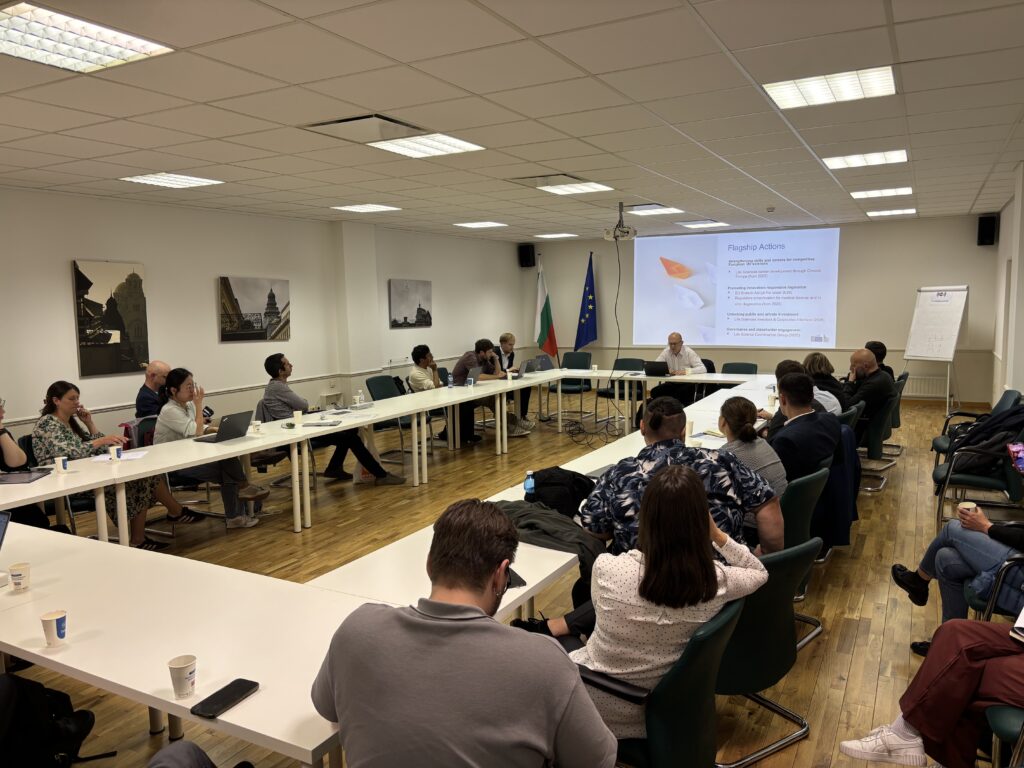
The programme also offered a broader European perspective on the future of AI and health research. Participants learned about key European Commission initiatives shaping this landscape, including the AI in Science Strategy and the European Life Sciences Strategy. Another highlight was the presentation of Compass AI, which showcased practical examples of AI applications in healthcare and illustrated ongoing efforts to strengthen Europe’s AI ecosystem.
Direct exchanges with representatives of the European Commission (DG CNECT and DG RTD) provided valuable insights into current policy priorities and emerging opportunities for research and innovation funding.
Day 2: Funding Opportunities and Matchmaking
The second day focused on European funding opportunities available to researchers and innovators. Participants attended dedicated sessions on programmes and instruments such as the European Research Council (ERC), EIC Pathfinder, COST, Horizon Europe, and Digital Europe. The sessions were led by experts directly involved in programme implementation, including representatives from ERCEA and EISMEA, as well as National Contact Point experts affiliated with FWO in Flanders. Their insights helped participants better understand the objectives, expectations, and opportunities offered by different funding schemes.
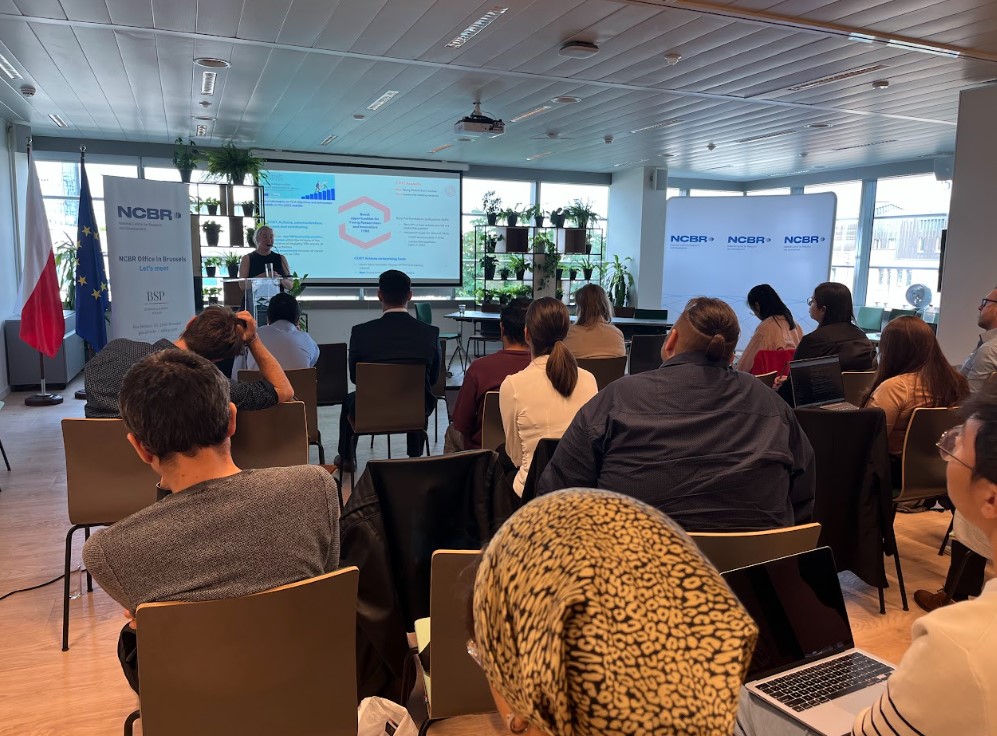
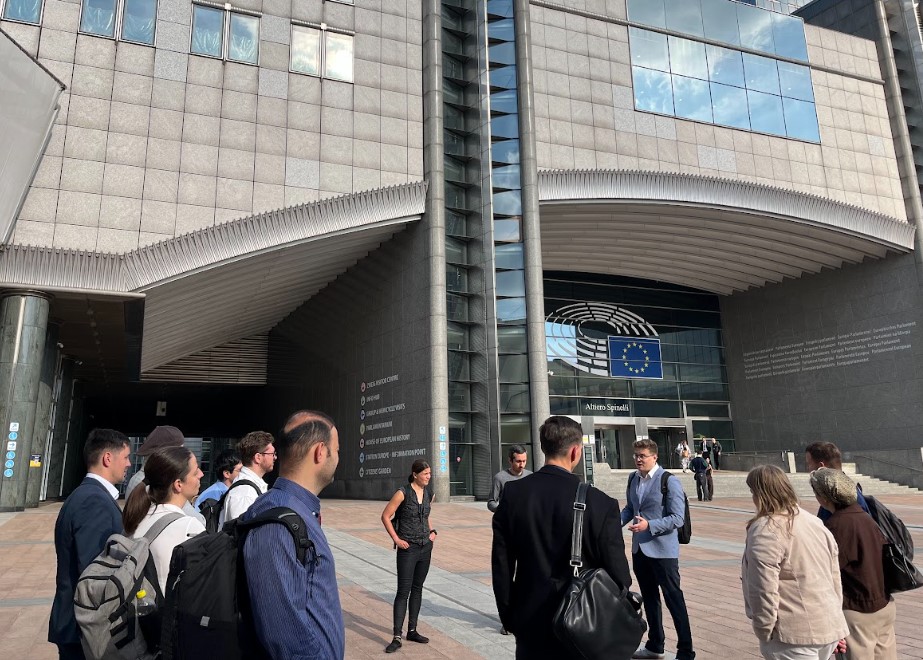
A key feature of the day was the matchmaking session. Researchers presented project ideas, identified shared interests, and explored opportunities for future collaboration. The discussions underscored the importance of networking and interdisciplinary cooperation in building successful international research consortia.
The programme took place at the NCBR Brussels Office. Following the formal sessions, participants had the opportunity to discover the European Quarter and continue discussions in a more informal setting.
Day 3: Learning from Practice at FARI
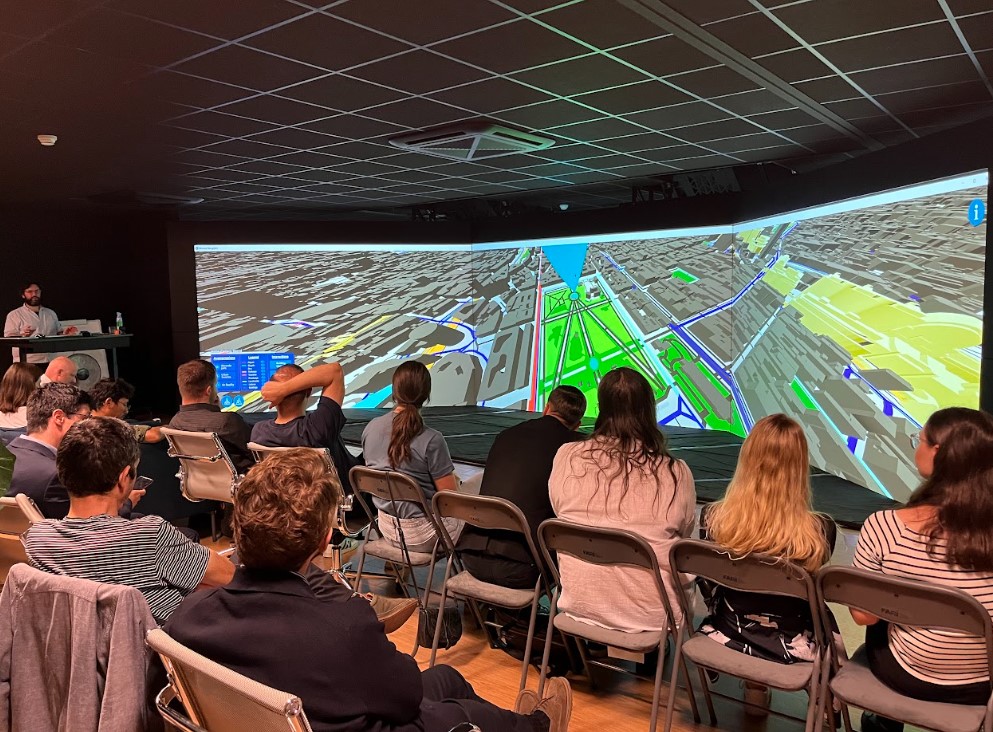
The final day was hosted by the FARI – AI for the Common Good Institute in Brussels. Participants gained first-hand insight into the institute’s activities and its work on applying AI to address societal challenges. Discussions focused on responsible AI development, collaboration between academia, public institutions and industry, and the practical realities of bringing innovative technologies into use. The visit demonstrated how research can be translated into tangible societal impact and provided an inspiring conclusion to three days of learning, exchange, and collaboration.
Key Takeaways
Throughout the study visit, several common themes emerged:
- Advancing AI solutions for healthcare requires strong collaboration across medical, biological, and technological disciplines.
- European funding programmes offer diverse opportunities for researchers at different career stages.
- Networking and matchmaking are essential for developing new partnerships and future collaborative projects.
- Direct engagement with European institutions helps researchers better understand evolving policy priorities and funding landscapes.
- Initiatives such as EMERGE-EU play an important role in supporting internationalisation and empowering the next generation of research leaders.
We would like to thank all participants, speakers, and partner organisations for their active engagement, inspiring contributions, and openness to collaboration. We hope that the connections established during EMERGE-EU: AI & Health will lead to new research projects, joint publications, and partnerships across Europe’s research and innovation ecosystem.
About EMERGE-EU
EMERGE-EU is a joint initiative of European research and innovation liaison offices based in Brussels: BLOR (Bulgaria), CZELO (Czech Republic), Leibniz Association – Europe Office (Germany), PolSCA – Polish Science Contact Agency of the Polish Academy of Sciences, SLORD (Slovakia), and UK Research and Innovation (UKRI).
The initiative aims to support researchers at the stage of developing scientific independence by creating international networking opportunities and facilitating direct engagement with the European research, innovation, and science policy ecosystem.
The pilot edition of EMERGE-EU took place in January 2026 and focused on Advanced Materials. The AI & Health study visit marked the second edition of the initiative, expanding its format and addressing one of the most important priorities in contemporary European research and innovation policy. Planning for future editions is currently underway.


